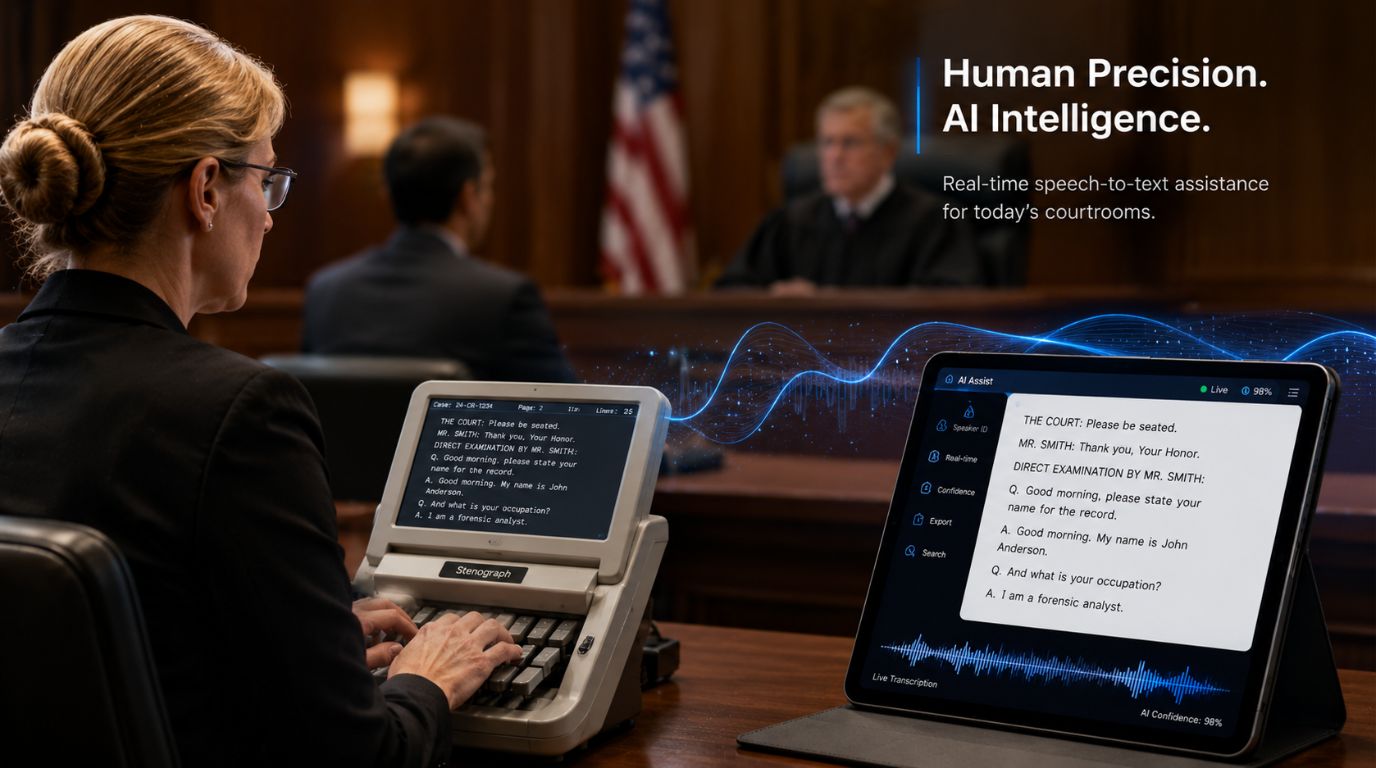

For years, we’ve been told that AI will replace millions of jobs. Court stenography—or court reporting—seemed like one of the professions most vulnerable to automation. After all, if AI can transcribe meetings, generate code, and summarize documents, will AI replace court reporters too?
Yet reality is proving to be far more nuanced. A recent report highlights a surprising trend: AI hasn’t killed stenography jobs. Instead, the industry is facing a shortage of skilled professionals. The challenge isn’t technology replacing humans—it’s a lack of humans entering the profession.
This is a pattern I’m increasingly seeing across industries
This is a pattern I’m increasingly seeing across industries. When people ask, “Will AI replace court reporters?” the assumption that AI eliminates jobs misses an important point: many professions are not just about tasks—they’re about context, judgment, trust, and accountability.
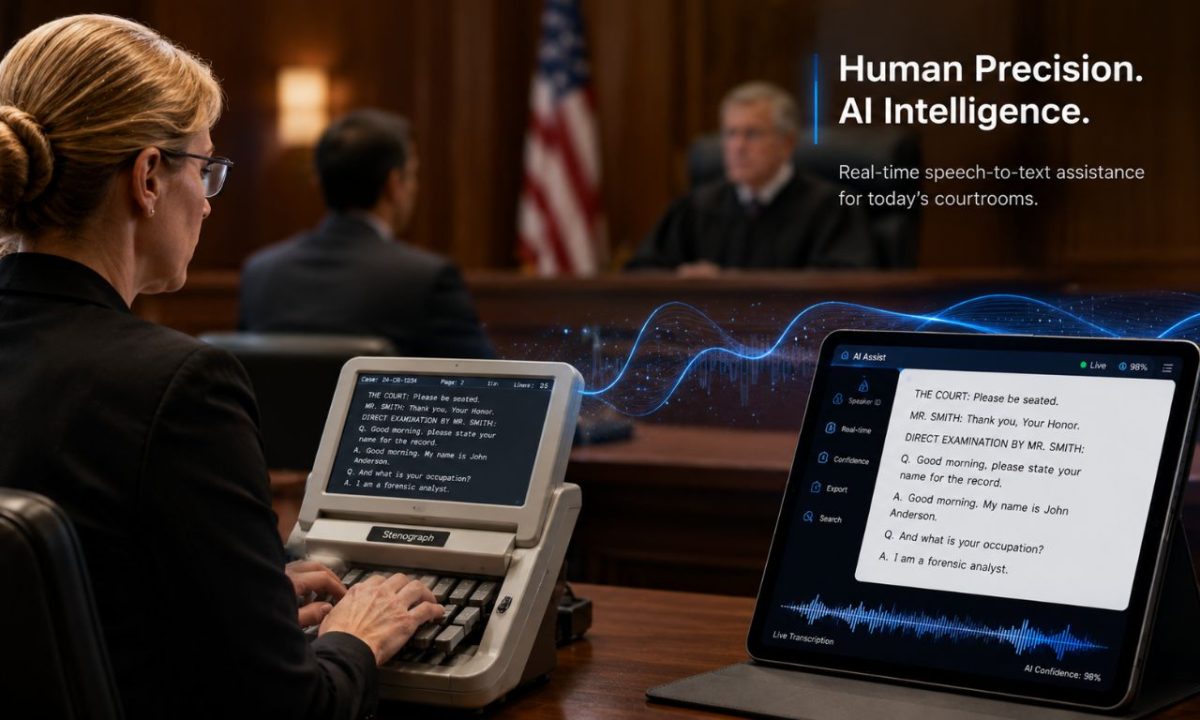
Take court reporting as an example. A court reporter does far more than convert speech into text. They capture non-verbal cues, manage chaotic courtroom environments, request clarifications when testimony is unclear, and ultimately certify legal transcripts that can influence appeals and judgments.
AI can assist with transcription. But when pondering will AI replace court reporters, we have to look at legal accountability. That’s still very much a human responsibility.
The Interesting Part
What’s particularly interesting is that AI’s arrival has actually exposed another problem: talent shortages.
As experienced court reporters retire, fewer people are entering the profession. The result? Courts are increasingly adopting digital tools—not because AI is superior, but because there aren’t enough professionals available.
This reminds me of a broader trend we are witnessing across sectors
AI isn’t replacing doctors—it is helping them diagnose faster.
AI isn’t replacing marketers—it is helping them create and analyze campaigns more efficiently.
AI isn’t replacing programmers—it is making them more productive.
And now, when looking at whether will AI replace court reporters, the answer is similar: it is augmenting them.
The future of work may not be “humans versus AI.” It is increasingly becoming “humans with AI versus humans without AI.”
This distinction matters. Historically, every major technological shift has changed the nature of jobs rather than eliminating them. ATMs didn’t eliminate bankers. Excel didn’t eliminate accountants. E-commerce didn’t eliminate retail. Instead, roles evolved.
AI appears to be following the same path
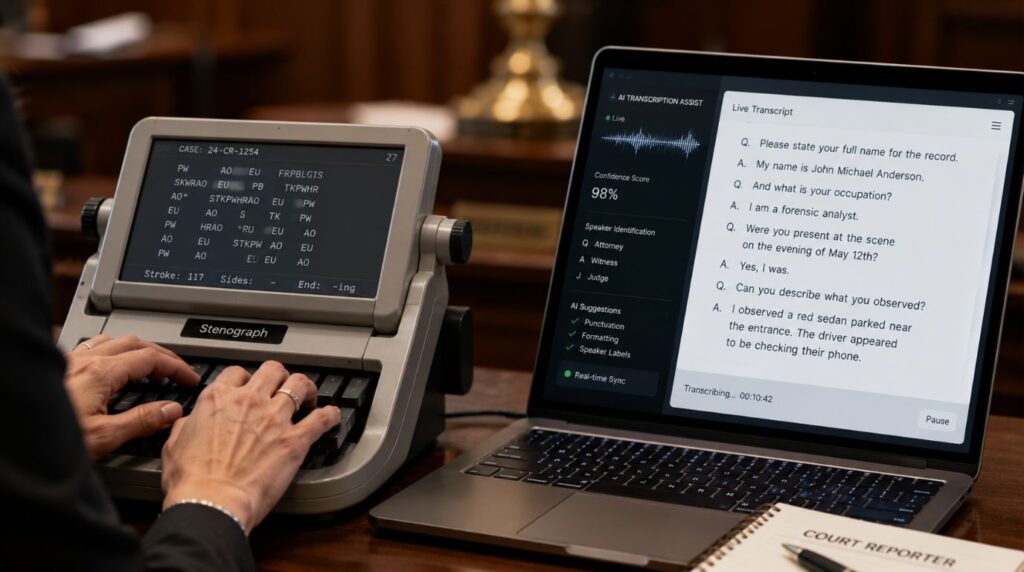
That doesn’t mean disruption isn’t real. Routine, repetitive tasks are undoubtedly being automated. But professions requiring empathy, critical thinking, domain expertise, and accountability remain difficult to replace.
Court reporting is a fascinating example because it highlights AI’s current limitations in the real world. Even the most advanced speech-to-text systems still struggle with accents, overlapping conversations, courtroom noise, emotional testimony, and legal nuances.
Technology excels at processing information. Humans excel at understanding context.
Final Thoughts on Will AI Replace Court Reporters
Ultimately, the debate over whether will AI replace court reporters shows us that the winners in the AI era won’t necessarily be those who resist technology. There’ll be those who learn to work alongside it.
For students and professionals, the takeaway is clear: focus less on competing with AI and more on building skills that AI cannot easily replicate—judgment, communication, ethics, creativity, and domain expertise. The conversation around AI often swings between hype and fear. The reality lies somewhere in between.
AI is not ending work. It is changing work. And sometimes, as the stenography industry shows us, the bigger challenge isn’t machines taking jobs—it’s finding enough skilled people to do them.
As the industry shifts, staying informed about AI trends is essential for anyone. Click through to read another thread!