
Summary
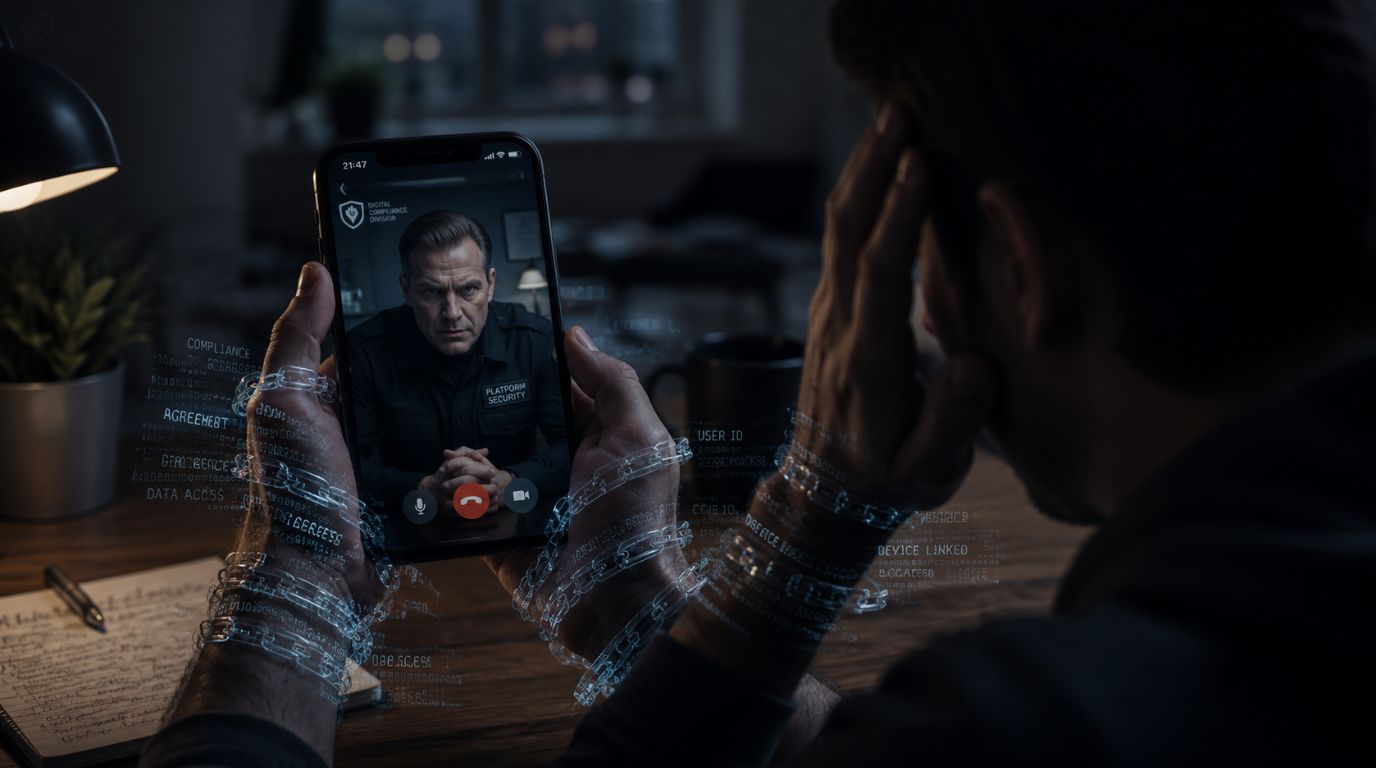
Modern cybercrime no longer relies on cracking passwords; it focuses on hacking human psychology. Driven by sophisticated manipulation rather than technical exploits, criminals are deploying ruthless social engineering tactics where victims are isolated, pressured, and financially drained under the illusion of authority. This analysis tears down the exact tactical conversion funnels scammers use to weaponize fear, why rapid digitization left a dangerous safety education gap, and the definitive rules required to protect your family from organized digital hostage situations.
The Scariest Scam Today Doesn’t Steal Your Money First
It Steals Your Mind.
Earlier scams wanted your bank password. Today, they want something far more valuable: Your attention. Your fear. Your isolation.
Because once they control those three things…the money eventually follows.
The story of a Bengaluru woman losing ₹24 crore in a digital arrest scam isn’t shocking because of the amount. It’s shocking because it shows how modern scams no longer work like traditional fraud.
It is terrifying because it highlights how modern social engineering tactics have fundamentally changed the mechanics of fraud. This isn’t a technical data breach; it is pure psychological warfare.
The Scam Wasn’t Built On Technology
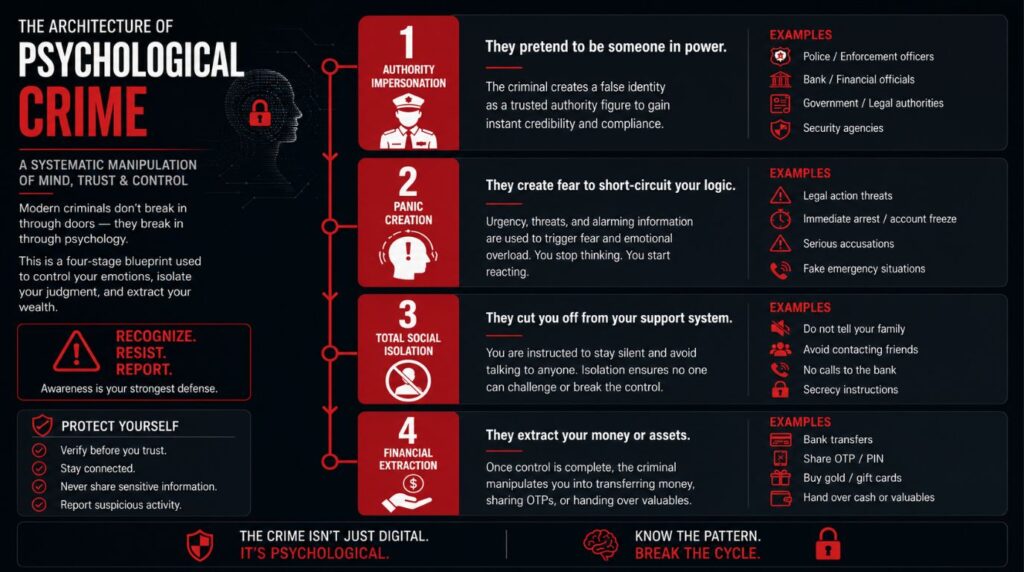
It Was Built On Human Emotion. Look at the formula:
- pretend to be authority figures
- create panic
- isolate the victim
- create urgency
- maintain constant pressure
Sound familiar?
Because this is the exact structure used in manipulation tactics everywhere. The criminals reportedly impersonated high-ranking officials and placed the victim under constant surveillance pressure. Not because they needed technology. Because they understood human behavior.
These malicious social engineering tactics turn standard communication tools into instruments of extreme mental manipulation, executed flawlessly by syndicates who trade technical exploits for a deep understanding of human behavioral vulnerabilities.
Fear Turns Smart People Into Vulnerable People
One thing people often say after hearing stories like this: “How can someone fall for this?”
Wrong question. The truth is that sophisticated social engineering tactics do not target cognitive intelligence; they target a temporary, highly heightened emotional state.
When people are:
- scared
- alone
- confused
- stressed
- under pressure
logic quietly exits the room. And fear takes over. A retired teacher. A senior citizen. An educated person. Scammers don’t care. Fear equalizes everyone.
We Need To Stop Calling Victims “Foolish”
Because honestly, that’s one of the biggest problems.
Every time people say, “I would never fall for this.” They unknowingly reduce awareness. Modern scammers are running sophisticated systems:
- fake identities
- spoofed calls
- deepfakes
- authority impersonation
- psychological scripts
- continuous pressure tactics
This isn’t some random person sending bad English SMS messages anymore. This is becoming organized crime with customer journeys. Except that the customer journey ends with your bank account empty.
India Digitized Faster Than It Educated
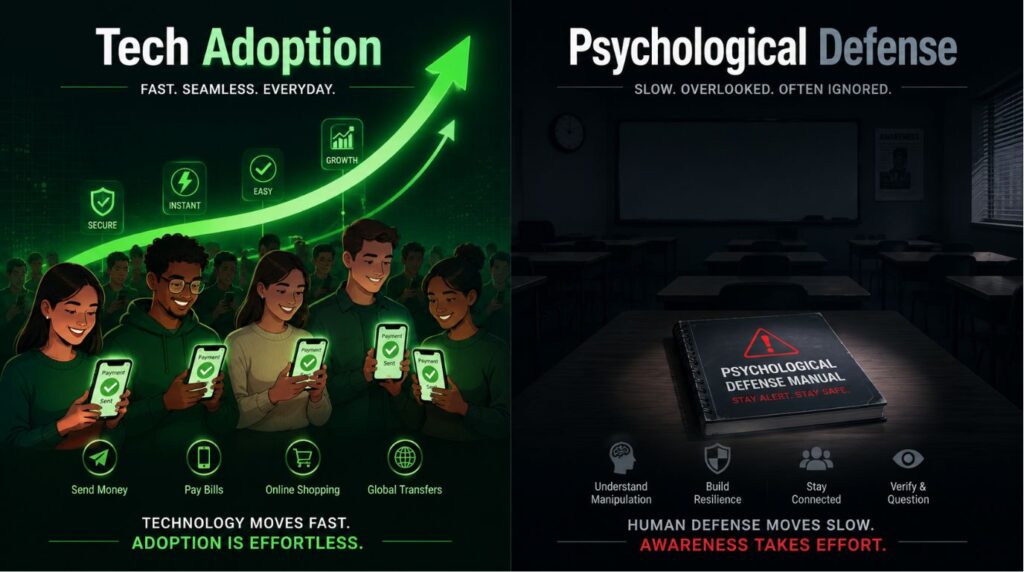
UPI exploded. Smartphone usage exploded. Online banking exploded. Digital trust exploded.
But digital safety education?
Not at the same speed.
We taught millions of people: “How to send money.”
Not enough people learned: “How manipulation works.”
We trained millions of citizens on how to send money in a single click, but we failed to teach them how advanced social engineering tactics work under pressure. Scammers found this systemic gap and are exploiting it with brutal efficiency.
A Simple Rule Can Save Crores
If anyone claims to be:
- police
- CBI
- ED
- court officials
- government agencies
asks you to:
- transfer money
- stay isolated
- remain on video calls continuously
- hide conversations from family
Pause immediately. Real systems don’t work like hostage situations. Scams do.
Final Thought on Social Engineering Tactics
The future of cybersecurity may not just be better software. It is widespread human education regarding modern social engineering tactics. Because the biggest vulnerability in modern technology isn’t your phone. It isn’t your laptop.
It isn’t your bank app. It’s human psychology.
And the scariest part?
Scammers have started studying it better than most companies do.
As the industry shifts, staying informed about the latest trends is essential for anyone. Click through to read another thread!