
Stop Thinking About AI Agents as Employees. Start Thinking in Workflows.
Most companies are asking the wrong question.
“What does this AI agent do?”
That’s like asking what Excel does… instead of what your business needs.
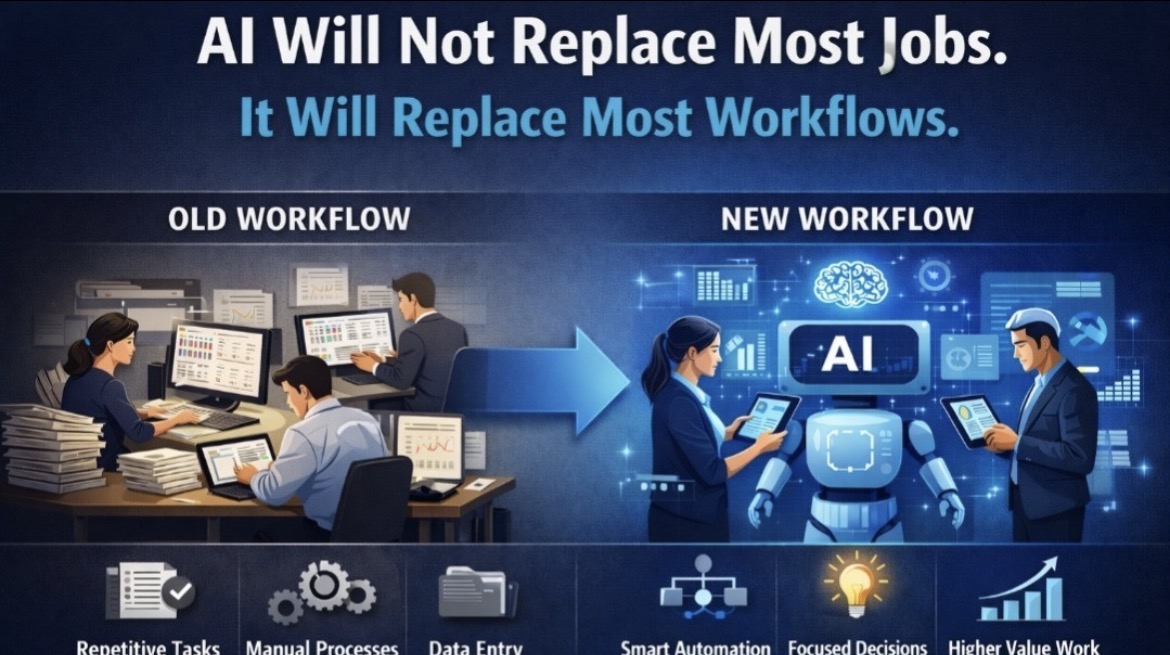
The real value of AI isn’t in standalone assistants writing emails.
It’s in how deeply AI is embedded into workflows.
Think:
- Customer support
- Hiring processes
- Internal operations
- Promotions and approvals
AI doesn’t win by doing one task well.
It wins by owning parts of the system.
The shift companies are missing
Some organisations are already treating AI agents like “digital employees” — giving them logins, managers, even names.
Sounds futuristic. Also slightly unnecessary.
Because AI isn’t a person.
It’s infrastructure.
And managing infrastructure is very different from managing people.
The smarter way to think about it
Don’t ask:
“What role can AI replace?”
Ask:
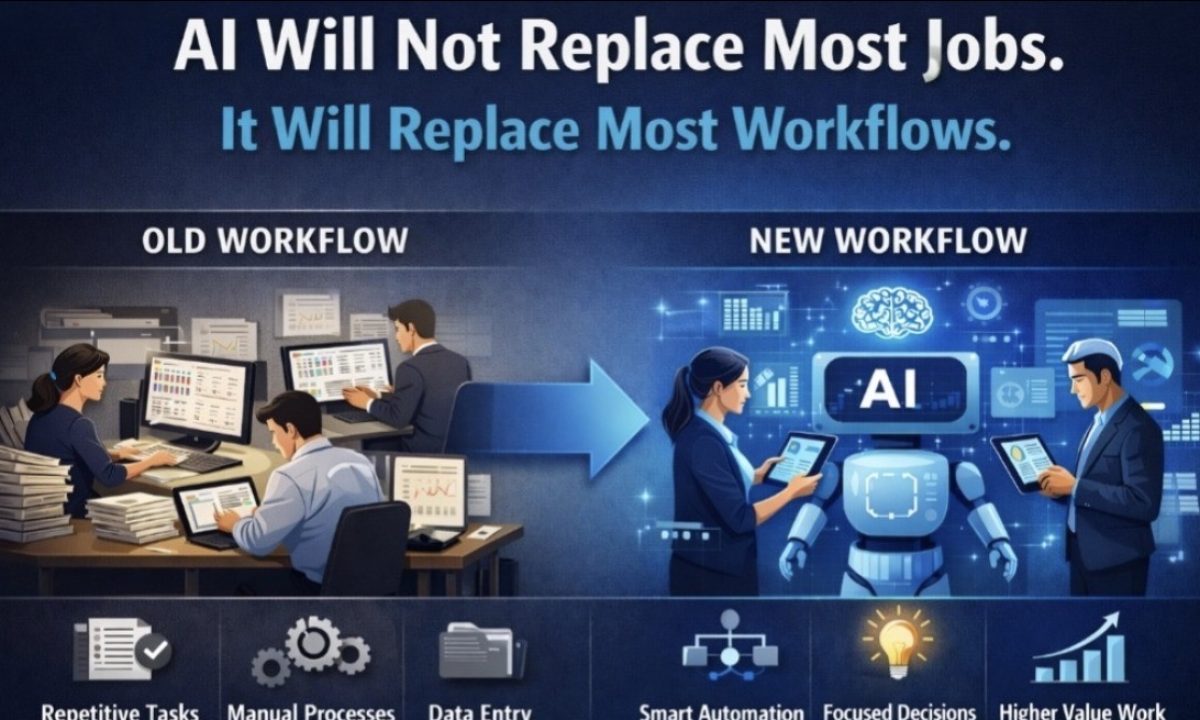
“What tasks in this workflow can be automated?”
Because jobs don’t disappear overnight.
Tasks do.
And when enough tasks disappear… the job quietly evolves.
The uncomfortable middle phase
We’re currently in that messy transition.
Where:
- AI is powerful
- Use cases are unclear
- Everyone is experimenting
- No one has fully figured it out
And that’s okay.
The takeaway
AI agents won’t “take over jobs” in one big moment.
They’ll slowly reshape how work gets done — one workflow at a time.
So stop hiring AI like employees.
Start designing systems like operators.
Because the companies that win won’t have more AI tools.
They’ll have better AI workflows.