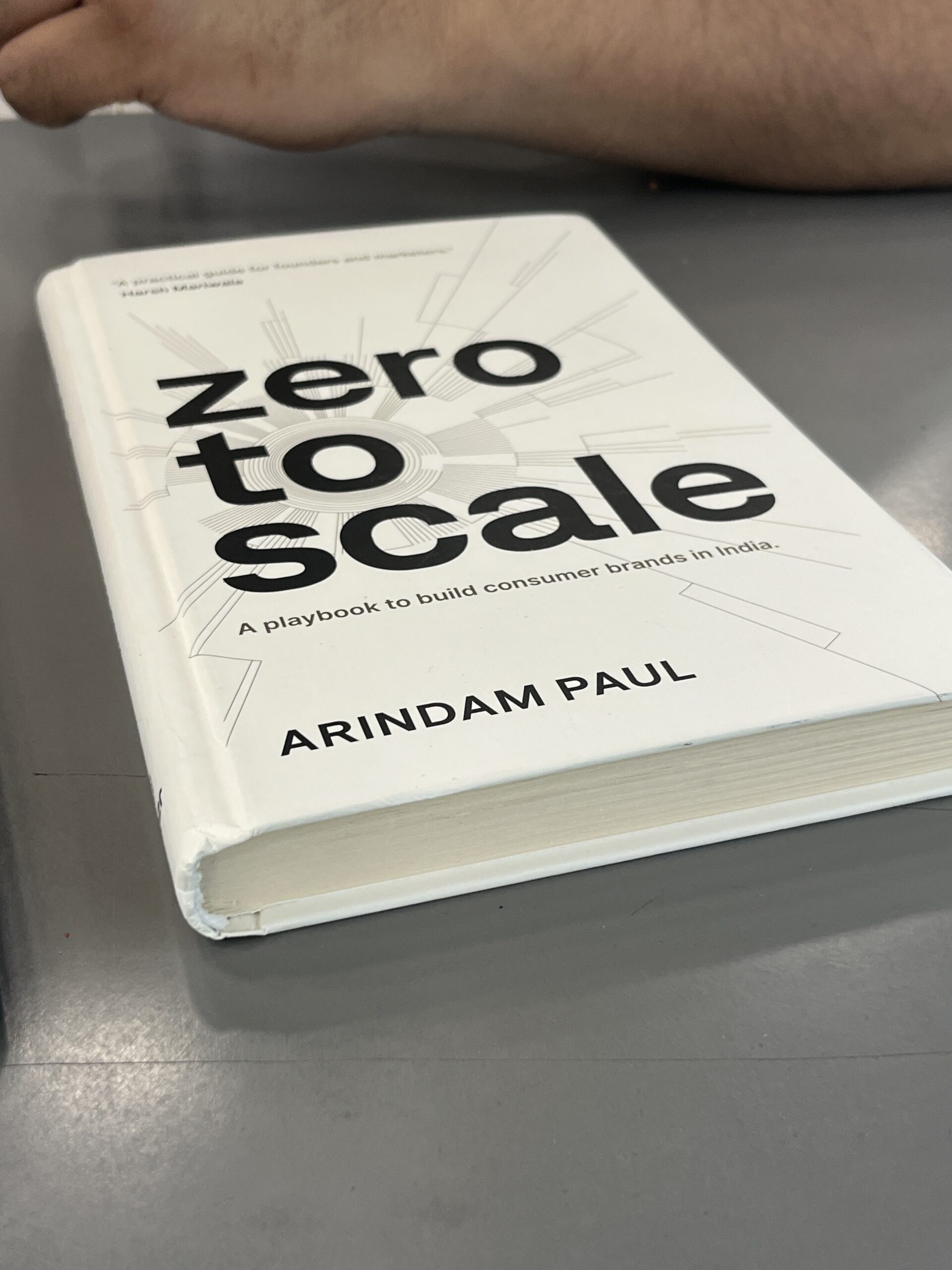

I recently finished reading Zero to Scale, and what I appreciate most about it is its practicality. This isn’t a theory-heavy branding book. It’s a grounded, India-first playbook for anyone trying to build consumer brands in a complex, price-sensitive, hyper-competitive market.
What stood out to me
The book doesn’t romanticize startups. It focuses on the hard realities of scaling — distribution challenges, unit economics, pricing strategy, and operational discipline. There’s a strong emphasis on understanding India not as one market, but as multiple micro-markets stitched together by distribution and aspiration.
Another key takeaway is the importance of getting fundamentals right before chasing growth. The author reinforces that brand building is not just about creative campaigns — it’s about product-market fit, repeat rates, supply chain consistency, and cash flow discipline.
I also liked how the book connects traditional FMCG wisdom with modern D2C thinking. It bridges offline distribution lessons with digital-first growth models without overhyping either.
What this means for a marketer or founder
For marketers, this book is a reminder that scale is not just performance marketing. It’s operations, margins, and consistency. You can’t media-buy your way out of weak fundamentals.
For founders, it’s even more relevant. The path from zero to scale is not linear. It demands structured thinking around positioning, distribution leverage, and disciplined expansion.
My takeaway: Zero to Scale is not flashy — and that’s its strength. It reinforces that enduring brands in India are built through patience, clarity of strategy, and operational depth.
If you’re building or advising a consumer brand in India, this is worth your time.