
Random acts of marketing infographic

Random Acts of Marketing vs. Building a Real System

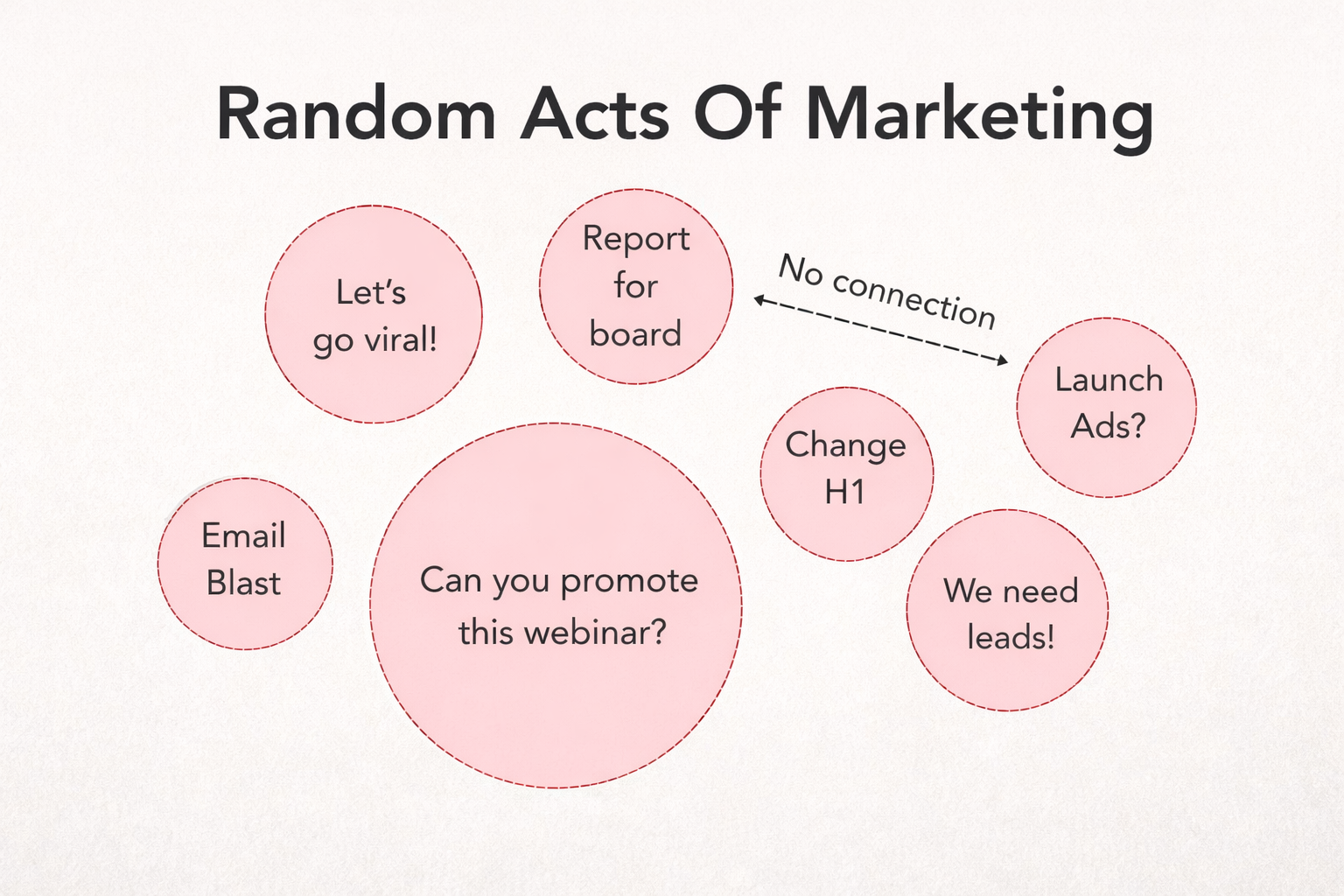
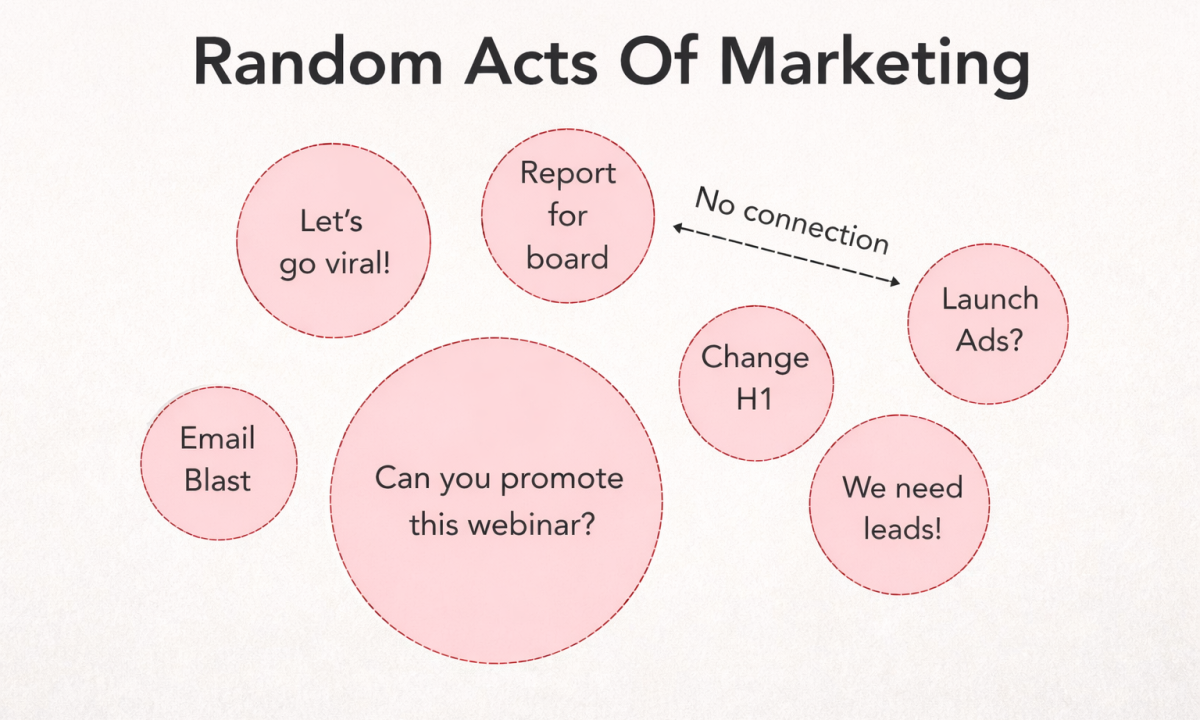
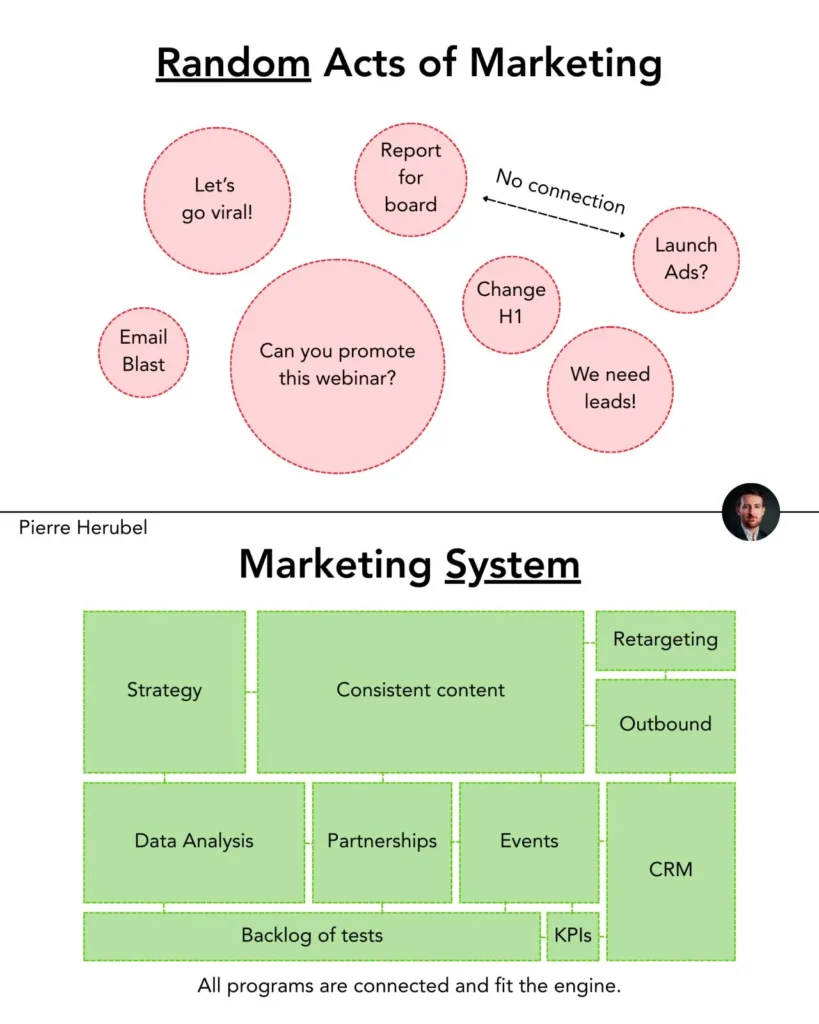
This visual perfectly captures something I see far too often.

On one side:
“Let’s go viral.”
“Launch ads?”
“We need leads!”
“Change the H1.”
“Email blast.”
“Promote this webinar.”

All valid ideas. But disconnected.

This is what I call random acts of marketing — activity without architecture. Every request feels urgent. None of it is anchored to a larger system.

On the other side is what actually drives scale: a marketing system.

Strategy.
Consistent content.
Retargeting.
Outbound.
Data analysis.
Partnerships.
Events.
CRM.
KPIs.
A backlog of tests.

Everything connected. Everything feeding the engine.

What this means for a marketer

The difference between chaos and compounding growth is not budget — it’s structure.

When marketing becomes reactive, teams burn energy but don’t build momentum. When marketing becomes systemic, every activity strengthens something else. Content fuels retargeting. Data sharpens messaging. CRM increases LTV. Tests improve performance.

My takeaway is simple:
If your marketing feels busy but not scalable, you probably don’t have a system — you have tasks.

And tasks don’t compound. Systems do.
Latest Threads...

The Job Even Accountants Want AI to Steal (And Honestly, I Get It) There’s a certain irony in how we talk about AI and jobs. We love debating which glamorous

A 13-Year-Old Outsmarted a Cyber Scam. Most Adults Wouldn’t. I read this and had one immediate thought: We’re not losing to scammers because they’re smart. We’re losing because they’re convincing.

A few years ago, brands were flexing how innovative they were. “Powered by AI.” “AI-generated.” “Next-gen creativity.” Now? They’re proudly saying the exact opposite. “No AI used.” And I can’t

Somewhere along the way, “tracking your health” became a full-time job. Steps. Sleep. Calories. Water. {Mood}. And 47 notifications reminding you that you’re failing at all of them. Irony level:

Artificial Intelligence (AI) is widely promoted as a tool that enhances creativity and efficiency. Yet for many design students, it is increasingly becoming a barrier rather than a benefit. While

Fashion week in 2026 has changed a lot, but the most noticeable shift is in fashion marketing. As a design student, I’ve realised that brands are no longer just focused