
India’s Next E-commerce Revolution Isn’t Coming. It’s Already Here.
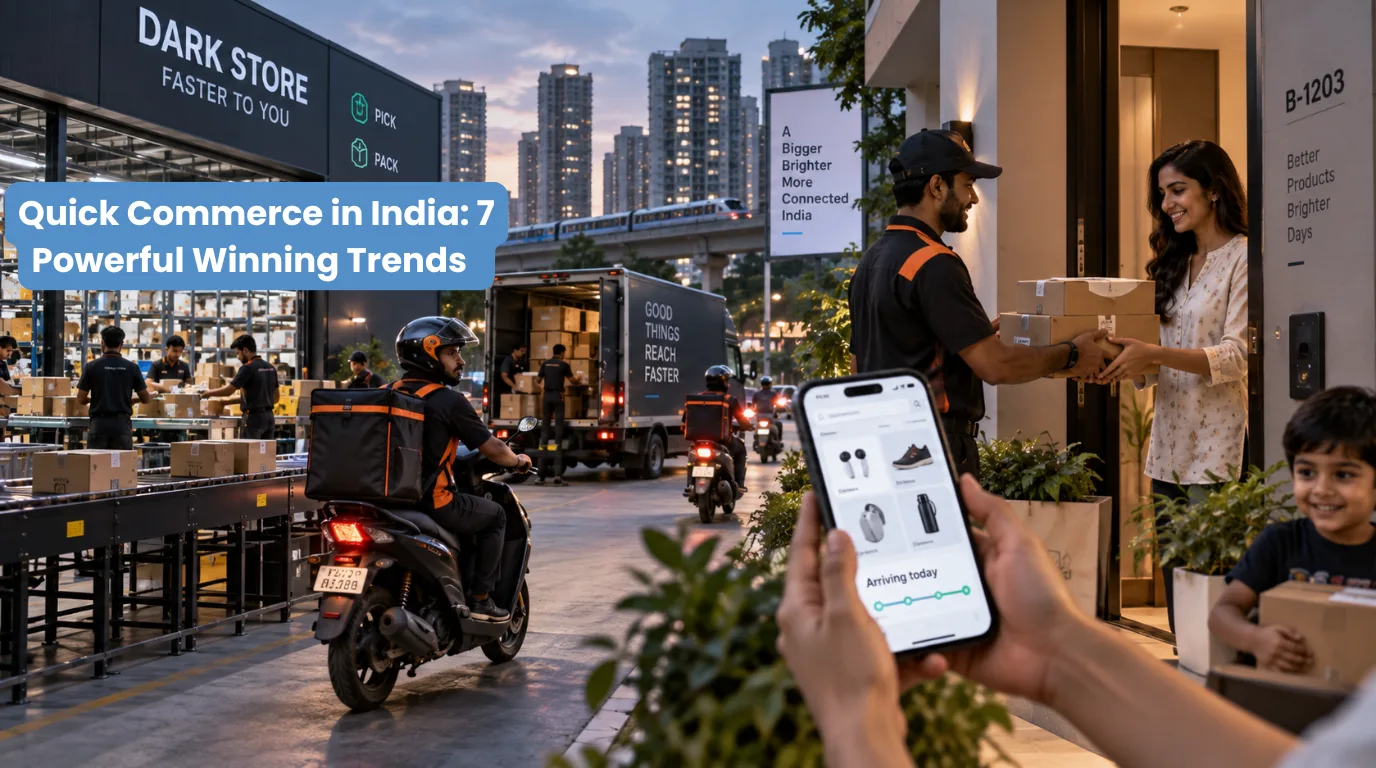
Quick Commerce in India is already transforming how consumers shop and receive products. For years, e-commerce in India was about choice.
Thousands of products, Discounts, Big marketplaces And waiting two or three days for delivery.
Then quick commerce changed the question.
It became:
“Why wait?”
And now, it is changing something even bigger — where and how India shops. According to the report in the image, quick commerce could contribute 45–50% of incremental e-retail growth over the next five years, with the segment potentially reaching $65–70 billion by 2030.
That is one of the most important ideas behind quick commerce in India.
That is not just a growth story. It is a fundamental shift in consumer behaviour.
Quick Commerce in India: The 10-Minute Mindset

Blinkit, Zepto and Swiggy Instamart have trained consumers to think differently.
Need milk?
Order it.
Forgot something for dinner?
Order it.
Need something right now?
Order it.
Convenience is no longer a feature of e-commerce.
Convenience is becoming the product And the interesting part is that quick commerce isn’t just competing with other e-commerce platforms.
It is competing with the neighbourhood store, the supermarket and increasingly, the consumer’s own habit of planning ahead.
The Next Battle Is Beyond Metros
This is perhaps the most interesting number in the entire story.
The report says 66% of new D2C orders in FY26 are expected to come from Tier 2 and Tier 3 cities, compared with 34% from Tier 1 cities. That tells us something important.
India’s next wave of digital consumption may not come from the biggest cities. It may come from Bharat.
As logistics, payments, smartphones and digital awareness improve, smaller cities are becoming increasingly important to the e-commerce growth story And the infrastructure is following
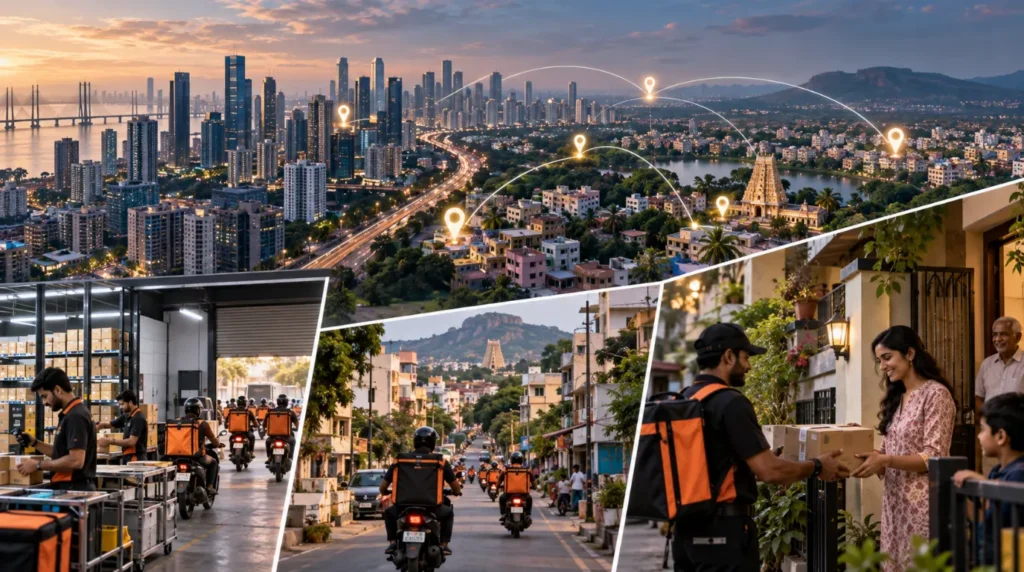
The dark-store network is projected to almost triple — from around 2,525 facilities in 2025 to approximately 7,500 by 2030.
That’s a massive physical footprint being built around one simple idea:
Get closer to the customer Because in quick commerce, the last mile isn’t just logistics.
It is the competitive advantage.
The Bigger Question for Marketers
When delivery becomes faster and products become easier to access, brand loyalty could become harder to maintain.
Why?
Because consumers have more options available instantly. The brands that win may not necessarily be the ones with the biggest advertising budgets.
They may be the ones that understand: What does the consumer want, where are they, and can we put it in their hands right now?
India’s e-commerce story is therefore moving from: “What can I buy online?”
to
“What can I get right now?”
And that tiny change in consumer psychology could create a $65–70 billion opportunity by 2030. Quick commerce isn’t just making delivery faster.
It’s making consumer expectations faster And that’s a much bigger disruption.
India’s quick commerce market growth
As the industry shifts, staying informed about digital trends is essential for anyone. Click through to read another thread!