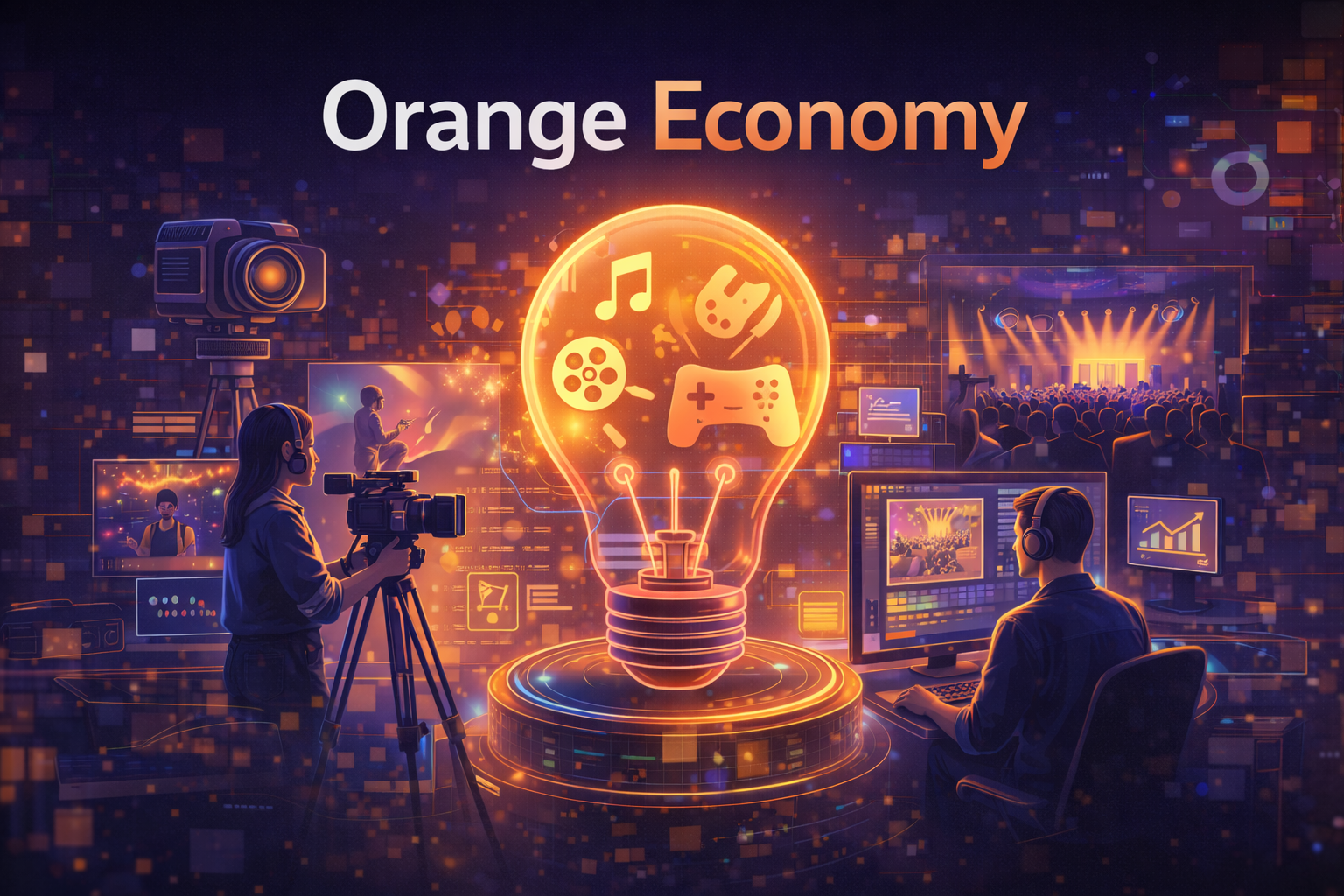
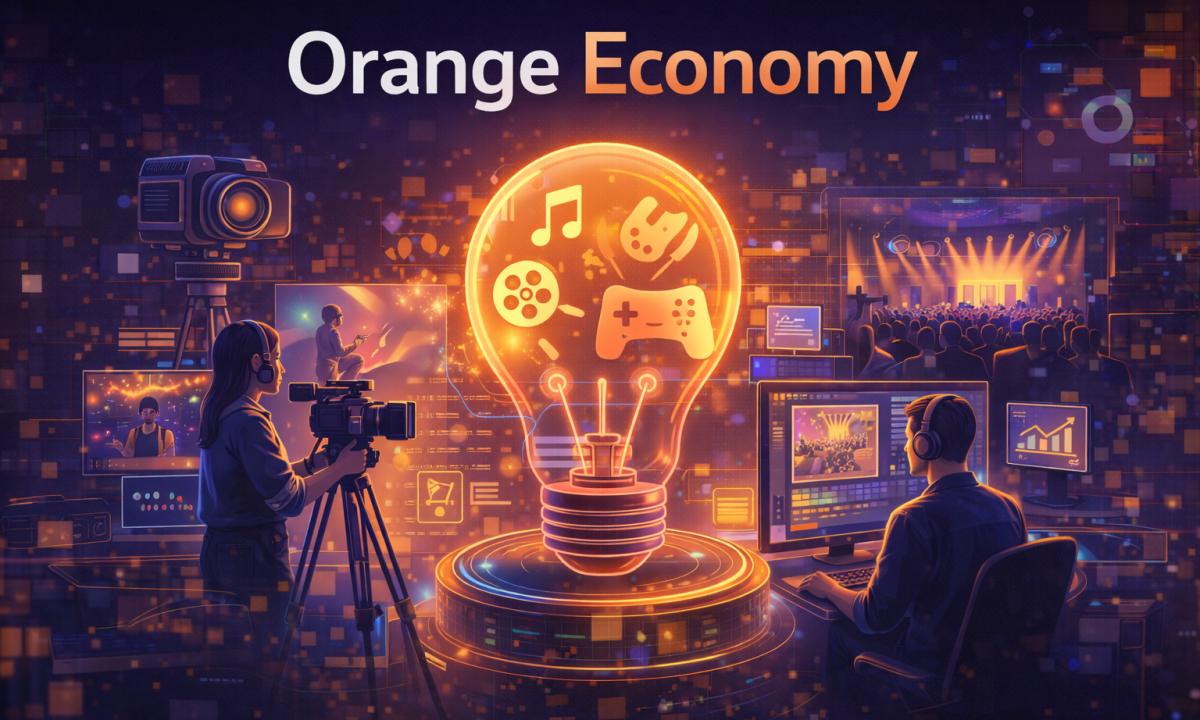

While manufacturing dominated the Economic Survey and Budget headlines, a quieter idea slipped in this year — the orange economy.
The term refers to industries that monetise creativity: music, films, design, gaming, performances, and digital content. And the government just signaled it’s taking this seriously.
The Finance Minister proposed supporting the Indian Institute of Creative Technologies (IICT), Mumbai to set up AVGC (Animation, VFX, Gaming, Comics) creator labs across 15,000 schools and 500 colleges. The goal? Give students hands-on exposure to creative tech before they enter the workforce.
This isn’t just about art. It’s about economics.
Live entertainment alone triggers ripple effects — travel, hospitality, retail, local transport, production, and content creation. The UK already sees music tourism contribute ~0.3% of GDP. Globally, creative industries contribute anywhere from 0.5% to 7% of GDP.
But here’s the real shift for marketers-
Concerts and entertainment today are hybrid experiences — physical + digital. Think:
- AR/VR stages
- Immersive visuals
- Digital fan engagement
- Livestream promotion
- Creator-led amplification
All of this needs marketers who understand content, communities, and digital storytelling.
By 2030, the sector may need ~2 million creative and tech professionals. That includes:
- Content marketers
- Social & community managers
- Performance marketers for entertainment brands
- Creator partnership managers
- Brand storytellers
- Experiential marketers
In short, the orange economy isn’t just a cultural play — it’s a talent and hiring signal.
India is preparing for a future where creativity, content, and marketing skills directly drive economic growth.
And for marketers, that future is hiring.