
I was going through recent data on misinformation in India, and the trend is worrying. Despite laws and fact-checking units in place, fake news cases have continued to rise — and AI could make the challenge even more complex going forward.
Key Highlights
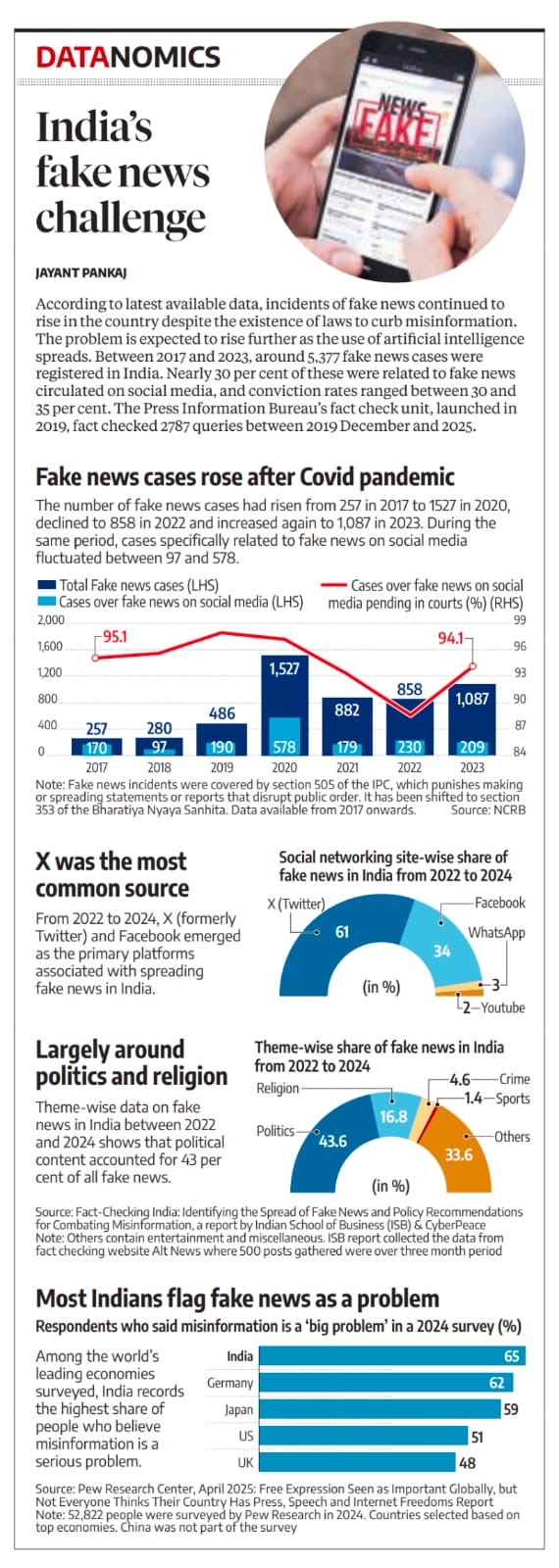
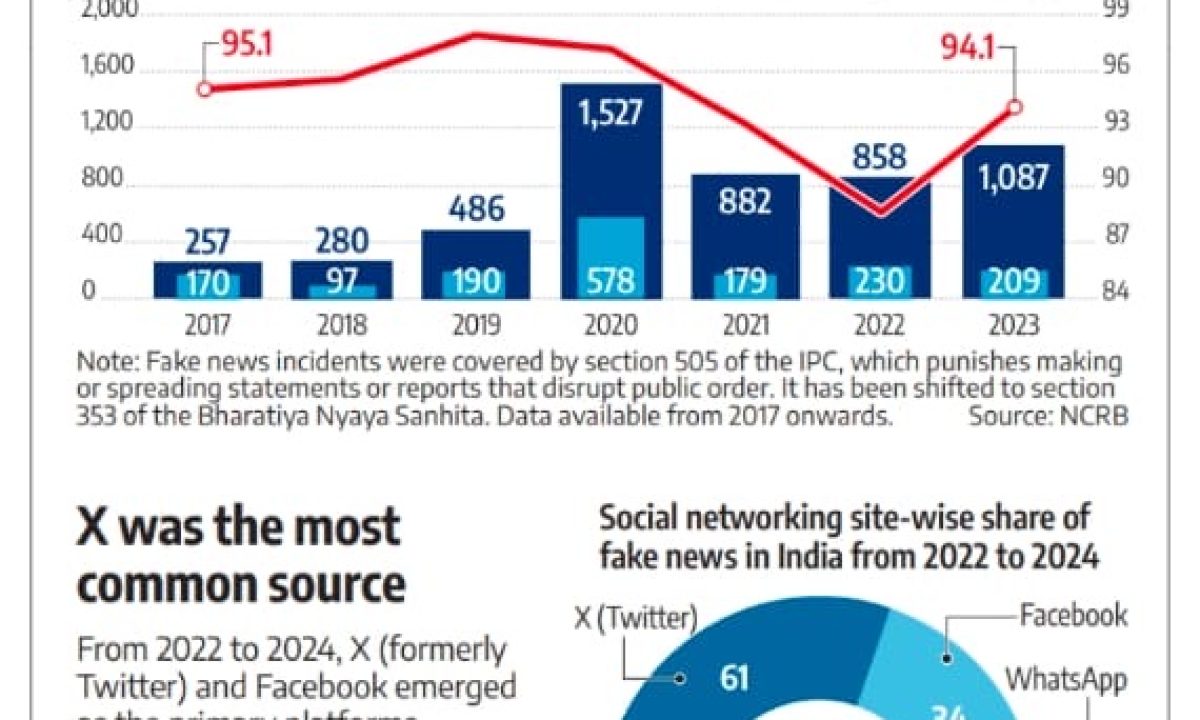
Between 2017 and 2023, over 5,300 fake news cases were registered in India. The spike post-Covid is particularly noticeable. Cases jumped sharply in 2020, dipped slightly, and then rose again in 2023.
Social media remains central to the issue. A significant portion of fake news cases are linked to online platforms. From 2022 to 2024, X (formerly Twitter) emerged as the most common source, followed by Facebook and WhatsApp.
When you look at themes, politics dominates — accounting for roughly 43% of fake news cases. Religion follows. That tells me misinformation isn’t random; it clusters around emotionally charged, high-engagement topics.
Another striking insight: in a 2024 global survey, India recorded the highest percentage of respondents who believe misinformation is a “big problem.” Public awareness is high — but the scale of spread remains higher.