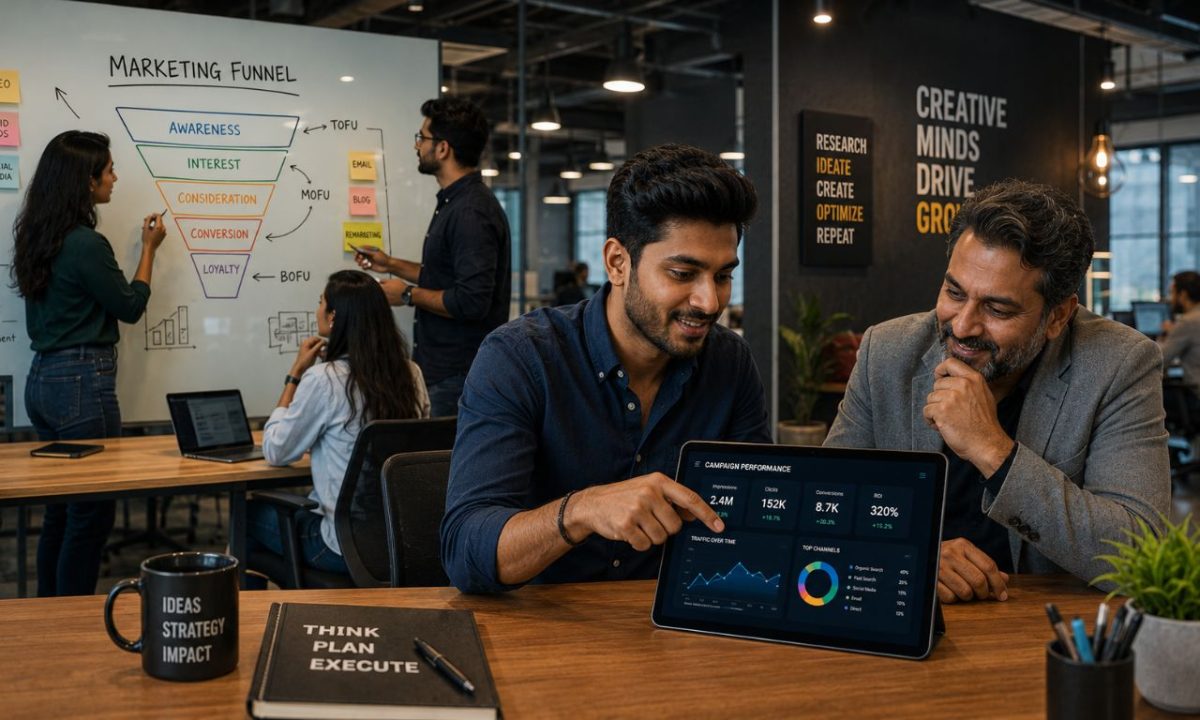

Impact of Remote Work on Career Growth – Harder for Fresh Graduates?
One of the biggest workplace debates over the last few years has been whether remote work is more productive than working from the office.
Personally, I think we’ve been asking the wrong question.
The real question is: Who benefits the most from remote work—and who doesn’t?
A recent landmark survey by Universum analyzing over 18,000 workers suggests that while experienced professionals continue to thrive in distributed environments, fresh graduates may be paying a hidden price. The silent, negative impact of remote work on career growth for young professionals isn’t a drop in productivity.
Instead, it is a drop in unstructured, organic learning
The Hidden Impact of Remote Work on Career Growth
When people think about an office, they often imagine meetings, desks, and coffee machines. I think the real value of an office has always been something much harder to measure. Learning by observation.
Understanding the structural impact of remote work on career growth requires looking past day-to-day task execution. Early-career professionals do not develop simply by reading manuals; they absorb critical corporate soft skills naturally through proximity.
Watching how senior colleagues handle difficult clients. Listening to conversations you weren’t invited to. Picking up communication skills simply by being around experienced professionals.
These aren’t things you’ll find in a training manual. They’re absorbed naturally. And that’s exactly what many fresh graduates are missing today.
Experience Can’t Always Be Scheduled
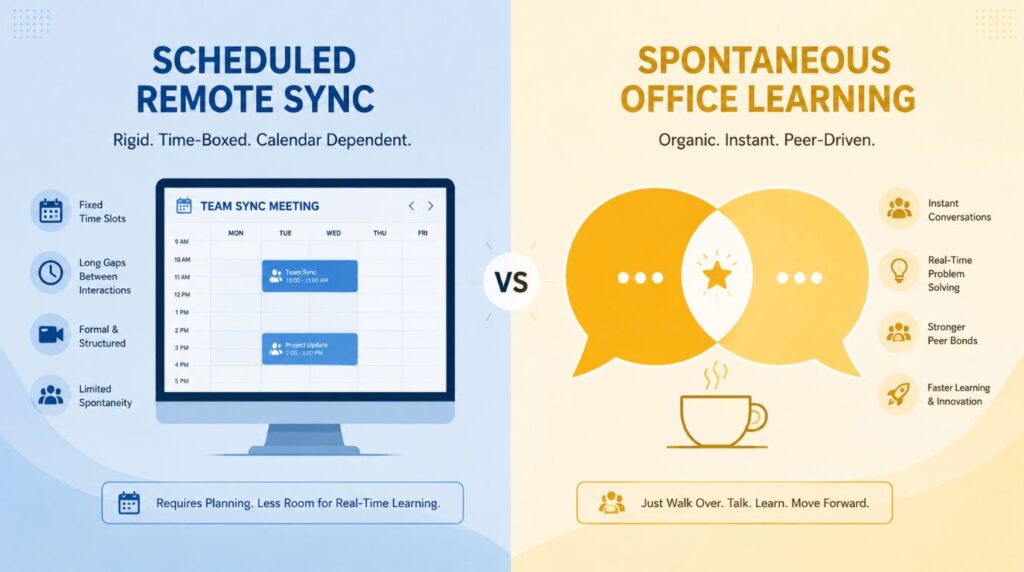
A Zoom sync teaches you the designated agenda. An office teaches you everything that happens before and after it.
The casual hallway conversations, the quick whiteboard brainstorming sessions, and the unexpected mentoring moments are critical drivers of the impact of remote work on career growth.
Remote work has made collaboration easier. But it has also made spontaneous learning much harder.
Networking Begins Inside the Office
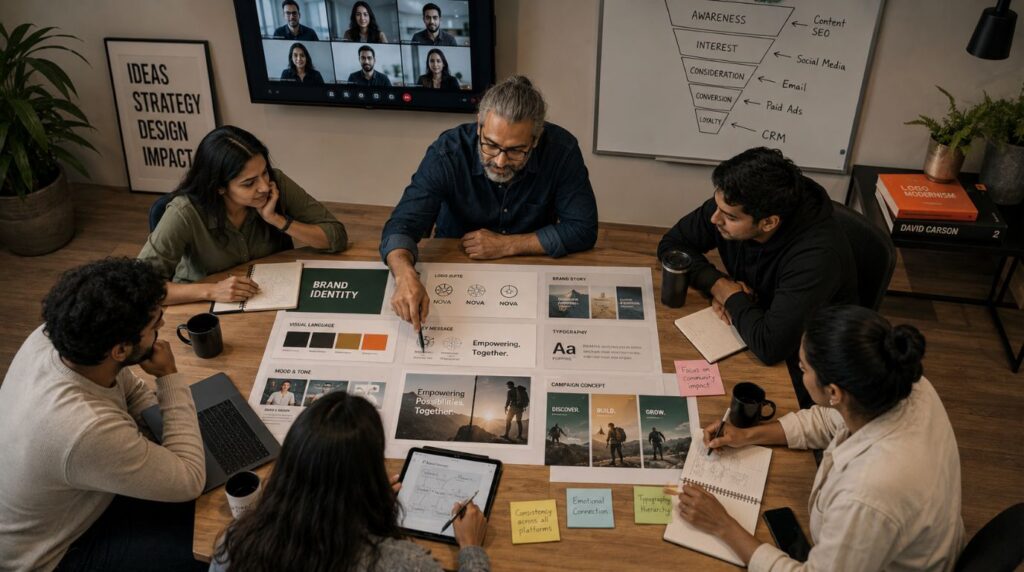
One of the biggest career accelerators isn’t your resume. It is your relationships.
Many life-changing opportunities come from people who know your working style, ethics, and potential before your LinkedIn profile does. This is where the compounding impact of remote work on career growth becomes most visible: when tasks are delivered efficiently, but professional networks are left empty.
Fresh graduates working remotely miss out on building those organic, cross-departmental professional relationships. Proximity bias is a real, documented force—managers are naturally inclined to promote, mentor, and sponsor the people they see, hear, and interact with regularly.
The Marketing Lesson
As marketers, we’ve always believed that ideas grow through collaboration. Some of the best campaigns don’t begin in formal meetings. They emerge during hallway conversations, coffee breaks, or someone casually saying, “What if we tried this instead?”
Creativity often needs proximity. Technology can enable collaboration. It cannot completely replace human interaction.
My Take
I’m not against remote work. In fact, for experienced professionals, it can be incredibly productive. But for someone just starting their career, the office is more than a workplace. It’s a classroom.
The future of work probably isn’t fully remote or fully office-based. It’s about finding the right balance. Because while work can happen from anywhere, experience is still built around people.
And sometimes, the most valuable lesson you’ll learn isn’t in the meeting. It’s in the conversation after it.
As the industry shifts, staying informed about the latest skills-first hiring news is essential for anyone. Click through to read more such threads!