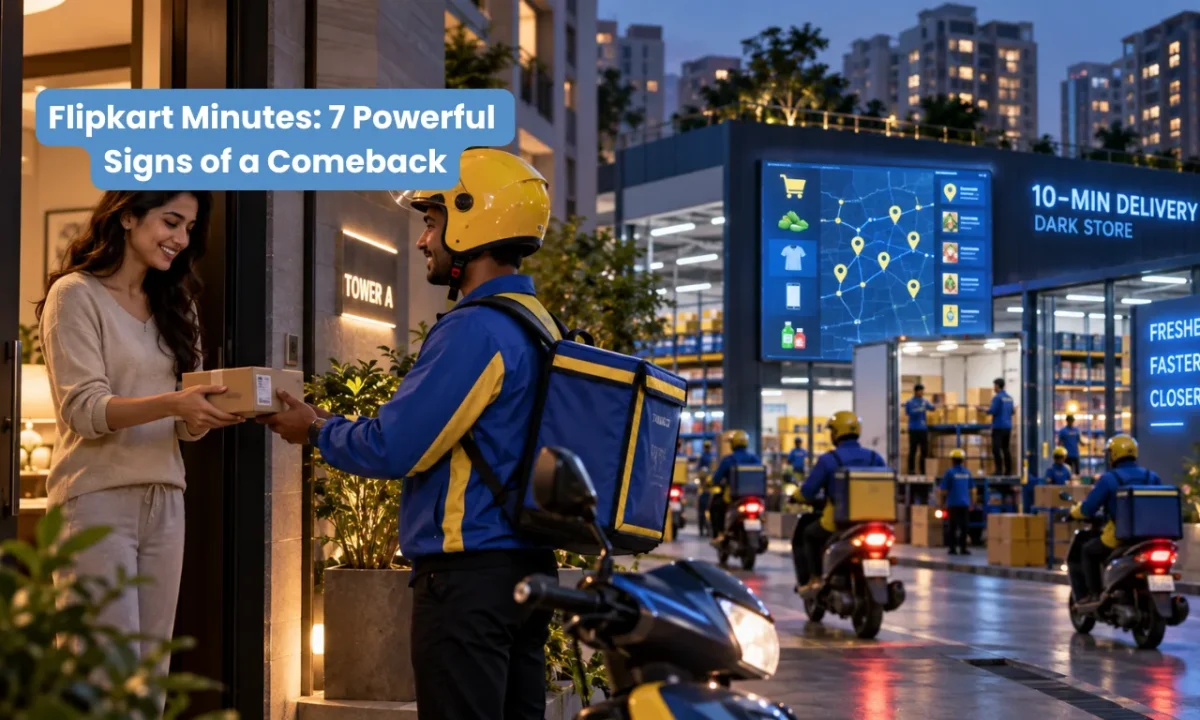

Is this the Flipkart comeback?
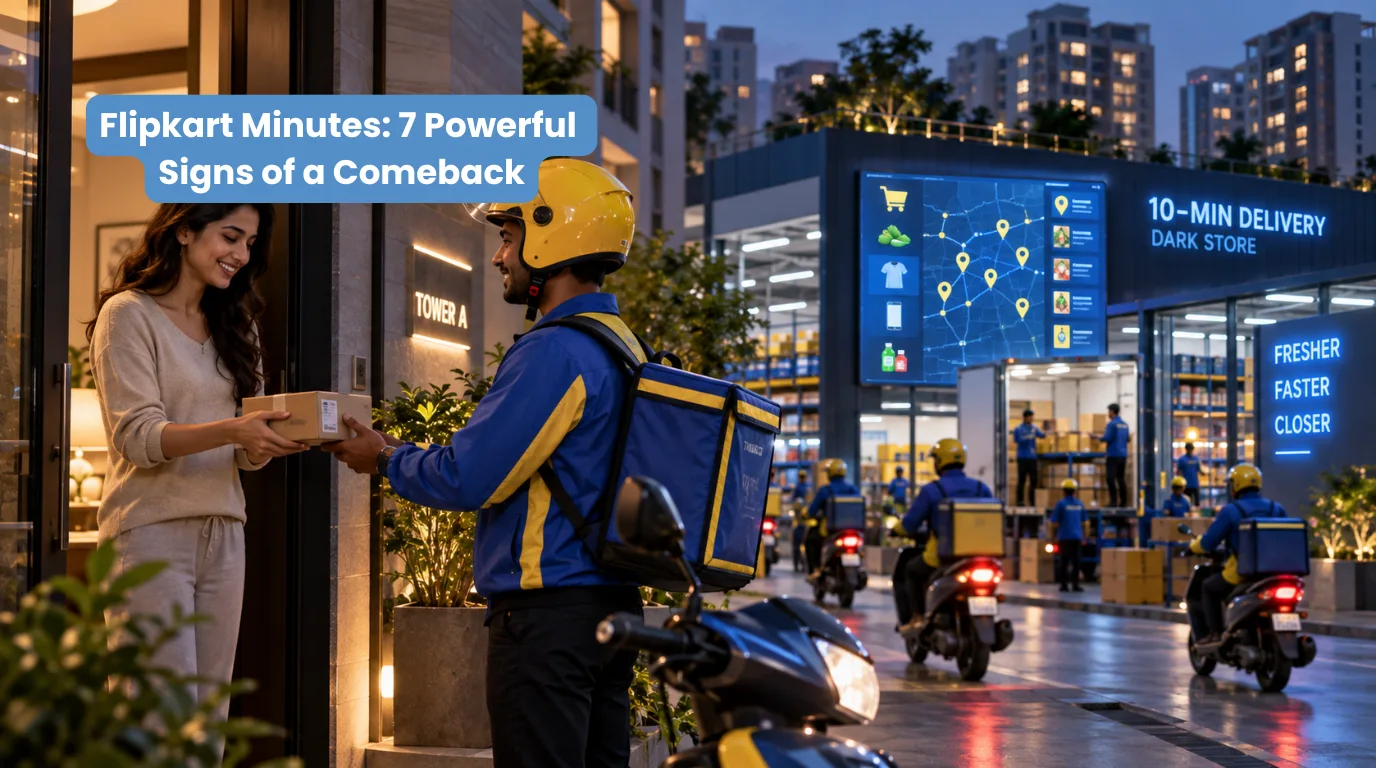
India’s quick-commerce story has already moved far beyond Blinkit, Zepto and Swiggy Instamart. Now, two of India’s biggest e-commerce giants are going head-to-head in the race for your 10-minute order.
Flipkart Minutes and Amazon Now are scaling their dark-store networks—and the interesting part is that this battle isn’t simply about who can open more stores. It is about how efficiently those stores can generate orders.
The Dark-Store Race is Heating up
According to the snapshot, Blinkit currently has around 2,443 dark stores, while Instamart and Zepto have around 1,171 and 1,139 respectively.
Flipkart Minutes has already crossed 1,000 stores, while Amazon Now has around 500–600 but the targets are ambitious.
Flipkart Minutes is targeting roughly 2,000 stores by mid-2027, while Amazon Now is targeting around 1,000 by the end of 2026. Clearly, both companies believe quick commerce is no longer a niche experiment.
It is becoming an important part of Indian e-commerce. But here’s the number I find more interesting Orders per store per day.
Because opening dark stores is relatively straightforward if you have capital. Making every store productive is much harder.
The snapshot shows Zepto at around 2,071 orders per store per day, while Blinkit is around 1,600.
Flipkart Minutes currently averages around 800–1,000, with mature stores reportedly reaching 1,200–1,500. Amazon Now is currently around 700–850 and this is where the real battle may be decided.
Scale doesn’t Automatically Mean Success
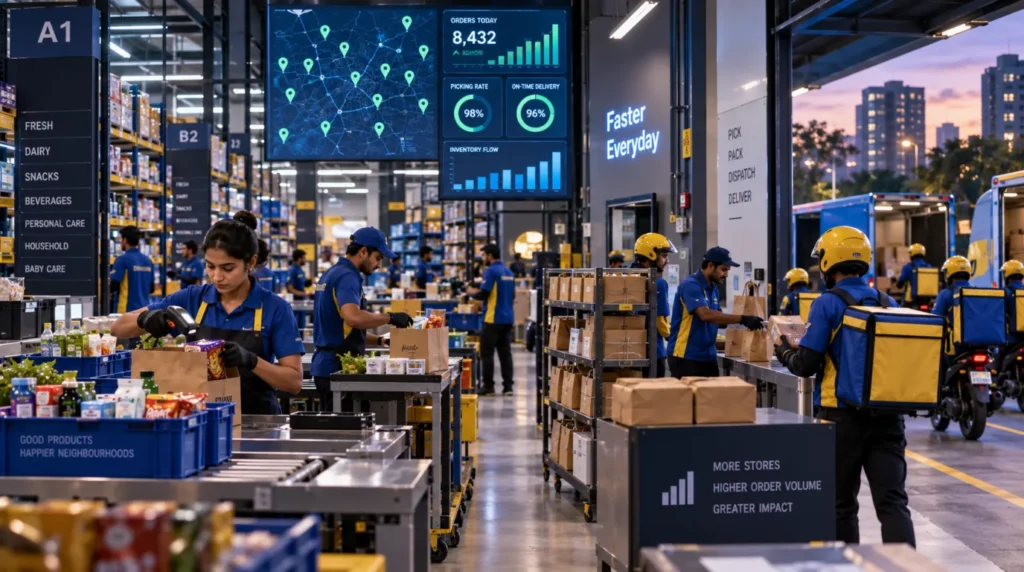
A dark store is essentially an expensive promise.
- You pay for the real estate.
- You stock the inventory.
- You hire people.
- You build the delivery network.
And then you have to generate enough orders from that location to make the economics work. That’s why store productivity could eventually matter more than store count.
A company with 2,000 stores isn’t necessarily winning if another company can generate significantly more orders from every store it operates.
Flipkart Minutes has an interesting advantage
Flipkart already has something Amazon and the newer quick-commerce players can’t easily replicate:
a massive e-commerce customer base. The challenge is converting that existing relationship into a quick-commerce habit.
Because buying a ₹500 item on an e-commerce platform and ordering ₹200 worth of groceries in 10 minutes are two very different consumer behaviours.
Quick commerce is about frequency. You don’t need consumers to make one large purchase. You need them to keep coming back.
And Amazon isn’t going to sit this one out
Amazon Now’s expansion suggests that Amazon sees the same opportunity. With platforms like Flipkart Minutes entering the race, the battle for 10-minute deliveries is heating up.
The question is whether its enormous existing ecosystem can help it build enough density quickly enough to compete with companies that have spent years optimising the quick-commerce model. And that’s what makes this market fascinating.
The incumbents have customers. The specialists have density.
Now everyone is fighting for frequency. New players like Flipkart Minutes are entering the market to win this frequency game.
The next phase of quick commerce and Flipkart Minutes
I think the Indian quick-commerce market is entering its next phase. The first phase was:
“Can we deliver in 10 minutes?”
The second became:
“How many dark stores can we build?”
The next question will be:
“Can we make the economics work at scale?”
- That means better inventory utilisation.
- Higher orders per store.
- Lower delivery costs.
- Smarter assortment.
And, perhaps most importantly, habit. Because ultimately, quick commerce isn’t a logistics business.It is a consumer behaviour business powered by logistics.
And when Flipkart and Amazon enter a market already shaped by Blinkit, Zepto and Instamart, the winner may not be the company with the most stores and it explains why Flipkart Minutes is investing so aggressively.
It may be the one that becomes the default app sitting on your home screen when you suddenly realise you need something—right now.
India’s 10-minute economy is getting crowded and for consumers, that’s probably going to mean one thing: The battle for convenience is only getting started.
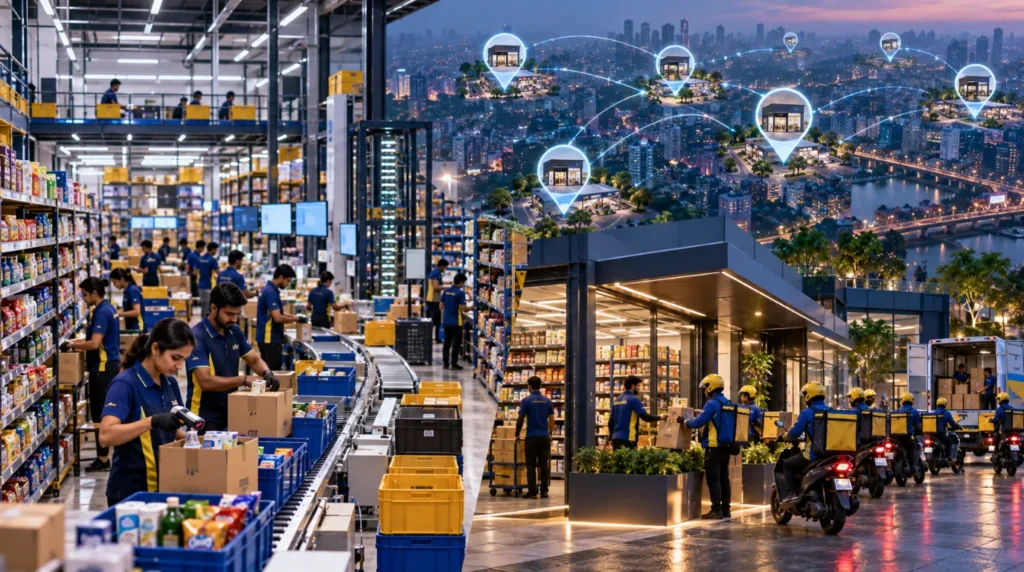
Flipkart Minutes’ 1,000 micro-fulfilment centres
As the industry shifts, staying informed about digital trends is essential for anyone. Click through to read another thread!