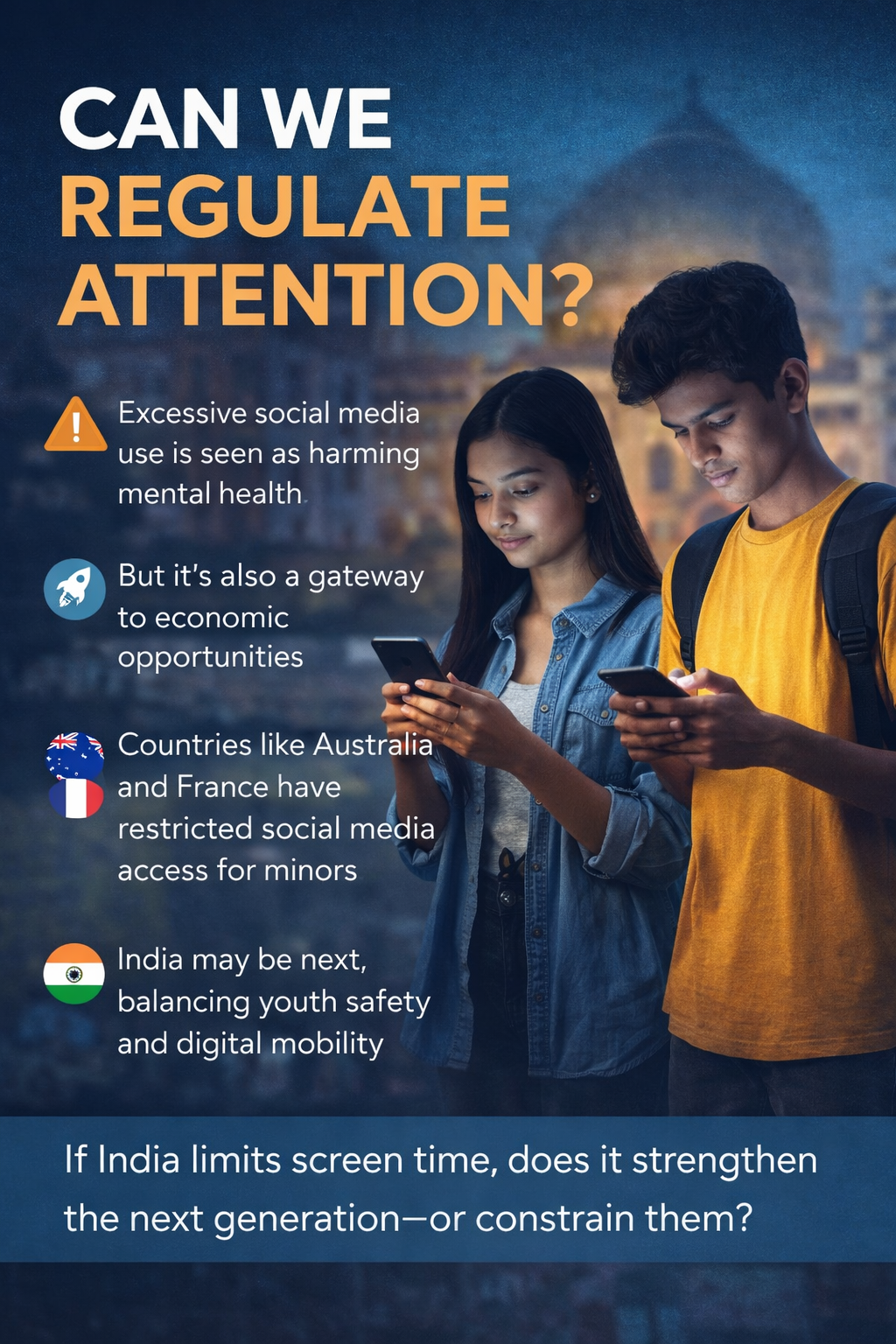

What started as a moral panic about teenagers glued to their phones is slowly turning into policy.
Australia and France are already moving to restrict social media access for minors. India may not be far behind.
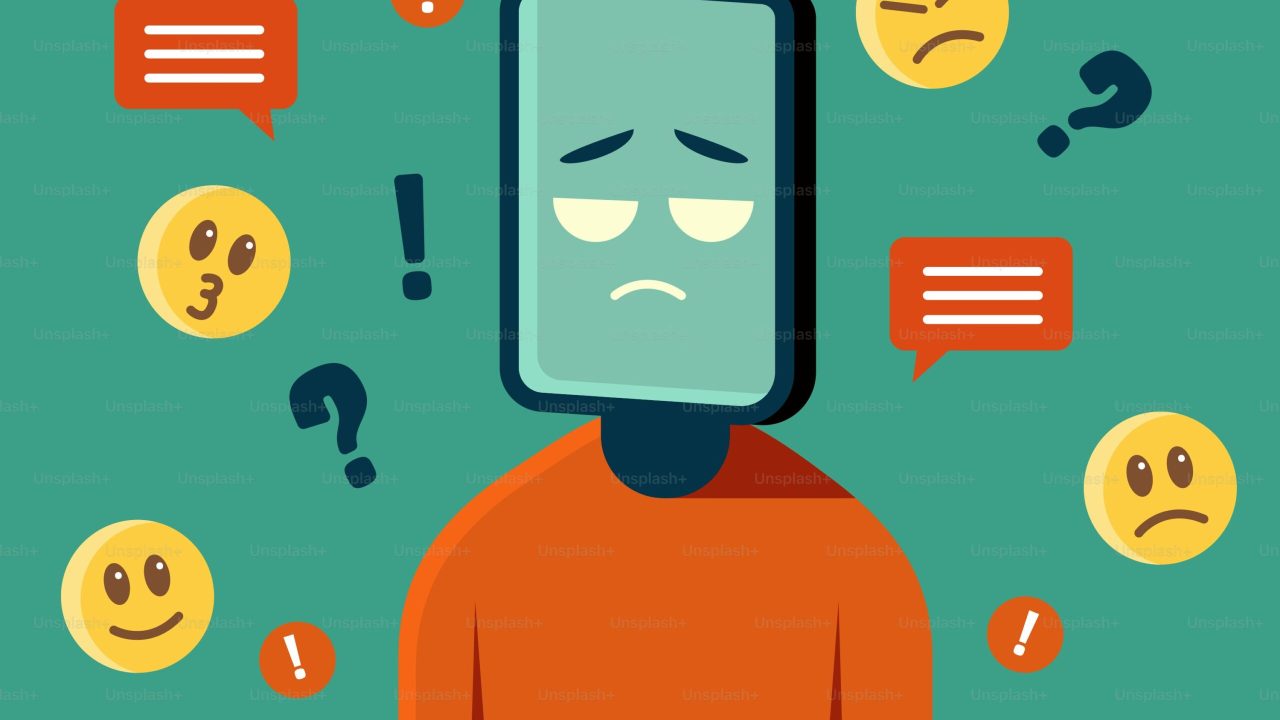
The argument sounds straightforward: excessive screen time impacts mental health, attention spans, and productivity. If we regulate access early, we protect young minds.
But here’s where it gets complicated.
For millions of young Indians, social media isn’t just distraction. It’s distribution. It’s education. It’s income. It’s networking. It’s access.
Creators are building careers before graduation. Freelancers are finding clients. Students are learning skills outside classrooms. Small-town entrepreneurs are discovering markets that didn’t exist a decade ago.
So when we talk about regulating attention, we’re not just debating mental health policy. We’re debating digital mobility.
The real question
Is the goal to reduce harm — or to control exposure?
Because attention today is infrastructure. It fuels creator economies, D2C brands, influencer-led commerce, and even political participation. Restricting it may reduce noise, but it may also reduce opportunity.
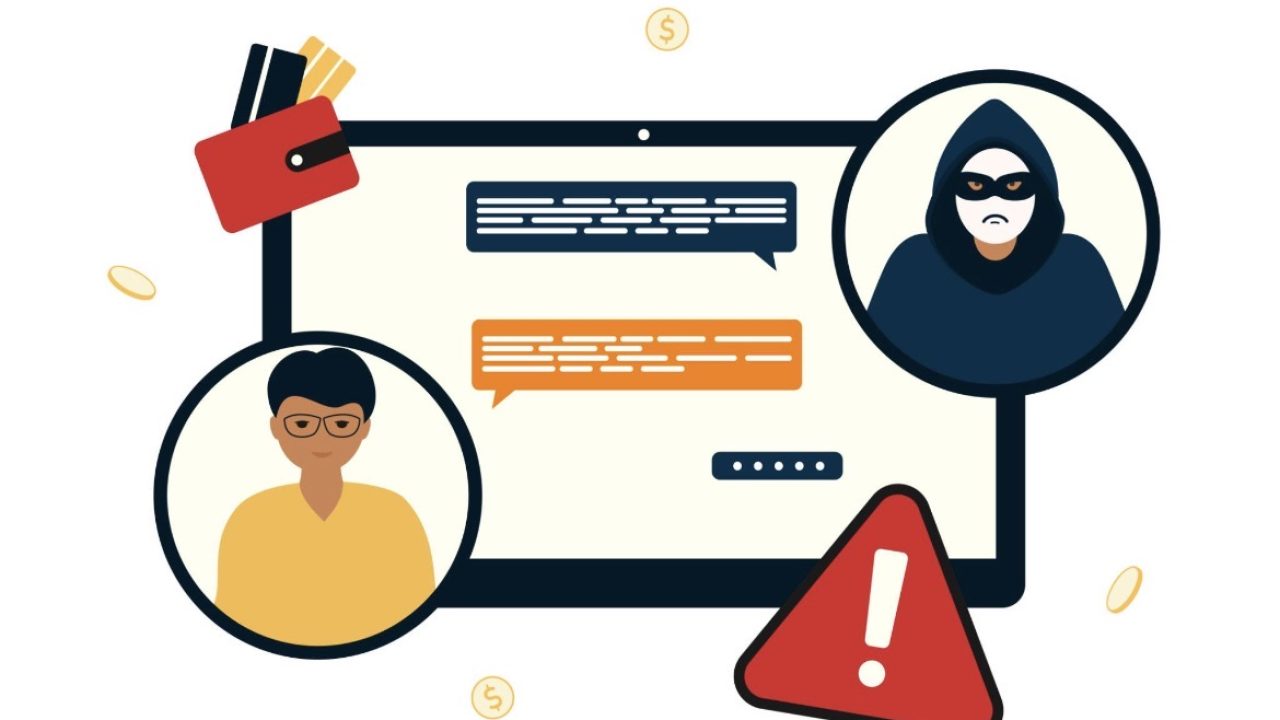
At the same time, unregulated attention markets reward outrage, addiction loops, and algorithmic manipulation. That has cognitive and economic costs too.
What this means for India
India’s demographic dividend depends on digital fluency. But it also depends on focus, skill-building, and mental resilience.
The policy challenge isn’t “ban or allow.”
It’s: how do we design systems that protect young users without shrinking digital ambition?
If India intervenes, the move won’t just shape screen time. It will shape human capital.
And that’s a much bigger debate than teenagers and phones.