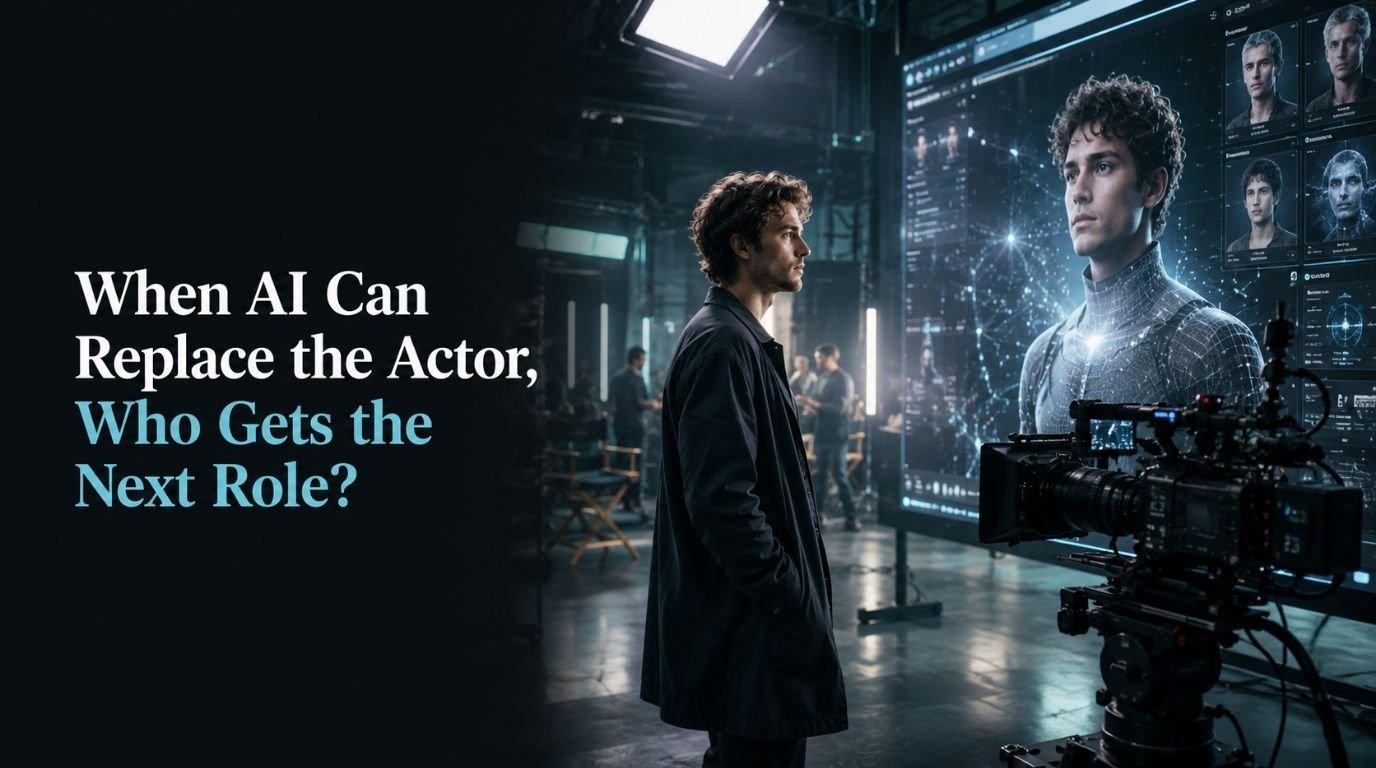
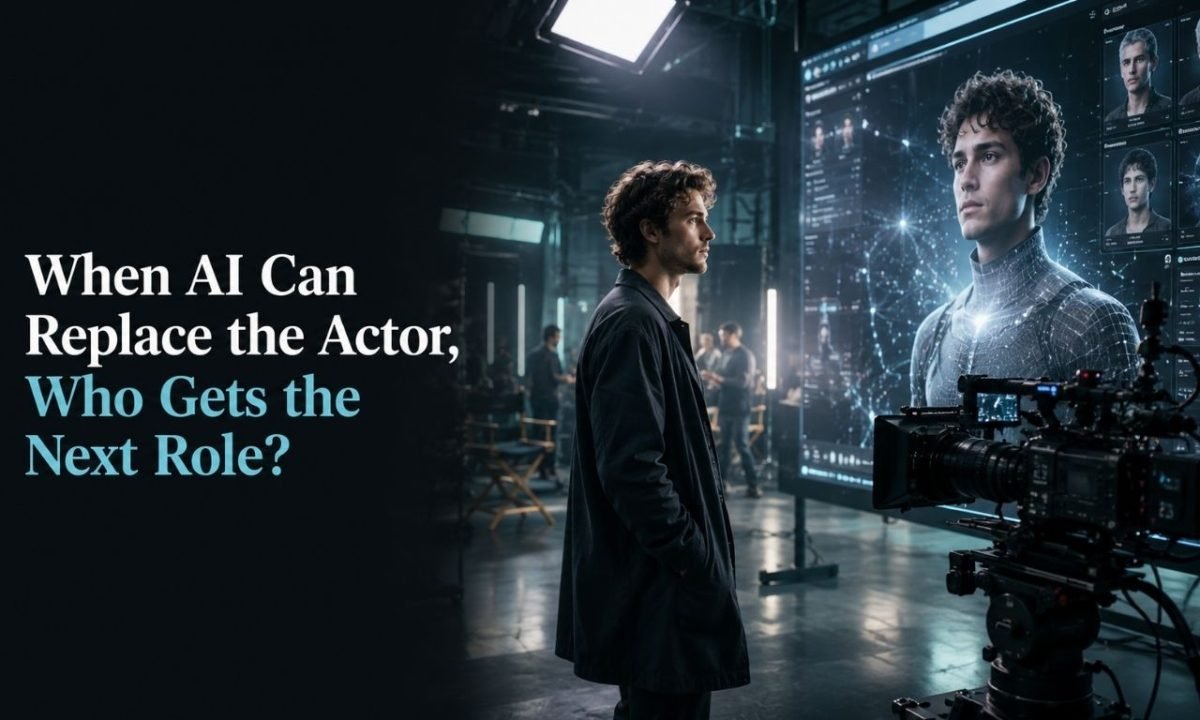

When AI Can Replace the Actor, Who Gets the Next Role?
For years, we heard that AI would transform creative industries.
Now, in China, it appears to be doing something more disruptive:
It is starting to replace the people who make the content.
A recent report highlights how AI-powered video generation tools such as ByteDance’s Seedance 2.0 are changing China’s booming short-drama and influencer economy.
And the speed of that change is hard to ignore.
From three productions a week to… zero
The article quotes Beijing-based actor and producer Greg Wollner, who was previously shooting three productions a week.
After the release of Seedance 2.0, he says:
“And after that, everything just went.”
That isn’t just a technology story.
It is a livelihood story.
Wollner says many of his friends had to stop doing what they loved and find something else.
And the numbers suggest this isn’t an isolated case.
According to the report, 89 of the top 100 animated dramas on Douyin in May were AI productions, citing marketing analytics company DataEye.
The economics are changing first
The biggest advantage of generative Artificial Intelligence isn’t necessarily that it creates something humans can’t.
It is that it can potentially create content:
Faster. Cheaper. At scale.
A production that previously required actors, cameras, locations, editors and multiple rounds of coordination can increasingly be created through software.
For brands and platforms, that’s an incredibly attractive proposition.
For the people whose jobs sit inside that production chain, it is a very different equation.
But here’s the interesting part
This isn’t really about Artificial Intelligence versus actors.
It is about what happens when the economics of creativity change.
We’ve already seen this happen with photography, graphic design, music production and digital publishing.
Every technological shift reduces the value of some skills while creating demand for others.
The uncomfortable question is:
Which creative skills will Artificial Intelligence make abundant—and which will become scarce?
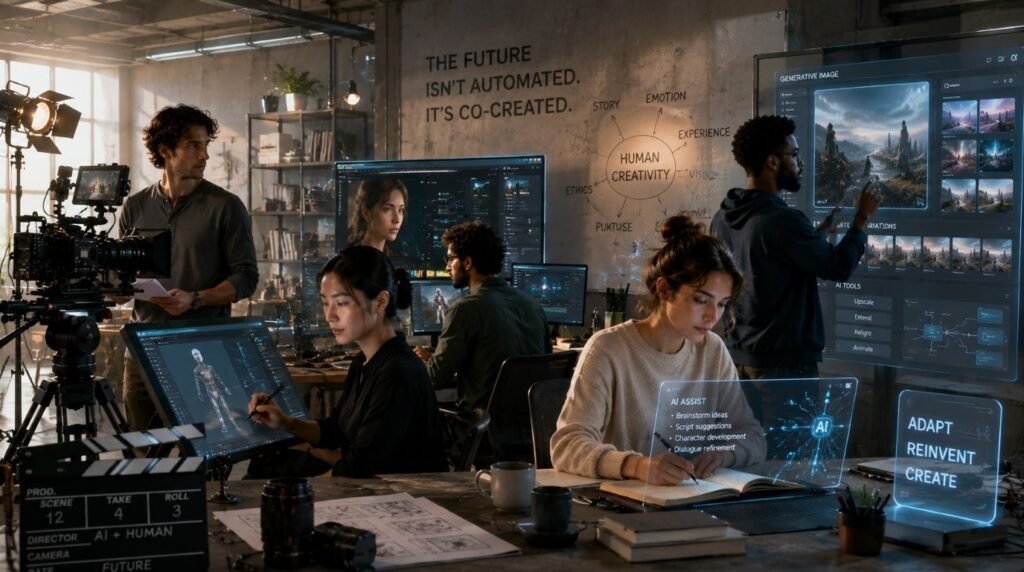
Perhaps acting won’t disappear.
Perhaps generic acting becomes cheaper while distinctive personalities become more valuable.
Perhaps production jobs decline while creative direction, storytelling and AI-assisted production explode.
Or perhaps the industry changes in ways we haven’t anticipated yet.
The creator economy is entering a new phase
For years, the internet made it possible for one person to become a media company.
Artificial Intelligence could take this one step further.
One person + AI could become an entire production studio.
That has enormous creative potential.
But it also creates an uncomfortable paradox:
The same technology that gives more people the ability to create could simultaneously reduce the number of people needed to create professionally.
And that’s the real Artificial Intelligence jobs conversation we should be having.
Not simply:
“Will Artificial Intelligence take our jobs?”
But:
“When the cost of creating something approaches zero, what happens to the value of the people who used to create it?”
That’s a much harder question.
And China’s short-drama industry may be giving us an early preview of the answer.
As the industry shifts, staying informed about AI trends is essential for anyone. Click through to read another thread!