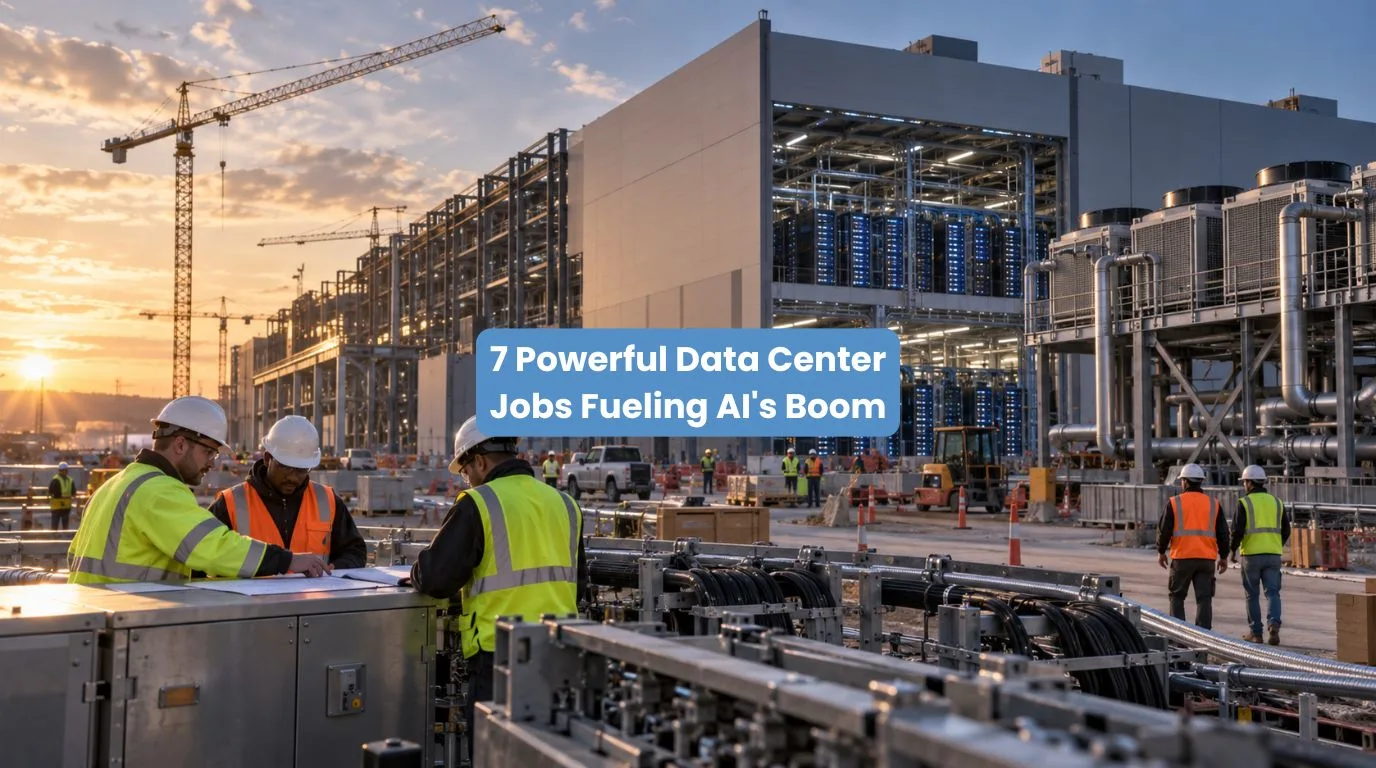

7 Powerful Data Center Jobs Fueling AI’s Boom
Behind every large AI model, cloud platform and generative AI application is a massive physical infrastructure of servers, power systems, cooling equipment, networking hardware and buildings. And building that infrastructure requires people. That is why data center jobs are becoming an increasingly important part of the AI economy.
For years, the AI debate has largely been about white-collar jobs—software developers, analysts, designers, writers, and other knowledge workers. But there is another side to the AI boom that is becoming increasingly difficult to ignore: The race to build data centres is creating huge demand for blue-collar workers.
The article highlights a growing battle in the US over data-centre construction. As companies build massive facilities to support AI infrastructure, construction trades, unions and skilled workers are finding themselves at the centre of the debate.
The AI Economy Needs More Than Engineers
Every new AI data centre requires much more than servers and software.
It needs electricians, mechanical workers, pipefitters, construction workers, technicians and a huge ecosystem of people involved in building and maintaining these facilities. That is creating an interesting contradiction.
AI may replace some jobs—but the infrastructure powering AI is creating entirely new ones.
The growth of data center jobs reflects this reality.
The Politics of AI is Changing
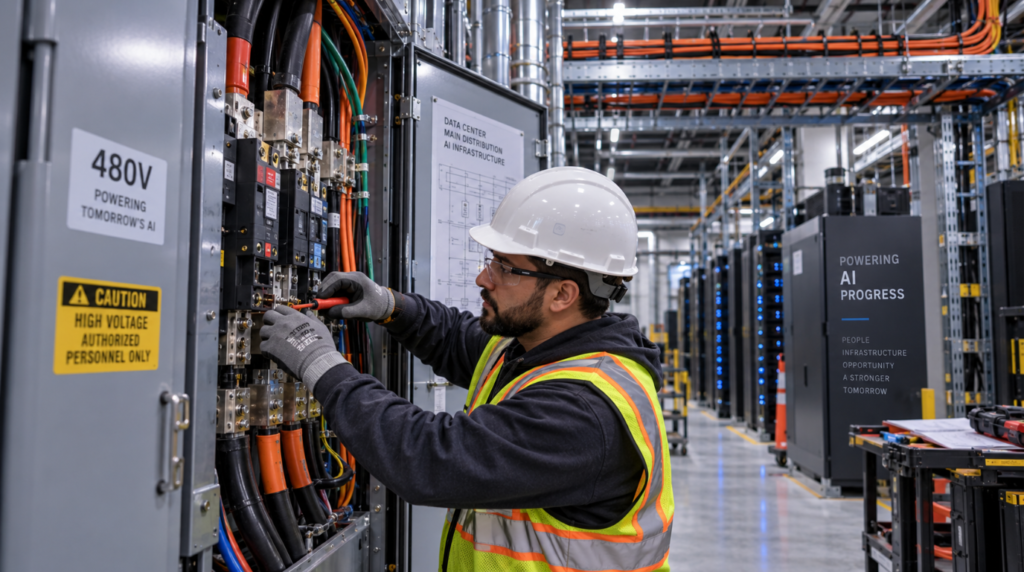
The backlash against data centres has traditionally focused on electricity consumption, water usage, noise and their impact on local communities.
Now, employment is becoming another major battleground.
Construction unions and trade groups are warning that opposition to data-centre projects could put thousands of building-related jobs at risk. Some are even reconsidering traditional political alliances in favour of candidates supporting construction.
This makes the AI debate much more complicated.
It isn’t simply: Humans vs AI.
It is increasingly: Which humans benefit from building the AI economy—and which ones don’t?
The Overlooked AI Opportunity
There is a tendency to think that the future of AI belongs exclusively to people who can code. That may be one of the biggest misconceptions.
The AI infrastructure economy requires people with physical, technical, and specialised skills—from installing electrical systems to maintaining sophisticated cooling and mechanical infrastructure.
In other words, the AI revolution isn’t happening only inside laptops. It is being built on construction sites.
The Bigger Question
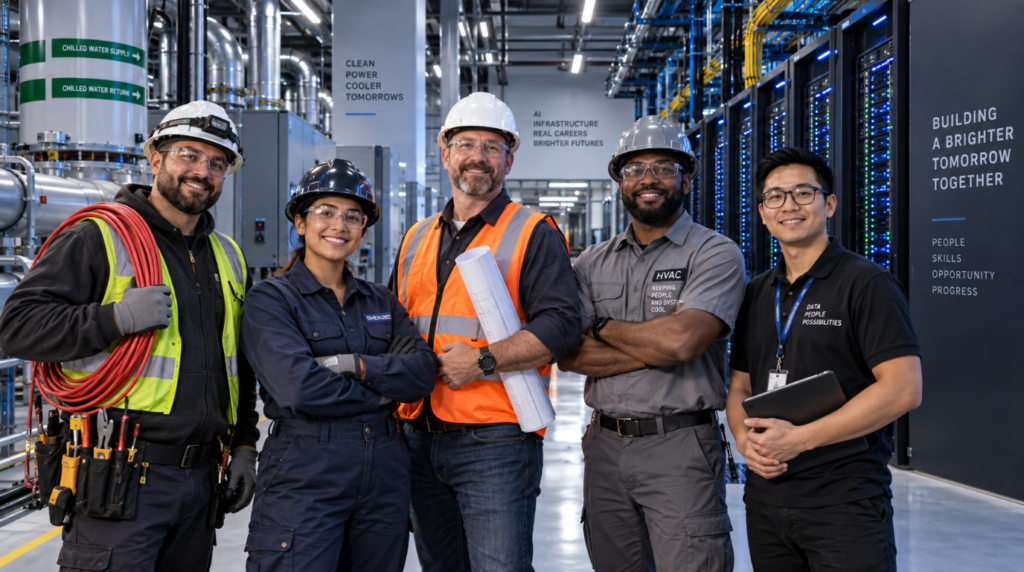
The real AI jobs story may therefore be less about “How many jobs will AI eliminate?” and more about: “What new jobs will the AI economy create—and do people have the skills to take them?”
As billions continue to flow into AI infrastructure, blue-collar workers could become some of the most important people in the technology boom.
The future of AI might not just be coded by engineers. It could be built by electricians, technicians, pipefitters and construction workers. And perhaps that is the most unexpected twist in the AI jobs story.
U.S. Bureau of Labor Statistics’ electrician outlook
As the industry shifts, staying informed about the latest skills-first hiring news is essential for anyone. Click through to read more such threads!