
If you’ve ever wondered where AI gets its wisdom from, the answer is… the internet. But not all of it. Just the loud parts.
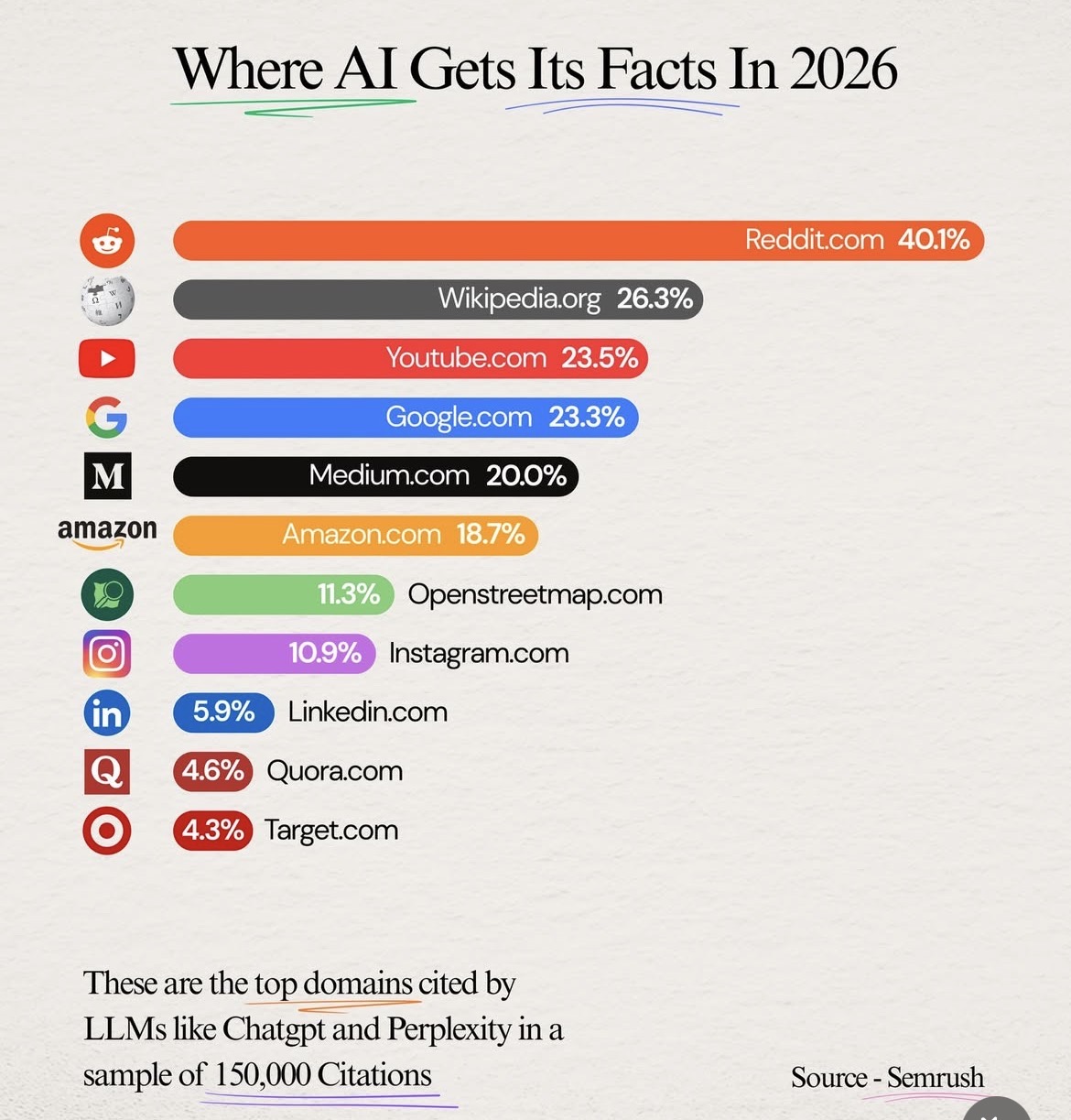
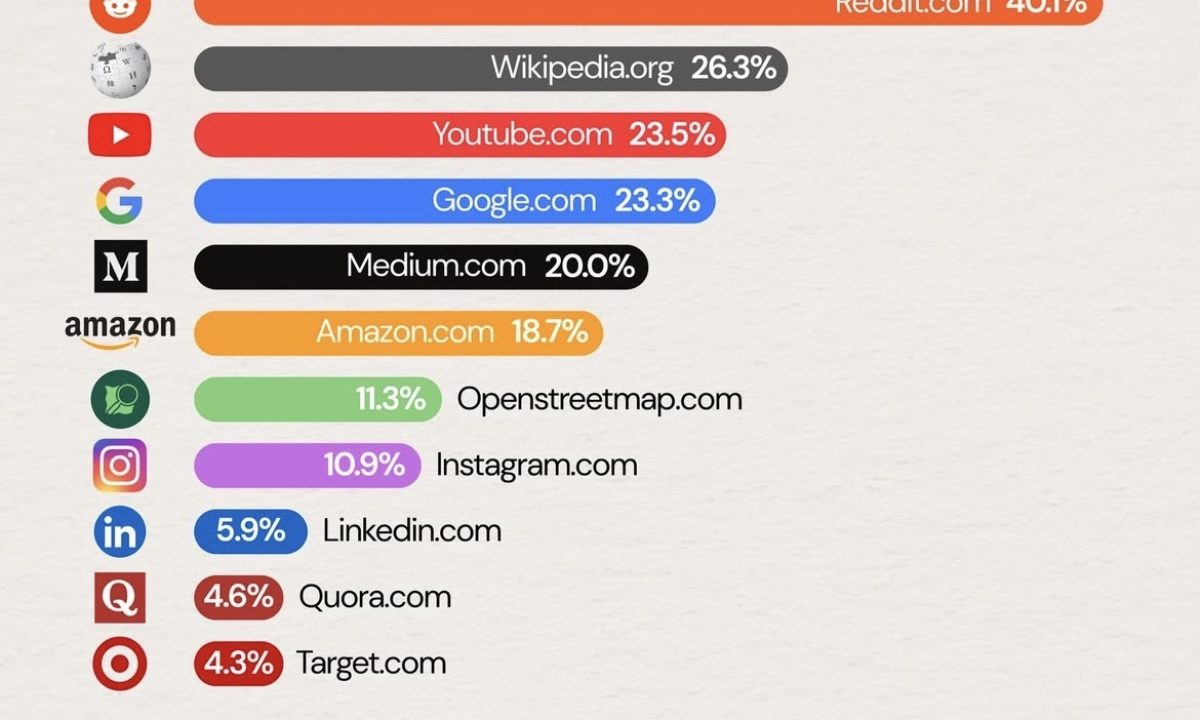
A recent analysis of 150,000 citations (via Semrush) shows the top domains cited by LLMs like ChatGPT and Perplexity.
Leading the pack?
Reddit at 40.1%.
Yes. The same place where someone once argued for 200 comments about whether cereal is soup.
Next comes Wikipedia (26.3%) — the group project we all trust but still side-eye.
YouTube (23.5%) and Google (23.3%) follow closely.
Medium (20%) makes sense — think pieces fuel AI like espresso fuels founders.
Then Amazon (18.7%), OpenStreetMap, Instagram, LinkedIn, Quora and even Target show up.
Let that sink in.
AI isn’t just trained on academic journals and government whitepapers. It’s absorbing product reviews, forum debates, creator explainers, listicles and the occasional 3 a.m. rant.
What does this mean for brands and creators?
Simple:
If you’re not publishing, you’re invisible to the machines.
Reddit threads, YouTube explainers, Medium essays, structured knowledge — these are now part of the “AI discovery layer.” SEO is evolving into AIO (Artificial Intelligence Optimization), whether we like it or not.
The real shift isn’t that AI reads the internet.
It’s that the internet now writes the future of AI responses.
So the next time you post a thoughtful thread…
Just remember.
You might not just be influencing people.
You might be training the robots.