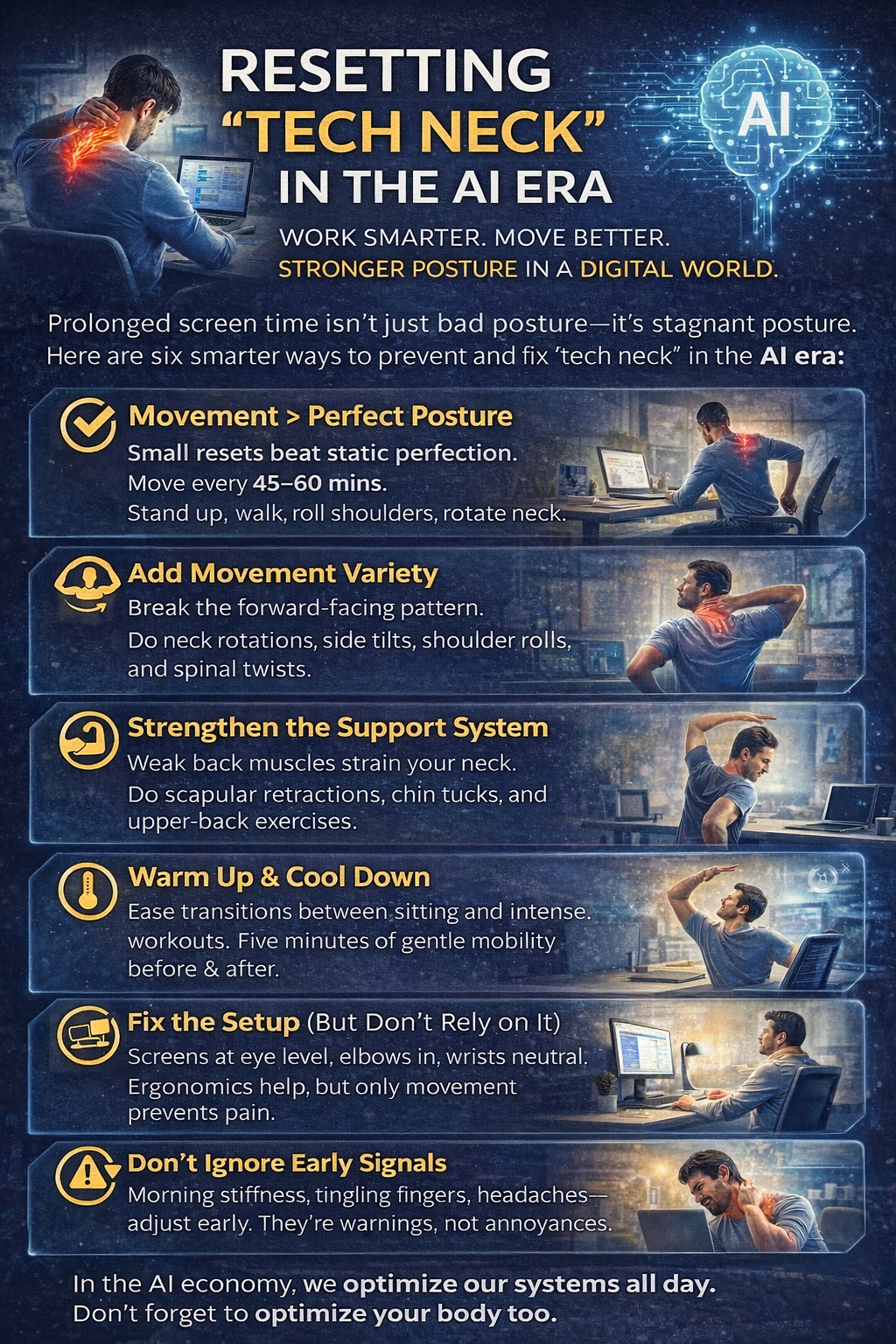

Resetting “Tech Neck” in the AI Era
If you work on a laptop all day, this one’s for you.
Tech neck isn’t just bad posture.
It’s holding any posture for too long.
And in a world of remote work, AI tools, and constant screen time, it’s becoming the new normal.
Here’s the smarter way to think about it.
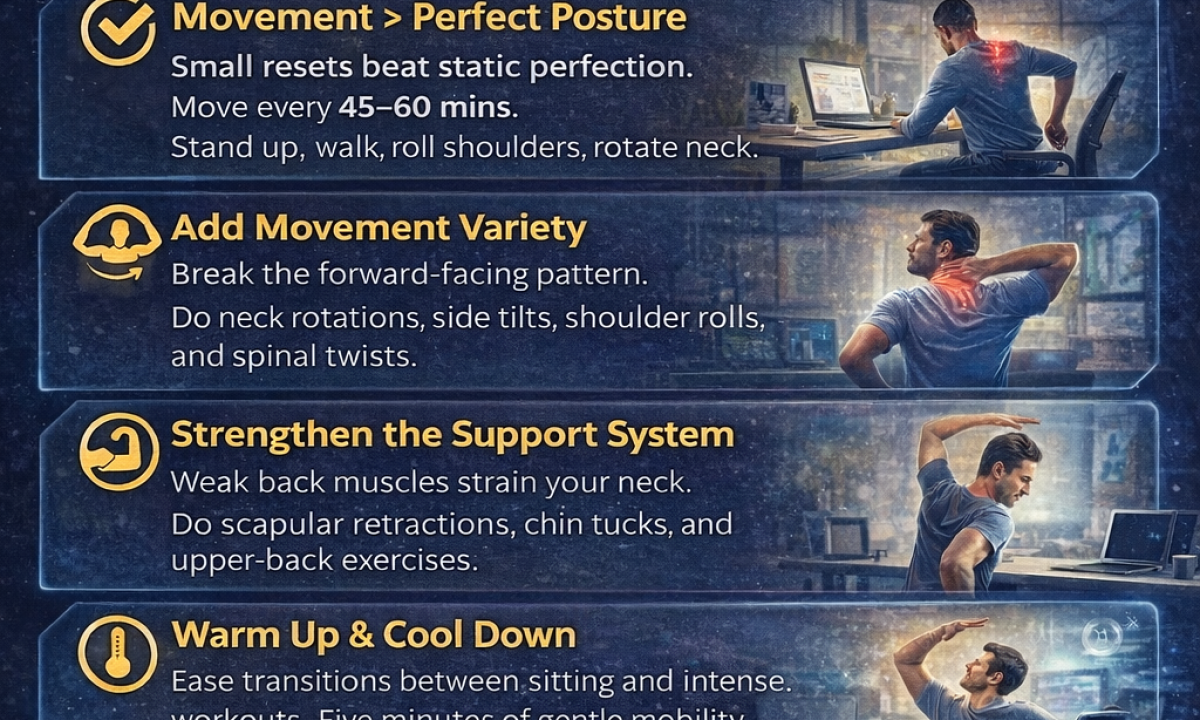
1. Movement > Perfect Posture
The biggest mistake? Trying to “sit correctly” all day.
Even perfect posture fatigues muscles.
Instead, move every 45–60 minutes.
Stand up. Walk for 2 minutes. Roll your shoulders. Rotate your neck. Small resets matter more than static perfection.
2. Add Movement Variety
Desk jobs lock us into one forward-facing position.
Break that pattern.
Do neck rotations, side tilts, shoulder rolls, gentle spinal twists. These keep joints lubricated and muscles responsive.
3. Strengthen the Support System
Weak upper-back muscles contribute heavily to neck pain.
Exercises like scapular retractions and chin tucks help stabilize the neck by strengthening what supports it.
Mobility without strength is incomplete.
4. Warm Up & Cool Down
Pain often comes from extremes — sitting all day, then suddenly exercising hard.
Five minutes of gentle mobility before and after workouts (or at the end of your workday) helps your body transition without strain.
5. Fix the Setup (But Don’t Rely on It)
Screens at eye level.
Elbows close to the body.
Wrists neutral.
Ergonomics matter — but furniture doesn’t fix bodies. Movement does.
6. Don’t Ignore Early Signals
Morning stiffness, headaches, tingling fingers — these aren’t minor annoyances. They’re early warnings.
The takeaway?
In the AI economy, we optimize systems all day.
Don’t forget to optimize your body too.