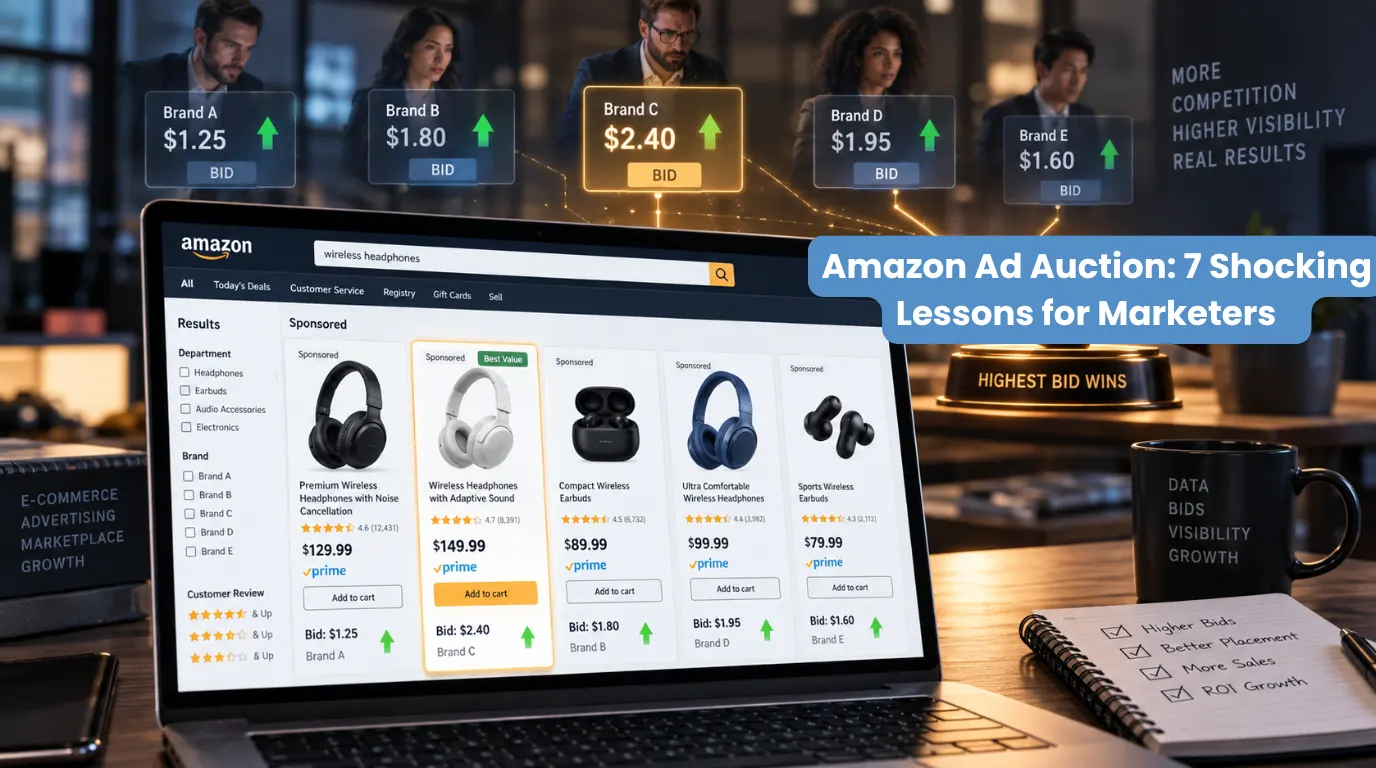

What If Your Ad Auction Isn’t Really an Auction?
I came across this story about Amazon being sued by the FTC and 22 U.S. states over its advertising practices. And honestly, the headline is interesting. But the bigger marketing lesson is even more interesting.
But the recent controversy surrounding the Amazon ad auction raises a more uncomfortable question:
According to the FTC, Amazon allegedly changed the way its advertising auctions worked, introducing an undisclosed “soft reserve price” that could make advertisers pay more than the price determined by the competitive auction. The FTC says this practice began in 2019 and may have extracted more than $20 billion from advertisers.
Amazon, of course, disputes the allegations and says the FTC has misunderstood how its advertising system works.
So, let’s leave the legal question to the courts.
There is a much bigger question for marketers:
How Much Do we Actually Understand About the Platforms We Advertise on?
For years, we have been told that digital advertising is driven by auctions.
You bid.
Your competitors bid.
The algorithm evaluates relevance, quality and price. And the platform determines what you pay.
Simple enough.
Except… what happens when the platform itself becomes an invisible participant in that auction? That is what makes this case fascinating.
The Real Currency in Digital Advertising is Not Money.

It is trust.
When I run an ad on Google, Meta, Amazon or LinkedIn, I am essentially handing the platform three things:
My money.
My data.
And my trust in the system.
I may not understand every algorithmic decision happening behind the scenes. But I assume the rules being presented to me broadly represent the rules actually being used.
If the platform says:
“This is how your ad auction works.” I shouldn’t need a forensic data scientist to discover that there is another pricing mechanism operating underneath it.
And this becomes particularly important because advertising platforms are no longer just advertising platforms.
Advertising Platforms are Marketplaces.
Amazon doesn’t simply sell advertising. It controls the marketplace where millions of sellers compete for customers.
That creates a fascinating conflict.
The seller wants the cheapest possible advertising that generates sales.
Amazon wants to maximise advertising revenue. And Amazon also controls the auction.
That’s an incredibly powerful position.
Here’s the Part Marketers Should Really Pay Attention to.
The FTC alleges that Amazon’s practices affected more than one million advertisers, including more than 500,000 small and medium-sized businesses.
Think about that.
For a large brand, an increase in advertising costs may hurt margins. For a small seller, it can determine whether the product is profitable at all. A seller might look at their Amazon dashboard and think:
“My CPC has increased. Let’s increase the product price.”
The customer sees a higher price.
The seller blames advertising.
The advertiser blames competition.
The platform earns more.
And somewhere inside that chain, the original pricing mechanism becomes almost impossible for the average business owner to understand. That’s why transparency in advertising isn’t merely a regulatory issue. It is a business issue.
This is Where AI Makes the Question Even Bigger.
Today, advertising platforms increasingly rely on AI and machine learning to determine:
- who sees an ad
- where it appears
- how much it costs
- which creative wins
- which audience is valuable
- how bids are adjusted
- and which conversion is attributed to which campaign
We’re increasingly being told: “Trust the algorithm.”
But trust without transparency can become a dangerous business model. Because if marketers don’t understand why something happened, they cannot effectively challenge it. And they certainly cannot optimise it. The future of advertising cannot just be “more AI.”
It has to be: AI + transparency + accountability.
If an algorithm changes my bid, tell me.
If a reserve price affects my auction, tell me.
If the platform prioritises something other than the highest bid, explain the principle.
If my advertising cost increases because of a platform-level decision rather than market competition, I should be able to understand that. Because otherwise, we aren’t really participating in an auction.
We’re participating in a black box. And the more money businesses move into these black boxes, the more important transparency becomes.
The Amazon case will now play out in court. But regardless of what the final judgment says, I think marketers should take one lesson away from this:
Don’t Confuse an Advertising Dashboard With Transparency.
Just because we can see the numbers doesn’t necessarily mean we understand the system producing them. And perhaps that’s the next big challenge for digital marketing:
Not getting better at buying ads.
But getting better at understanding who controls the rules of the game.
The allegations discussed above are from the FTC’s lawsuit; Amazon has denied the FTC’s characterization of its advertising auction practices. The case is pending.
Track major updates in the Amazon ad lawsuit
Amazon, of course, disputes the allegations and says the FTC has misunderstood how its advertising system works.
As the industry shifts, staying informed about digital trends is essential for anyone. Click through to read another thread!