

The most underrated career skill isn’t networking, but it’s knowing how to ask for help. Most people hesitate to ask for help.
Not because they don’t need it. But because they don’t want to inconvenience someone, appear inexperienced, or risk being ignored. Ironically, asking for help is one of the fastest ways to learn, build relationships, and create opportunities, provided you know how to do it well.
While networking remains important, today’s workplace rewards professionals who communicate with clarity, respect other people’s time, and make it easy for others to help. That’s the career skill that often creates the biggest opportunities.
I recently came across an excellent piece by Pradyumna Prasad that breaks this down beautifully, and it reminded me of something I’ve observed throughout my own career.
The Difference Between a Good Request and a Bad One
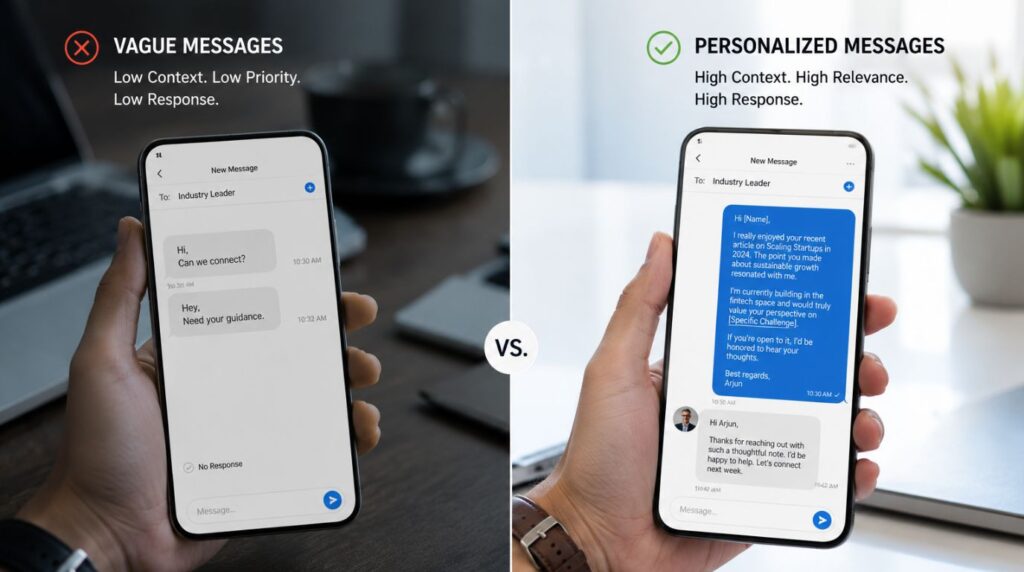
We’ve all received messages like: “Can we connect?” “Need your guidance.” “Can we jump on a quick call?”
The problem isn’t that people don’t want to help. The problem is that the request gives them no context, no clarity, and no idea of the time commitment.
In an increasingly connected professional world, people receive countless requests every week. The messages that stand out aren’t necessarily from the most experienced people; they’re from those who communicate clearly and respect the recipient’s time.
Busy professionals aren’t saying no to helping. They’re saying no to ambiguity.
How to Make It Easier for People to Say Yes
One idea from the article stood out to me: Make it easy for someone to say yes.
- If you’re asking for an introduction, write a short paragraph they can simply forward.
- If you have a question, ask it in writing first instead of requesting a call.
- If you’re requesting feedback, send one specific document, not ten.
The easier you make the task, the more likely you’ll receive a thoughtful response.
Small Requests Build Stronger Professional Relationships
This is another mistake I see frequently. People ask strangers: “Will you mentor me?” That’s a huge commitment.
Instead, ask for
- One small interaction.
- Request feedback on a portfolio.
- Ask one thoughtful question.
- Share one article you’ve written.
Relationships aren’t built through one big favour. They’re built through many small, positive interactions.
How Clarity Becomes a Competitive Advantage

Whenever I receive a message that clearly explains:
- Why they’re reaching out
- What they need
- Why did they think of me
- How much time will it take
I’m far more likely to respond.
Not because the person is more qualified but because they’ve respected my time. Good communication that speaks of clarity is often more valuable than impressive credentials and networking.
The Marketing Lesson: Why This Matters Beyond Networking
This principle extends beyond networking.
Whether it’s a marketing campaign, a website, or a salesperson, success comes from reducing friction, making the next step obvious, and helping customers make decisions easily.
Asking for help follows the same psychology. Clarity reduces effort, and reduced effort increases action.
The same principle applies to career growth. Whether you’re reaching out to a recruiter, mentor, client, or colleague, removing friction makes it easier for people to respond positively. Clear communication often creates opportunities that networking alone cannot.
The Real Career Advantage
One of the biggest career myths is that successful people reached where they are entirely on their own. Very few did.
Behind most successful careers is someone who answered an email, made an introduction, reviewed a proposal, or shared honest feedback at the right moment. That’s what meaningful networking often looks like; it isn’t just about making connections; it’s about people willing to help when approached thoughtfully.
People are generally willing to help. The real skill isn’t finding the right person. It’s asking in a way that respects their time, makes the request clear, and gives them every reason to say yes.
Sometimes, the opportunity you’re looking for is only one well-crafted message away. In 2026, the professionals who stand out won’t just be the ones with the biggest network, but the ones who know how to ask for help with clarity, respect, and purpose. That ability may be the career skill that matters more than networking.
As the industry shifts, staying informed about digital trends is essential for anyone. Click through to read another thread!