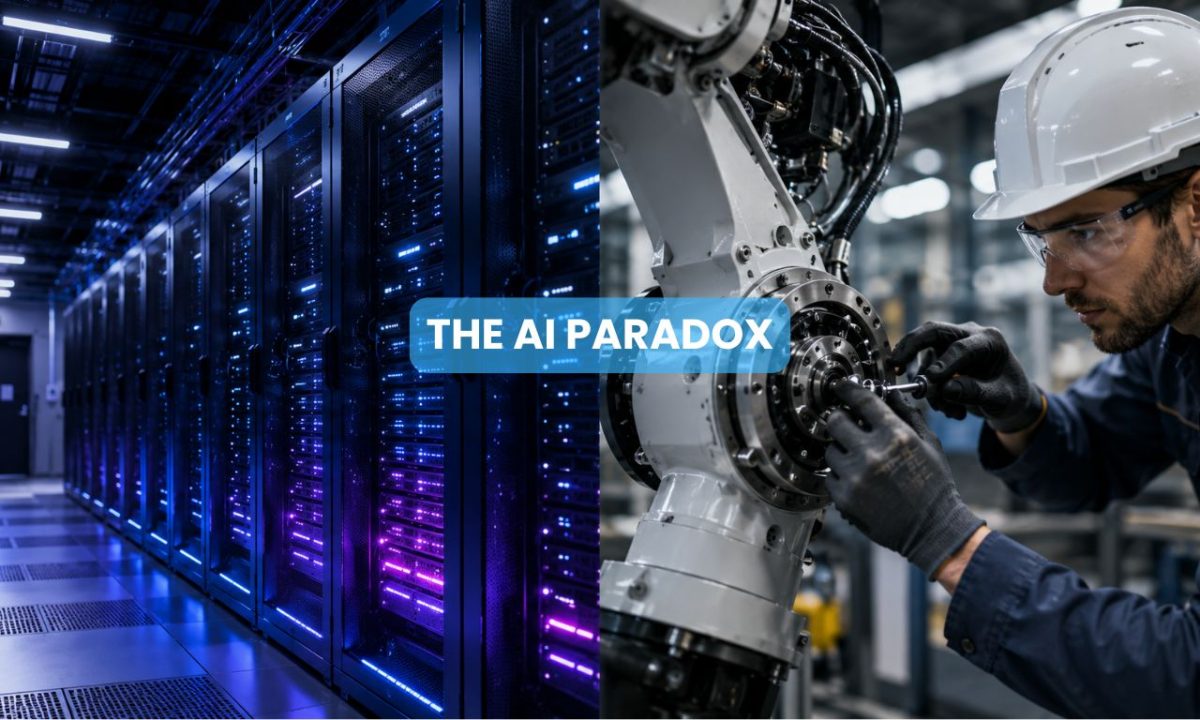

The AI Paradox: Why the Future Belongs to Blue-Collar Talent
Artificial Intelligence was supposed to replace jobs. That has been the headline for years. Every new model launch, every breakthrough in automation, and every viral AI demo fuels the same fear: Will AI take away human work?
Yet, when we analyze how technology is actually reshaping the job market, the reality of AI and the future of work is proving to be far more nuanced—and far more ironic.
A recent analysis by talent firm Randstad, based on over 50 million job postings, reveals an unexpected trend: while AI may automate certain digital tasks, it is simultaneously creating an unprecedented demand for skilled blue-collar workers. In many ways, AI isn’t replacing human labor—it is reshaping it.
The Numbers Tell an Interesting Story
Between early 2022 and early 2026, India’s blue-collar job volumes surged by an astonishing 93%, significantly outpacing white-collar growth, which stood at 40%.
Even more remarkable is where this growth is occurring:
- Demand for electricians has increased by 242%
- HVAC technicians have seen demand grow by 200%
- Robotics technicians have witnessed a surge exceeding 500%
At first glance, this may seem contradictory. After all, aren’t robots and AI supposed to reduce the need for human workers? Not exactly. The ongoing data demonstrates that AI and the future of work are deeply intertwined with physical, real-world execution.
Every AI Revolution Has a Physical Backbone
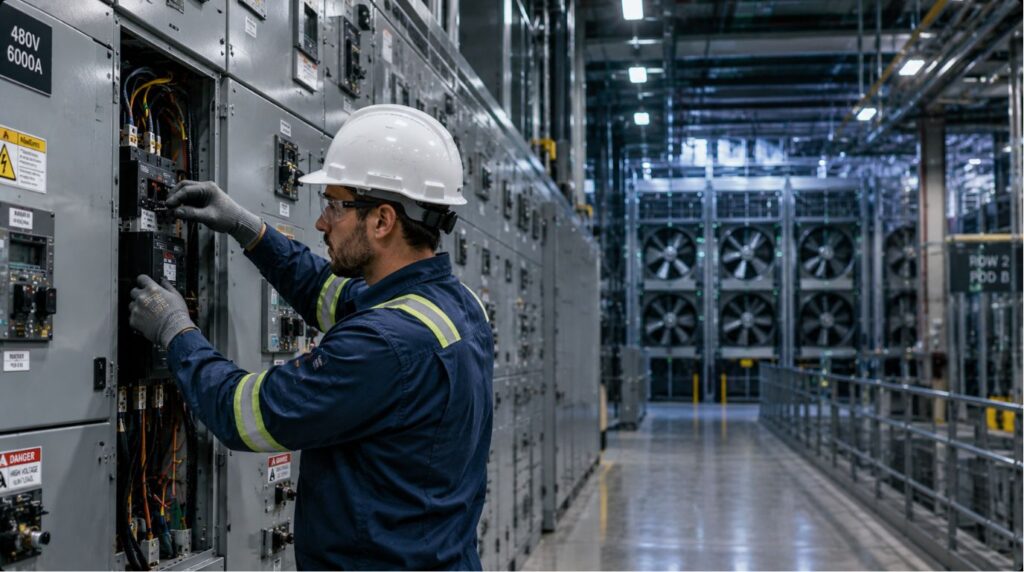
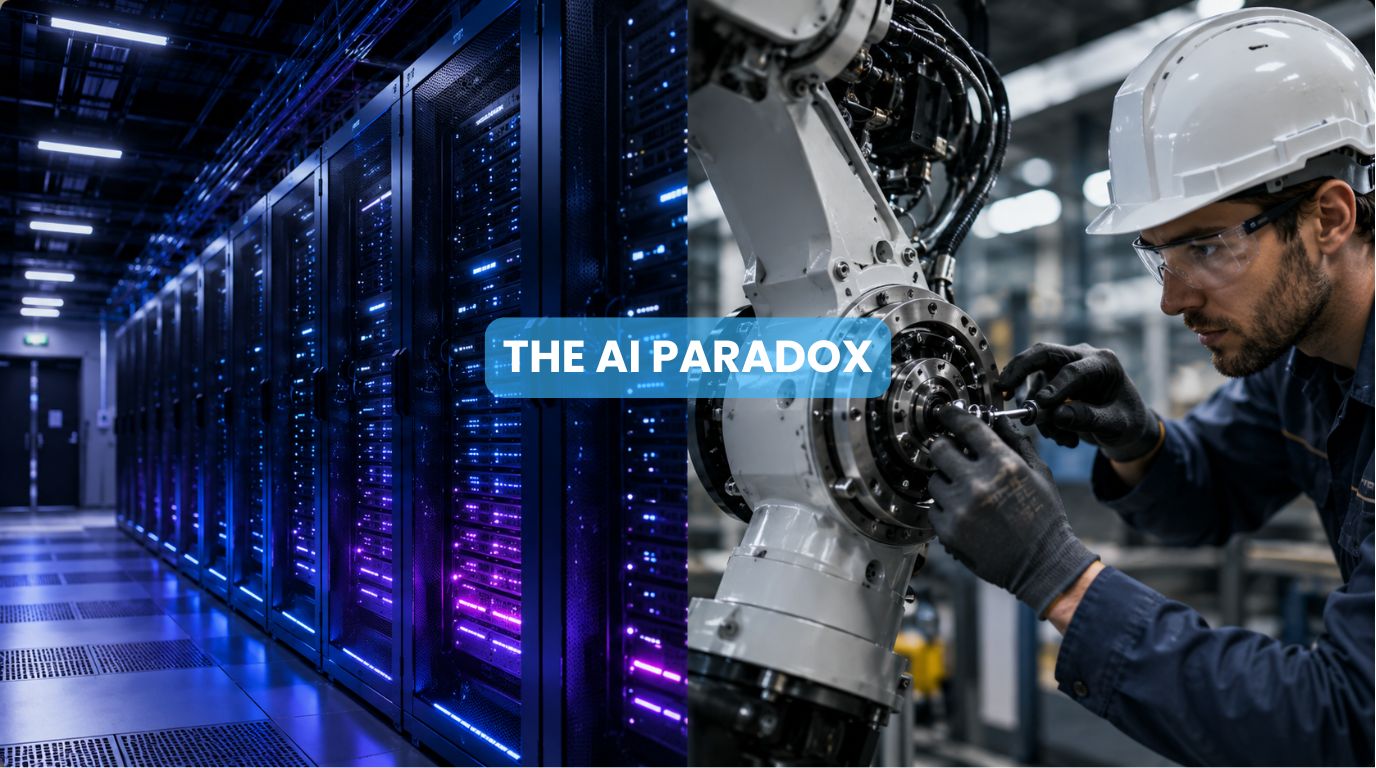
One of the most insightful observations from the report comes from Randstad India’s leadership: “Every AI breakthrough has a physical backbone.”
This simple statement captures the hidden reality of AI. AI models don’t run in thin air. They require:
- Massive data centers
- Power grids
- Cooling infrastructure
- Automated factories
- Advanced hardware
- Robotics systems
And who builds, installs, maintains, and repairs all of these? Humans. Specifically, highly skilled technicians, electricians, mechanics, HVAC experts, and robotics specialists.
Every time we celebrate an AI breakthrough, somewhere an electrician is wiring a new facility, an HVAC technician is installing cooling systems, and a robotics engineer is calibrating machines.
When discussing AI and the future of work, it turns out the marketplace is becoming surprisingly hands-on.
The Rise of the “New Collar” Economy
For years, societies across the world glorified white-collar careers while often overlooking skilled trades. Parents pushed children toward engineering, finance, and management degrees, while vocational training took a back seat.
That narrative may now be changing.
The labor market is witnessing what many experts call a “labor flip“, permanently changing how we define AI and the future of work. In India, blue-collar salaries are growing at 5.7% year-on-year, compared to 4% for entry-level white-collar roles. Some specialized roles command particularly attractive compensation:
- Robotics and specialized maintenance technicians: $9,106 annually
- Plant and machine operators: $7,815 annually
- Building and construction workers: $5,420 annually
- Electricians (including HVAC installation): $3,296 annually
Meanwhile, entry-level white-collar roles such as data entry and junior accounting average around $2,711 annually. The message is clear – skills are beginning to matter more than job labels.
AI and the Future of Work: Redistributing Labor
History offers us countless examples. The Industrial Revolution did not eliminate work—it transformed it. The internet did not eliminate work—it created entirely new industries. AI is likely to follow the same pattern.
Certain repetitive digital tasks may become automated. However, entirely new categories of employment are emerging around the infrastructure required to support these technologies.
A world filled with AI agents still needs:
- Electricians to power data centers
- HVAC specialists to cool servers
- Robotics technicians to maintain automation
- Skilled operators to manage advanced manufacturing
Ironically, the more digital our world becomes, the more we depend on physical expertise. This balance between automation and physical infrastructure is the defining characteristic of AI and the future of work.
What This Means for Students and Professionals
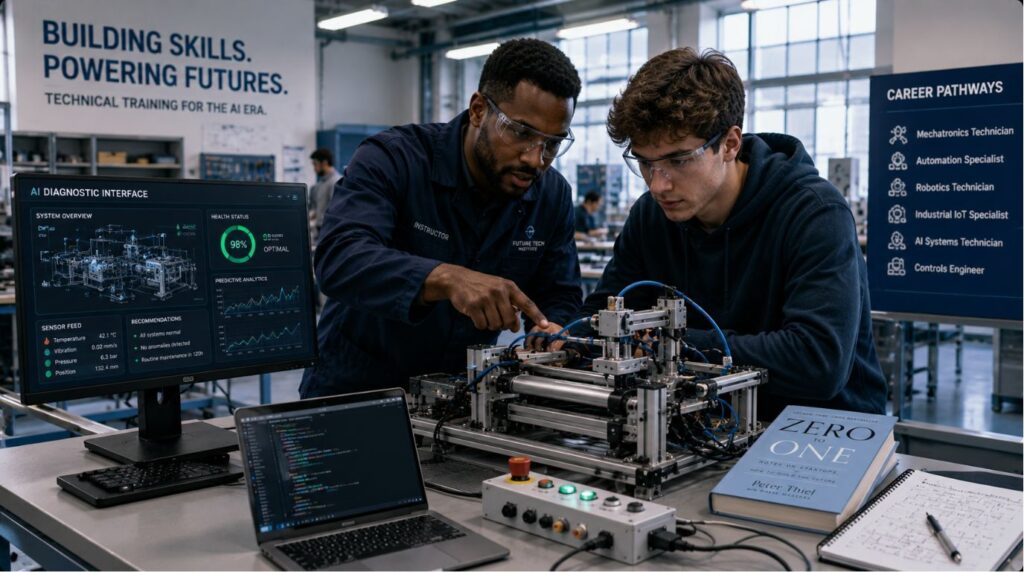
If there’s one lesson from this trend, it’s that AI and the future of work is not a battle between humans and machines. It’s a collaboration.
For students navigating their future career paths, understanding the balance between software and infrastructure is essential to anticipating AI and the future of work. Vocational training, certifications, and specialized technical skills may offer opportunities that are both financially rewarding and resilient to automation.
For businesses, it means rethinking workforce planning. The AI era is not just a software race—it is an infrastructure race.
And for policymakers, it highlights the urgent need to invest in skilling programs that prepare workers for the emerging “new collar” economy.
Final Thoughts
The AI conversation often focuses on what technology will take away. Perhaps we should spend more time discussing what it creates. Because behind every intelligent machine lies a network of very human expertise.
AI and the future of work may be powered by algorithms, but it will still be built, wired, cooled, repaired, and maintained by people. And that might just be the greatest paradox of the AI revolution.
As someone who has spent years in digital transformation and technology, I find this shift fascinating. The next decade won’t simply reward those who know AI—it will reward those who build the world that AI runs on.
As the industry shifts, staying informed about the latest skills-first hiring news is essential for anyone. Click through to read more such threads!