
If you want to protect your digital life, the most critical rule to understand is why you shouldn’t reply to scam texts.
A Confession
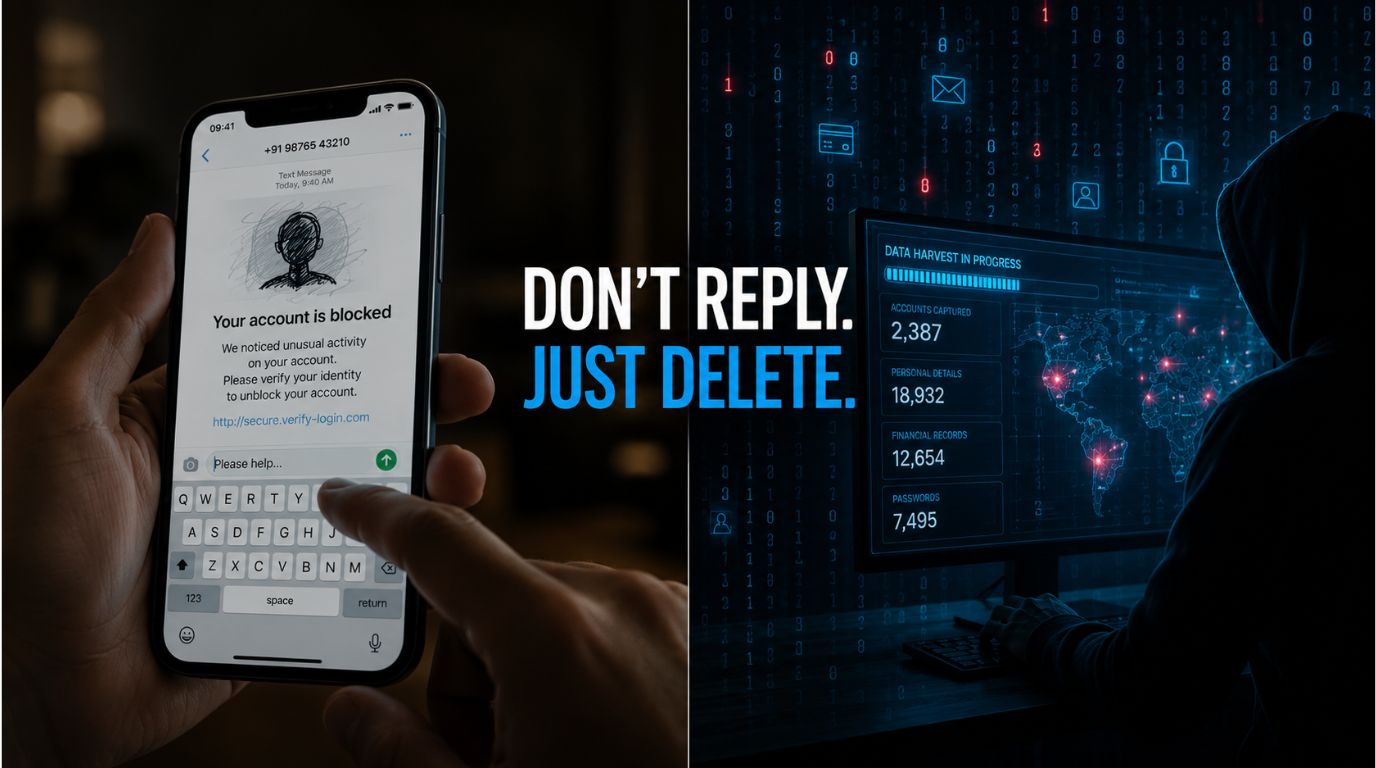
I know the temptation. You receive a message saying: “Your bank account will be blocked.” Or “Your parcel is waiting.” Or my personal favorite: “Hello dear, I accidentally saved your number.”
For a brief moment, your inner comedian wakes up. You think: “Let’s have some fun with this scammer.” Maybe you’ll send a meme. Maybe you’ll waste their time. Maybe you’ll pretend to be Elon Musk.
Sounds harmless, right?
Unfortunately, that’s exactly what scammers are counting on, and it is the core reason why you shouldn’t reply to scam texts.
Why Replying Is a Bad Idea
Most people assume the danger starts when money changes hands. It doesn’t.
When looking at why you shouldn’t reply to scam texts, the first major risk is confirmation. The danger starts when you respond. The second you reply, you’ve confirmed one important thing: Your phone number belongs to a real human being.
That alone has value. Think about it.
Scammers send millions of messages every day. Most numbers are inactive, abandoned, or filtered.
But when you reply?
You’ve just raised your hand and said: “Hello. I’m here.”
Congratulations. You just moved from a random database entry to a verified target.
Every Tiny Detail Matters
Many people believe: “I didn’t share any personal information.”
Maybe. But information doesn’t always come from direct questions. Sometimes it comes from casual conversation. This data harvesting is a massive factor in why you shouldn’t reply to scam texts. For example:
- The timing of your reply reveals your time zone.
- Your language reveals your location.
- Your writing style reveals your age group.
- Mentioning work reveals your profession.
- Mentioning travel reveals your lifestyle.
None of these seem dangerous individually.
Together?
They create a surprisingly detailed profile.
Modern fraud isn’t about stealing one big secret. It’s about collecting dozens of tiny clues.
The New Scam Economy
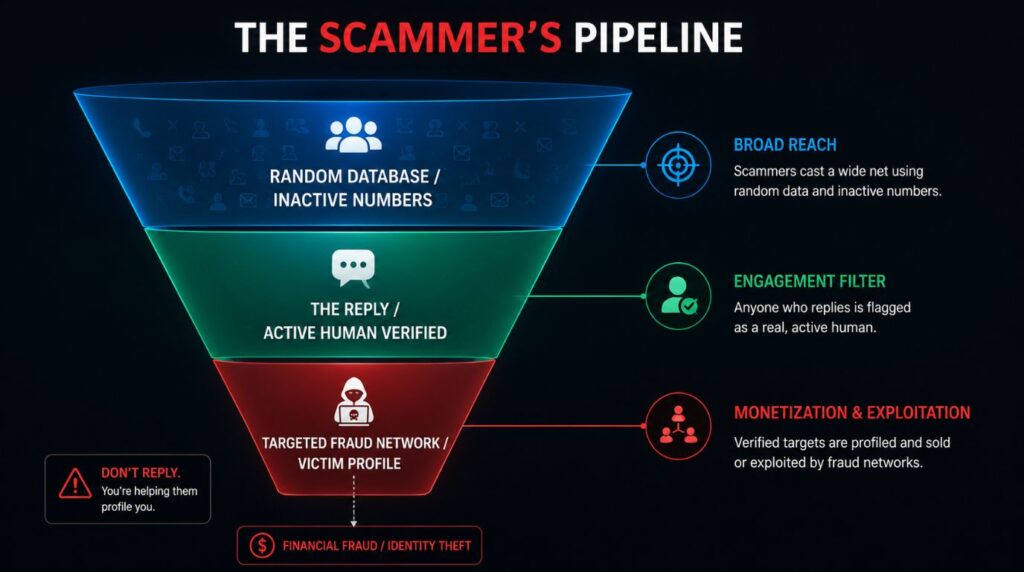
Today’s scammers operate more like marketers than criminals. Think about it. Marketers build customer profiles. Scammers build victim profiles. Marketers segment audiences. Scammers segment targets. Marketers nurture leads. Scammers nurture trust.
The difference is only the end goal.
One wants a sale. The other wants your money.
Even “STOP” Can Backfire
A lot of people believe replying with STOP will solve the problem. Sometimes it does. Many times it doesn’t.
In scam operations, “STOP” still counts as a response. If you are wondering why you shouldn’t reply to scam texts, even just to opt out, it’s because the sender now explicitly knows:
- The number is active
- Someone reads messages on it
- Engagement is possible
That information alone can increase future targeting.
Why We Love Troll Responses
Let’s be honest.
Trolling scammers feels satisfying. It feels like justice. You imagine you’re wasting their time. You feel smarter than them. You get a funny screenshot for social media.
But here’s the uncomfortable truth: The scammer isn’t always losing. Sometimes they’re gathering data. Sometimes they’re validating numbers. Sometimes they’re simply passing active contacts to another fraud network.
The joke may be on us.
What You Should Do Instead
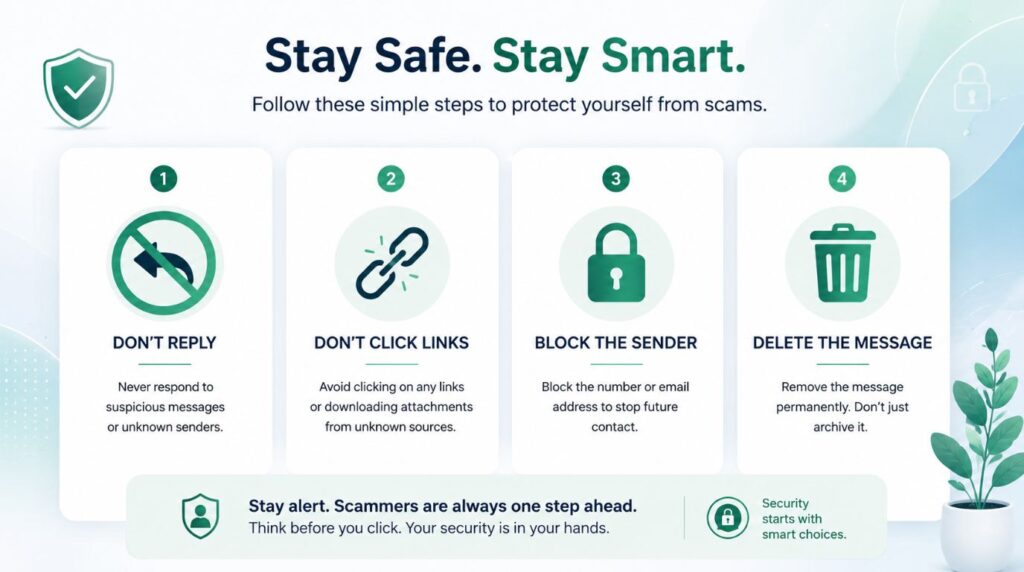
The safest approach is surprisingly boring. And boring is good.
If you receive a suspicious message:
✅ Don’t reply
✅ Don’t click links
✅ Don’t call numbers mentioned in the text
✅ Block the sender
✅ Report spam if available
✅ Delete the message
That’s it. No heroic mission required. No witty comeback required. No Oscar-worthy performance required. Understanding why you shouldn’t reply to scam texts means embracing the power of complete disengagement.
The Bigger Lesson
The internet has trained us to react. To comment. To engage. To respond.
But in cybersecurity, silence is often the smartest response. Not every battle needs to be fought. Not every scammer deserves a reply. And not every opportunity to be funny is worth becoming a data point in someone else’s fraud spreadsheet.
Final Thoughts on Why You Shouldn’t Reply to Scam Texts
The next time a scam text lands in your inbox and your inner comedian starts preparing a response, remember this: The goal isn’t to win an argument with a scammer. The goal is to disappear from their radar completely.
Understanding why you shouldn’t reply to scam texts is important because the safest target isn’t the smartest target; it’s the one that never responds.
My Take on Why You Shouldn’t Reply to Scam Texts
In digital marketing, engagement is everything. In digital fraud, it’s the same. The moment you engage, you’ve entered the funnel. The smartest click is often the one you never make.
DON’T REPLY.
JUST DELETE.
Every response is data.
As the industry rapidly shifts, keeping your finger on the pulse of the latest trends is no longer optional—it is essential for anyone striving to drive growth and innovation. Click through to read another thread!