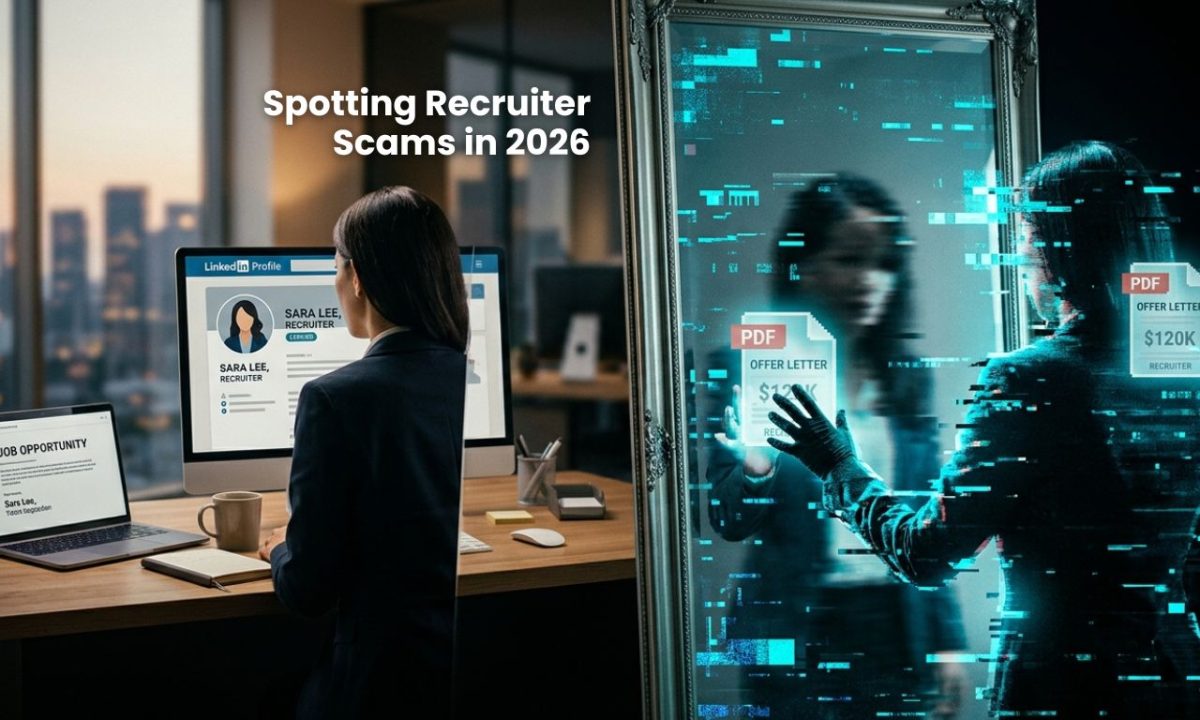

The Recruiter Who Offered You a Job… Might Be a Scammer in Disguise.
I read this and immediately thought: We’ve officially entered the “Nothing is real” phase of the internet.
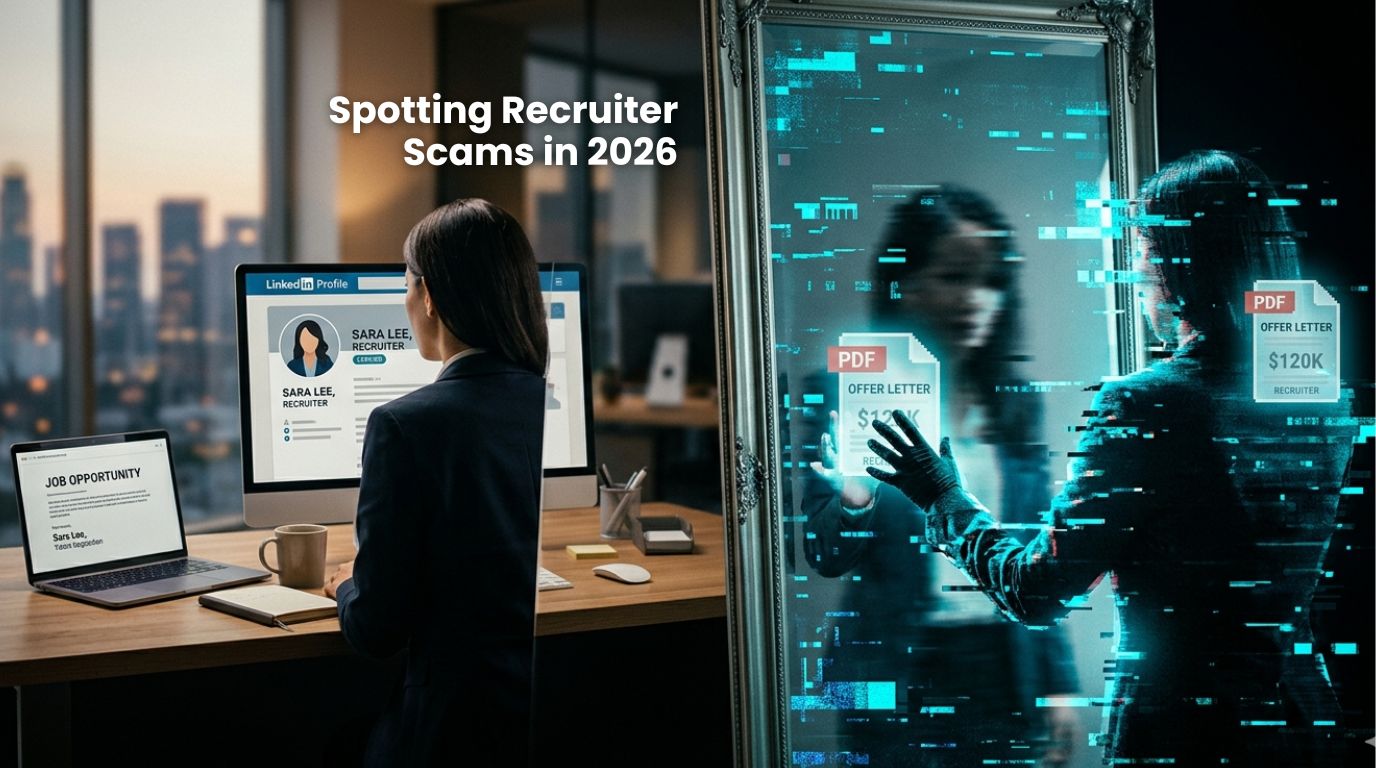
Because now, it’s not just fake profiles or spam messages. Sophisticated recruiter scams are literally stealing the identities of real professionals. Scammers are literally stealing the identity of real recruiters.
Not creating fake ones.
Not pretending badly. Cloning credibility.
Let Me Explain How Wild This Is
You get an email. It looks legit.
- Proper company name
- Real recruiter signature
- LinkedIn profile link (that actually exists)
- Even references your resume
Basically…Everything checks out. Except for one thing. It’s a scam.
These modern recruiter scams have upgraded. This is not your old-school scam anymore. Gone are the days of: “Dear Sir, you have won 10 million dollars.”
Now it’s: “Hi, I came across your profile and think you’d be a great fit.”
Same intent.
Way better execution.
That’s What Makes This Dangerous
Because scammers have upgraded. They now understand:
- How hiring works
- What good outreach looks like
- What candidates expect
They’re not guessing anymore. They’re studying behavior.
Psychology Behind This is Genius (and scary)
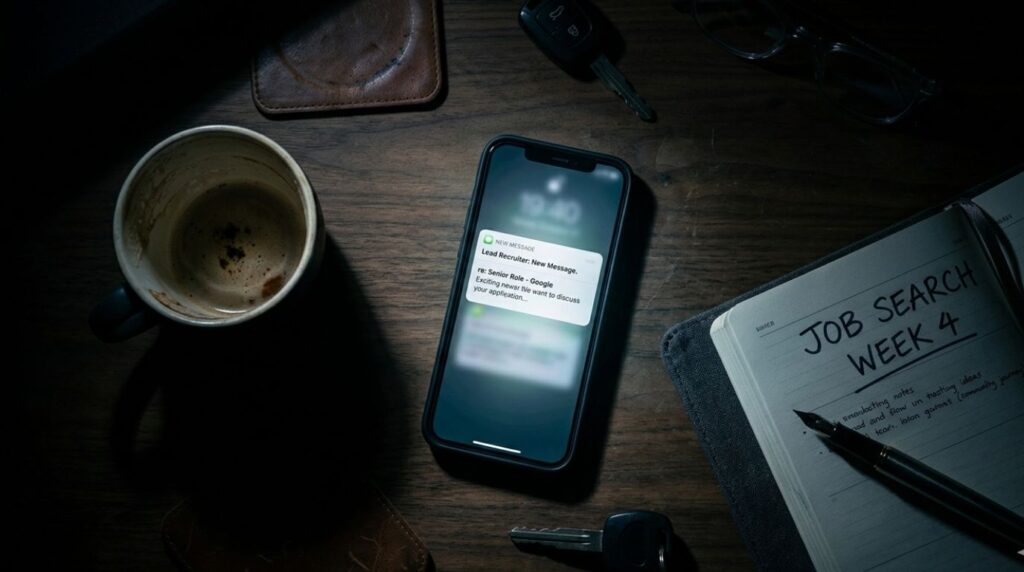
Recruiter scams are so successful because they exploit the psychology of job hunting. Job hunting already puts people in a vulnerable state. You’re:
- Hopeful
- Slightly anxious
- Open to opportunities
So when a “recruiter” reaches out…You want it to be real. And that’s exactly what scammers exploit.
They don’t just steal money. They steal Trust.
The Real Shift Here
Earlier recruiter scams relied on Ignorance. Now they rely on: Accuracy
Which means your usual filters don’t work anymore. You can’t just look for:
- Bad grammar
- Sketchy links
- Obvious red flags
Because those are gone. Now the recruiter scams look better than real outreach.
Ironically…Some scam emails are more personalized than those of actual recruiters. Let that sink in.
The Satire Writes Itself (again)
Recruiters are like: “Please respond to my email.”
Candidates are like: “Are you even real?”
Let’s Get Practical –
If this is the new reality, what should you do?
Simple checks:
- Don’t trust email alone → verify via LinkedIn
- Don’t click links blindly → type URLs manually
- Never share sensitive info early
- If it feels slightly off… pause
Basically: Slow down your excitement.
That’s your biggest vulnerability.
The 2026 Verification Checklist
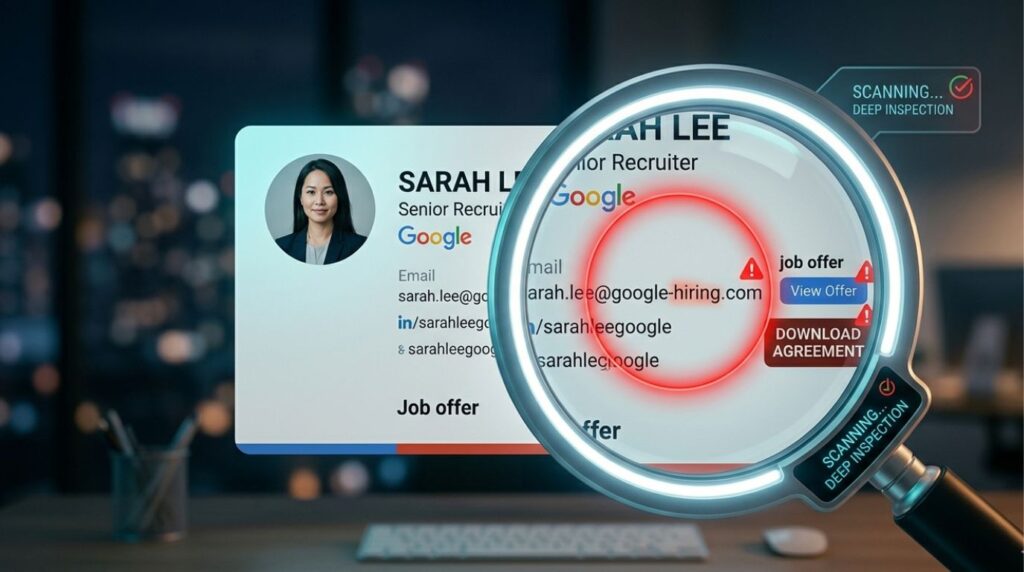
To protect yourself from the rising tide of recruiter scams, you need a “Verify-First” mindset. Use this practical checklist before responding to any “too good to be true” offer:
- Verify the Domain: Check the sender’s email address meticulously. Is it
recruiter@company.comorrecruiter@company-careers-hiring.com? - LinkedIn Double-Check: Don’t just click the link in the email. Search for the recruiter on LinkedIn manually and send them a message asking if they reached out via email.
- The Interview Test: If they offer you a job without a video call or a face-to-face meeting, it is one of many typical recruiter scams.
- Financial Red Flags: Never pay for “training equipment” or “onboarding software” with a promise of reimbursement.
Here’s The Bigger Problem
This doesn’t just hurt candidates. It hurts:
- Real recruiters
- Real companies
- The hiring ecosystem
Because once trust is broken…Everything feels suspicious.
My Take on Such Recruiter Scams
We’re entering an era where: Verification > Trust
And that’s a big shift. Because earlier, the internet was about: “Assume it’s real unless proven fake.”
Now, with the prevalence of recruiter scams, “Assume it’s fake unless proven real.”
Final Thought
If scammers are now impersonating recruiters…The real question isn’t: “Is this opportunity good?”
It’s: “Is this opportunity even real?”
Also, just saying— If your job offer comes too fast…It’s probably not your career growth. It’s a scammer working overtime.
As the industry shifts, staying informed on the latest hiring news is essential for any person. Click through to read more such threads!