

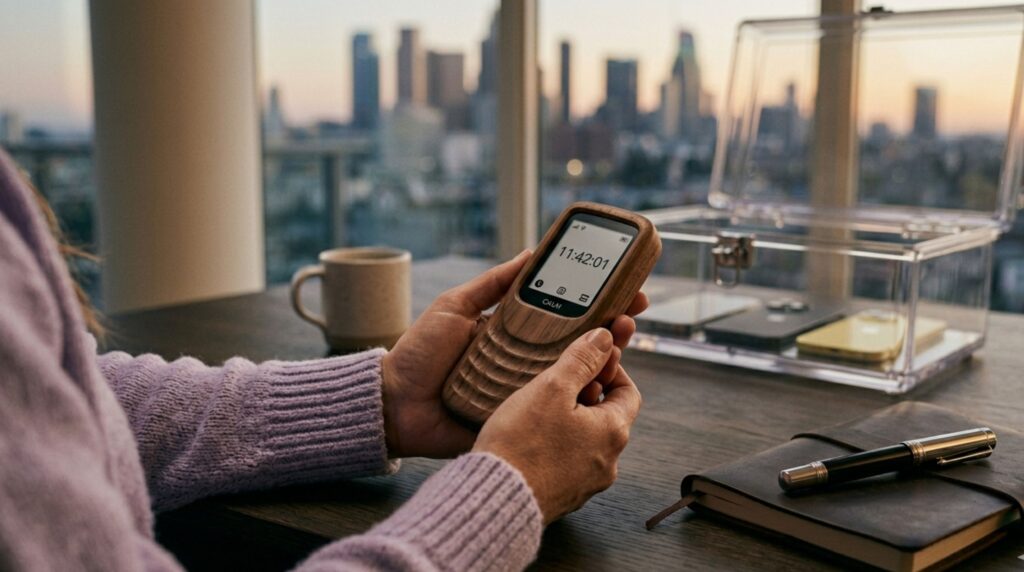
I read this and had to double-check if it was real. A group of people in New York voluntarily gathered in a room and put their phones in a metal container, engaging in digital overload detox.
Then they spent hours:
- Talking
- Drawing
- Knitting
- Just… existing
No scrolling. No notifications. No “just one quick check.”
And the weirdest part?
This is becoming a movement.
Let’s call it what it really is.
This isn’t a trend. This is a reaction. What we are seeing in these New York rooms isn’t just a hobby; it’s a manual digital overload detox.
Because somewhere along the way, we didn’t just start using our phones, we started living inside them.
The Part That Hit Me the Most
People didn’t immediately start chatting after putting their phones away. They hesitated. Looked at their hands. Looked around.
Almost like…
They forgot what to do without a screen.
That’s not a tech problem. That’s a behavioral shift.
We’ve trained ourselves to:
- Fill every gap with scrolling
- Replace boredom with content
- Replace silence with noise
So when that disappears, we feel uncomfortable.
And now we’re trying to reverse it. There’s literally something called:
“Attention activism.”
Which, if you think about it, is slightly absurd. We now need a movement to get back our own attention.
The Irony is Beautiful (and painful)
Tech companies spent years:
- Making apps more addictive
- Designing infinite scroll
- Optimizing notifications
And now users are:
- Turning phones to grayscale
- Using “dumb phones.”
- Locking devices in boxes
It’s like we built a casino, and now we’re installing self-exit buttons.
Here’s What I Find Most Interesting
This isn’t anti-technology. It’s anti:
- Overstimulation
- Constant engagement
- Endless consumption
People don’t hate their phones. They hate what their phones are doing to them.
The real enemy isn’t the device; it’s the default behavior.
Because right now, the default is:
- Pick up the phone
- Open app
- Scroll without thinking
And that loop is almost automatic.
The Satire Writes Itself (again)
We’ve reached a point where:
- We use apps to track screen time
- Then ignore those apps
- Then attend “phone-free meetups.”
To fix what apps broke. Peak human behaviour.
But let me be honest, I don’t think extreme digital overload detox is the answer. Locking your phone away for hours sounds great, until real life kicks in.
Work. Messages. Coordination. Reality.
So What Actually Works?
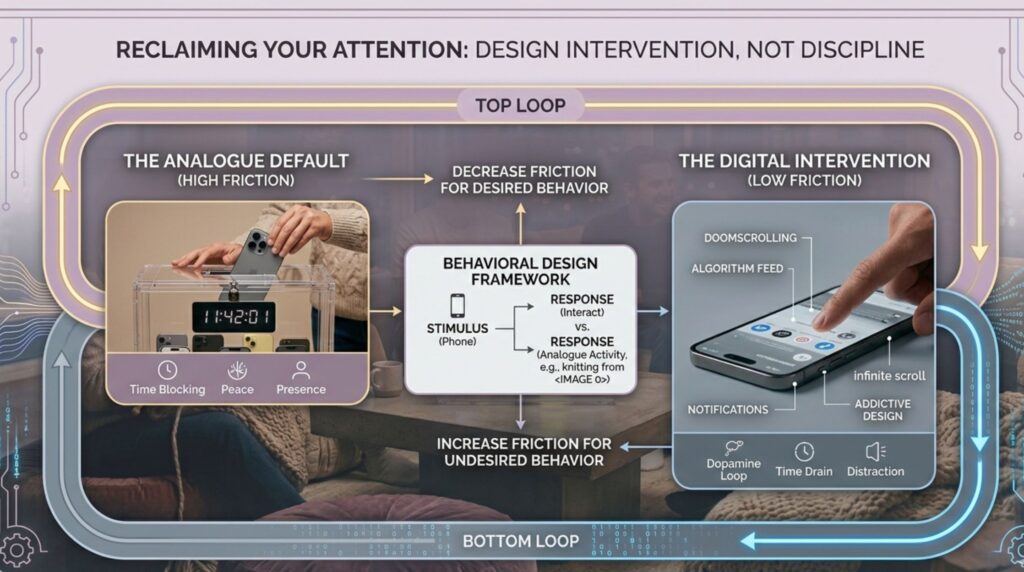
From what I’ve seen (and experienced), it’s simpler:
- Reduce friction to stay offline
- Increase friction to go online
That’s it.
Because attention is a design problem, not a discipline problem.
The most effective digital overload detox doesn’t rely on willpower. It relies on environmental design. If your environment makes distraction easy, you’ll get distracted. No matter how “focused” you think you are.
In 2026, we understand that digital addiction isn’t a failure of character; it’s a hijacking of the dopamine loop. By practising digital overload detox, you aren’t just practising ‘discipline’—you are lowering your baseline cortisol levels.
The Bigger Shift Towards a Permanent Digital Overload Detox
We’re entering a phase where:
- Productivity was the obsession
- Then came burnout
- And now…
Attention is the currency.
My Takeaway
The fact that people are physically separating themselves from their phones tells me something important.
We don’t trust ourselves with them anymore.
Final Thoughts on Digital Overload Detox
For years, we’ve optimized for:
- Speed
- Efficiency
- Convenience
But maybe the next wave is about: Control. Control over:
- Time
- Focus
- Attention
Also, just saying—
If the only way to focus is to lock your phone in a box, maybe the problem was never your discipline. It was the system all along.
As the industry shifts, staying informed on digital trends is essential for any person. Click through to read more such threads!