
When AI Joins the Family Vacation
There was a time when family vacations meant one simple thing: everyone switching off.
There was a time when family vacations meant one simple thing: everyone switching off, way before the era of AI adoption.
No work emails.
No endless scrolling.
No technology coming between conversations. Apparently, we have found a new problem.
AI.
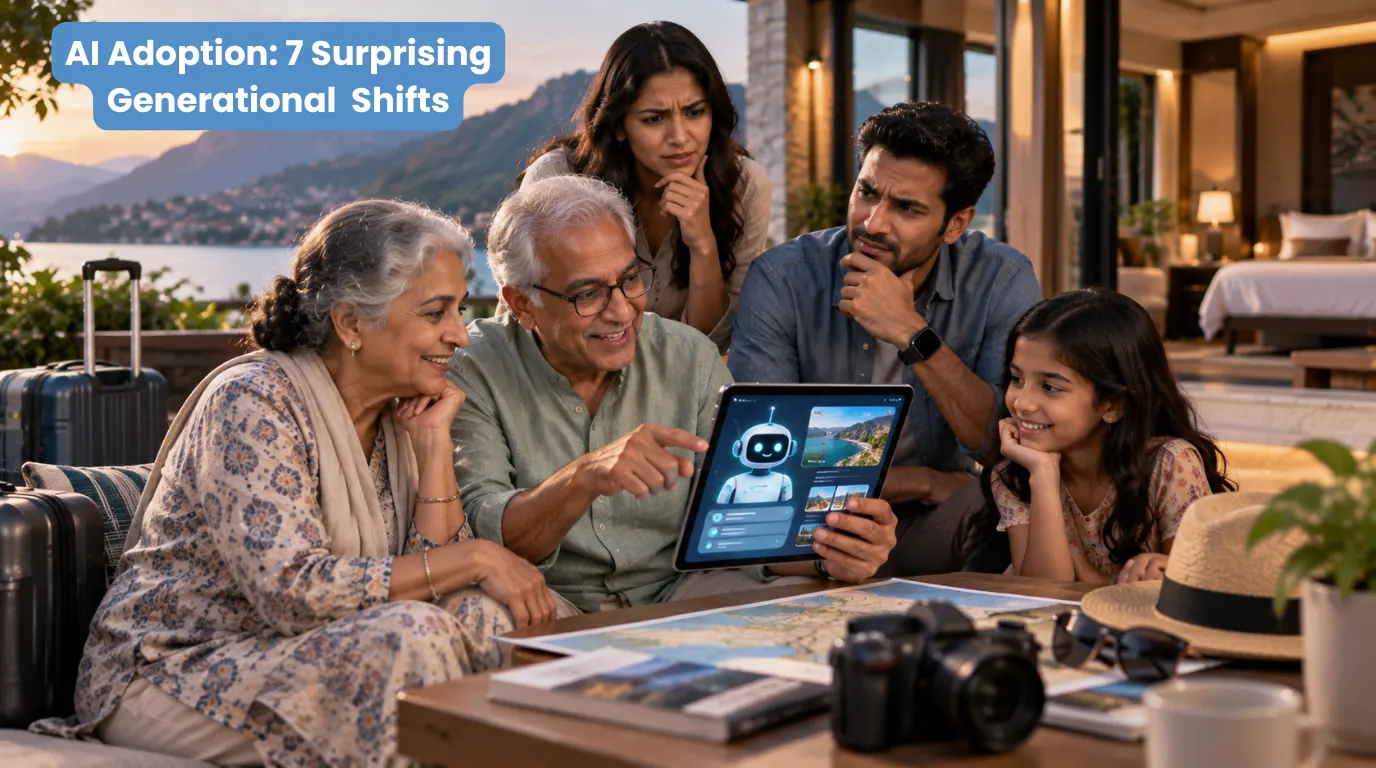
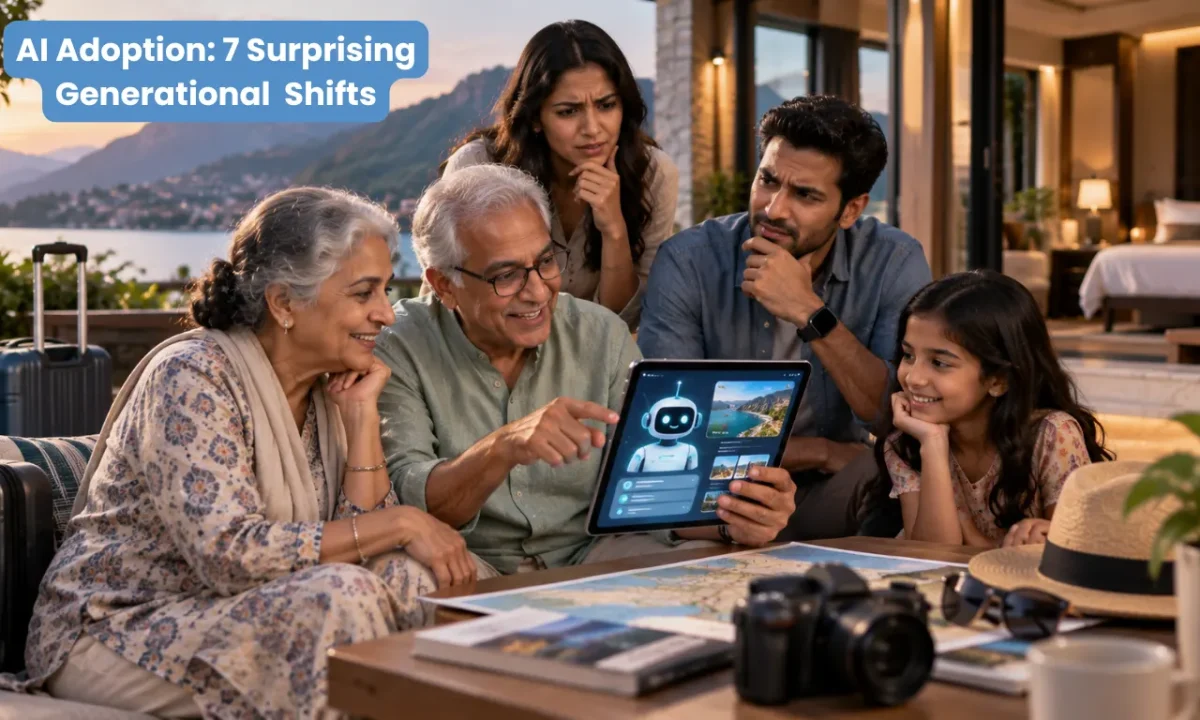
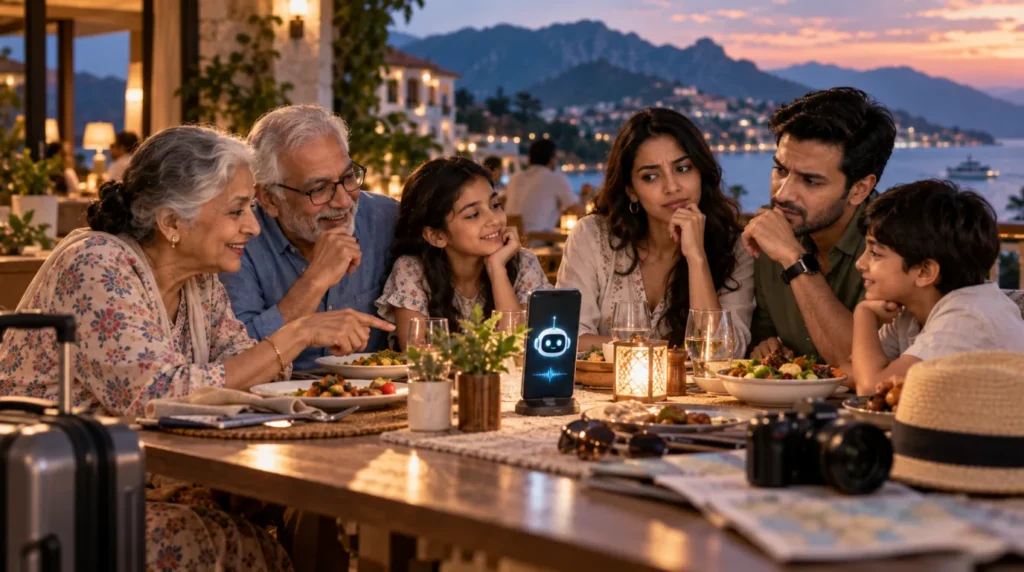
A recent story captures a fascinating generational shift: a family goes on vacation, and instead of arguing about where to eat or which tourist spot to visit, they end up arguing about Claude.
AI adoption isn’t necessarily following the age stereotypes we expected. The parents in their 70s have embraced AI. Their adult children? Not so much. And honestly, this is more interesting than it sounds.
AI Adoption isn’t Following the Age Stereotypes
We often assume that younger people will naturally become the biggest AI users while older generations will struggle to adapt.
But that’s not necessarily happening.
The story describes parents who have started using AI for everything from travel planning to everyday questions. Their daughter, meanwhile, remains deeply sceptical—partly because she sees AI as something that could disrupt her career. That difference is important.
Because AI adoption isn’t simply about age. It is about what people want AI to do for them.
For someone approaching retirement, AI can feel like a brilliant personal assistant. For someone building a career, the same technology can feel like a competitor.
The Fascinating Part: AI is Becoming a Social Object

We’ve spent years talking about AI as a productivity tool. Write my email.
- Summarise this report.
- Create my presentation.
- Plan my holiday.
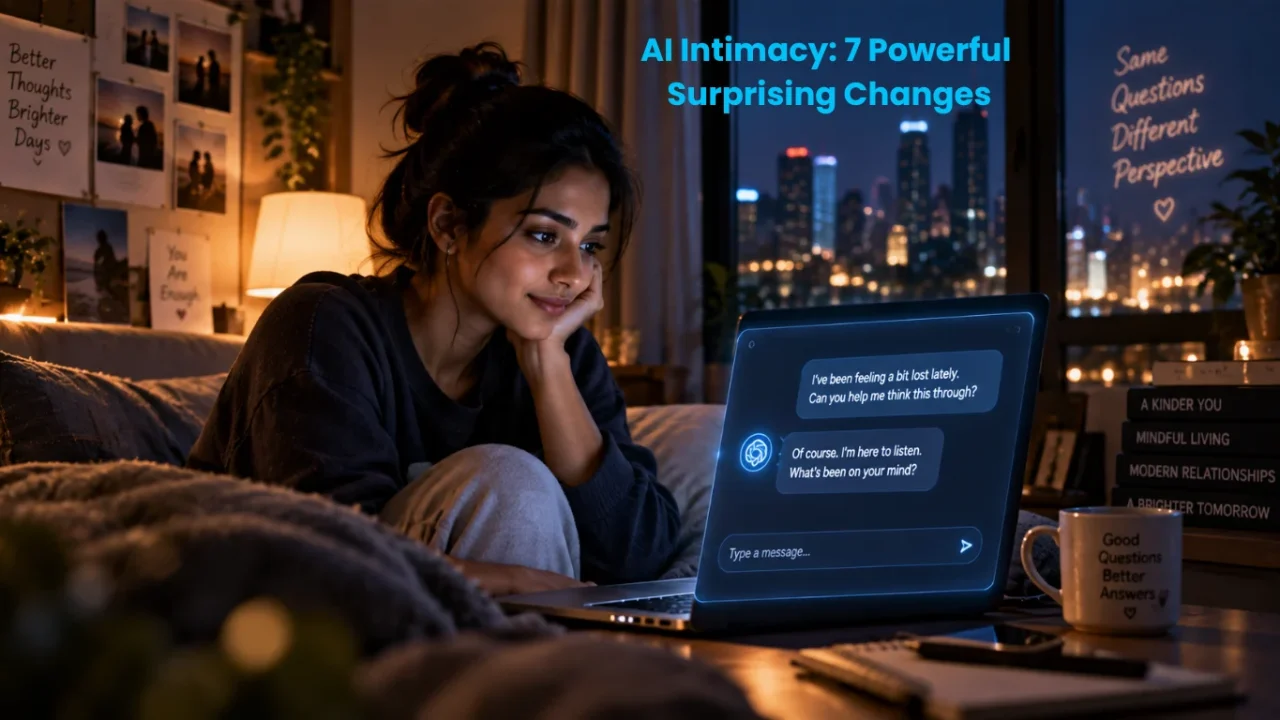
But we’re now entering a phase where AI is becoming something people develop opinions, habits and even emotional relationships around.
Some people want an assistant that challenges them. Others want one that is polite, patient and always available.
Some use AI as a search engine. Others use it as a life adviser.
And some people are beginning to treat it almost like another person in the room. That changes the conversation around AI adoption. That’s where things get interesting.
The Generation Gap May Not be About Technology
It may actually be about trust.
Older users may look at AI and think: “This makes my life easier.”
Younger users may look at the same technology and think: “This could change my job, my industry and my future.” Both reactions are completely rational.
The bigger question is whether we are teaching people how to use AI critically, rather than simply encouraging them to use more of it.
Because an AI that is always available, always polite and always willing to answer can become incredibly convenient. And convenience can very quickly become dependence.
Maybe the Future Family Argument isn’t About Screen Time
For years, parents told their children:
“Get off your phone.” Perhaps the next version will be:
“Stop asking AI and talk to us.” And that might be the most unexpected cultural impact of generative AI.
The technology isn’t just changing how we work. It is beginning to change how different generations think, learn, communicate and even spend time together.
The real AI divide may not be young vs. old.
It may be: Those who see AI as a tool vs. those who see it as a companion.
And that is a much bigger conversation.This is why AI adoption needs to be understood through psychology as well as technology.
What would happen if your family took a vacation with AI as the fifth member of the group?
#AI #GenerativeAI #ArtificialIntelligence #Technology #FutureOfWork #DigitalTransformation #AIAdoption #WorkplaceTechnology
generational differences in AI use
As the industry shifts, staying informed about AI trends is essential for anyone. Click through to read another thread!