
Why Labels for AI-Generated Music Might Be the Best Thing to Happen to the Industry
There was a time when the biggest question in music was “Is this song original?”
Today, the question has evolved. “Was this song created by a human, AI, or a mix of both?”
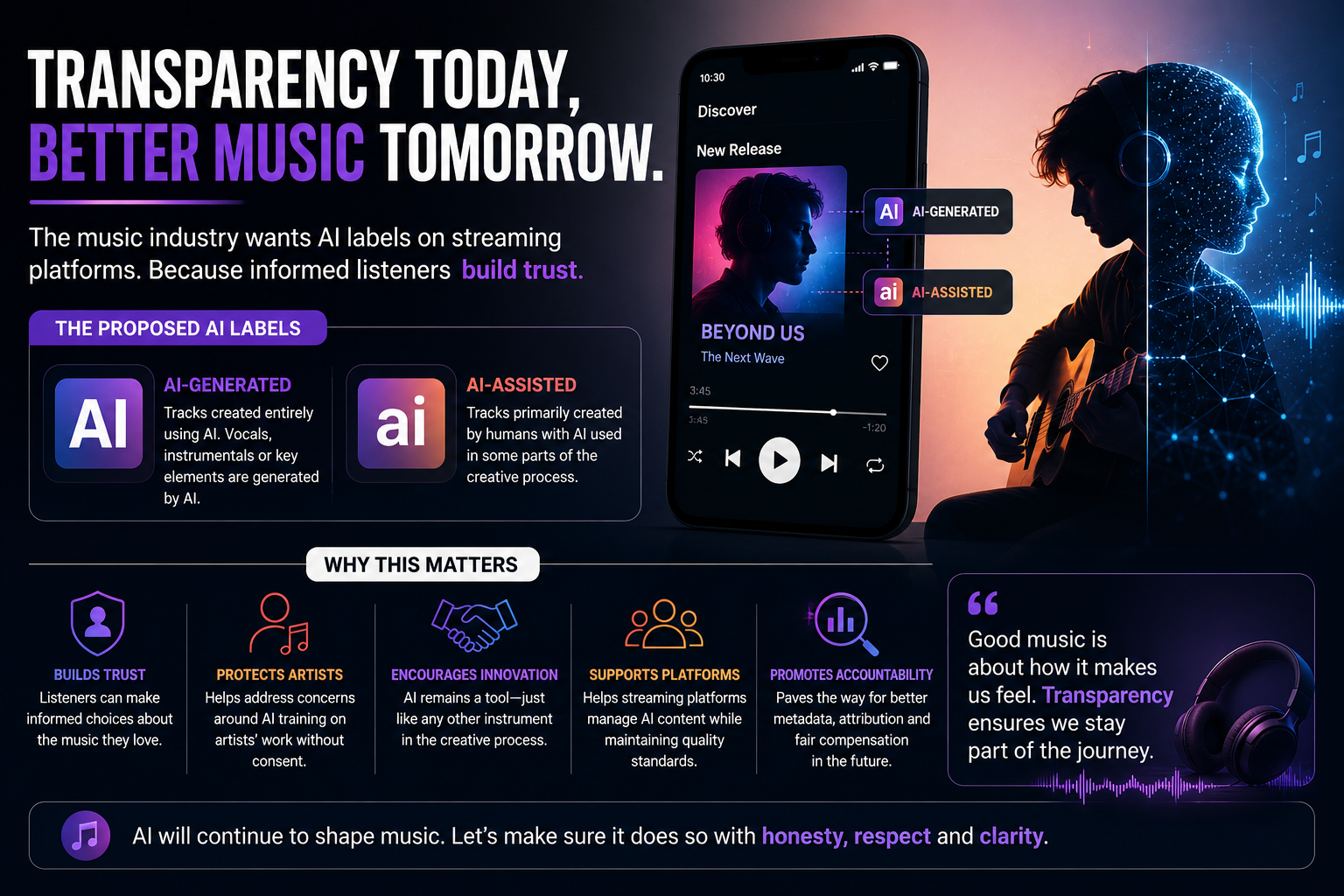
As generative platforms flood digital pipelines with automated audio, the debate over introducing standardized labels for AI-generated music has reached a critical tipping point. A powerful coalition representing musicians, songwriters, and record labels—led by the RIAA, IFPI, SAG-AFTRA, and the Recording Academy—is actively pushing streaming services like Spotify and Apple Music to adopt a uniform disclosure system.
At first glance, this might seem like a minor administrative feature. But look closer, and you will realize that establishing clear labels for AI-generated music is one of the most vital, trust-preserving conversations happening in the modern creator economy.
The Rise of Automated Audio: Contextualizing Labels for AI-Generated Music
Whenever a new technology arrives, the first instinct is usually to ban it. Photography was criticised. Synthesizers were criticised. Auto-Tune was criticised. And now AI is facing the same scrutiny.
But instead of asking whether AI should exist in music, the industry is asking a far more practical question:
Can listeners simply be informed?
That’s a much healthier approach. People deserve to know what they’re listening to. Implementing standardized labels for AI-generated music isn’t just a localized platform fix—it is a critical necessity to align digital markets with real user expectations.
How Standardized Labels for AI-Generated Music Differ From Banning It
One thing I appreciated about the proposed framework is that it doesn’t treat every AI-created song the same.
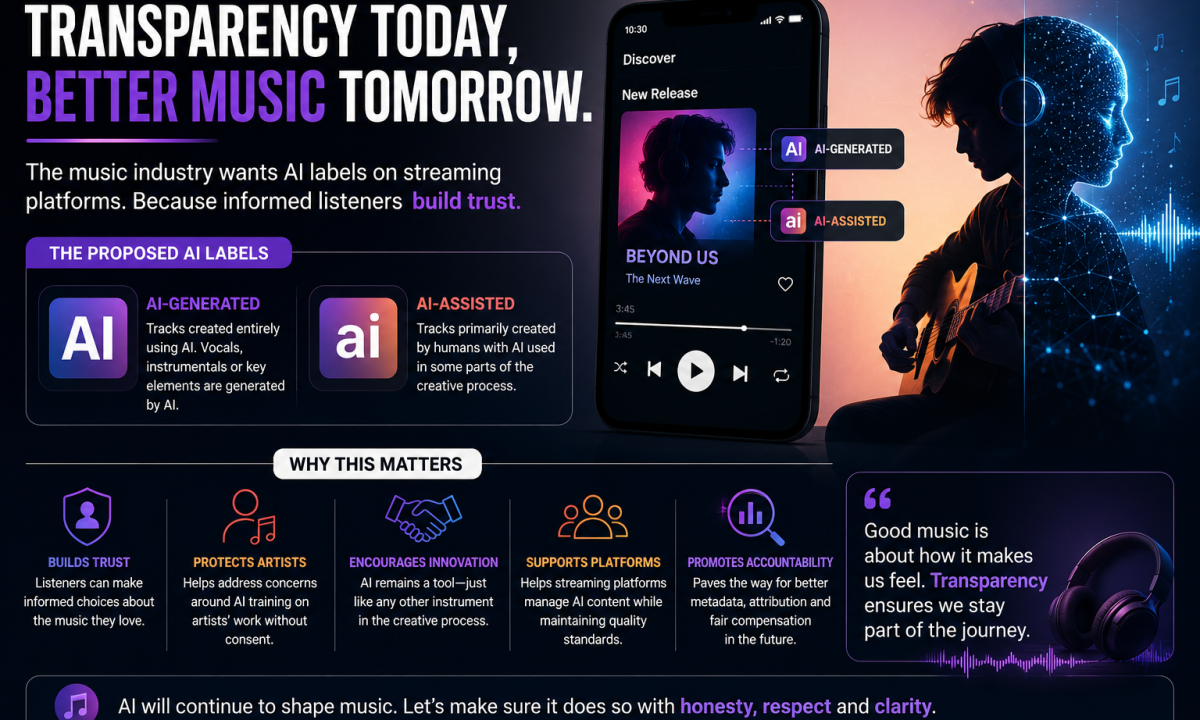
The proposal separates music into two categories:
- AI-Generated – where vocals or major musical elements are created entirely using AI.
- AI-Assisted – where human artists remain the primary creators but use AI during parts of the creative process.
That’s an important distinction.
Using AI to remove background noise isn’t the same as asking AI to compose an entire song. Just as Photoshop didn’t replace photographers, AI won’t replace musicians overnight. But it will certainly change how music gets created.
The Real Issue Isn’t AI. It’s Trust.
Artists aren’t only worried about AI creating songs. They’re worried about something much bigger.
Their music is being used to train AI models without permission. Their voices are being cloned. Their styles are being replicated. Their years of creativity are becoming someone else’s dataset.
That’s a legitimate concern.
If AI companies benefit from human creativity, then conversations around consent, attribution, and compensation become unavoidable.
Listeners Also Deserve Clarity
Imagine discovering your favourite new singer. You listen to ten songs. Follow them. Recommend them to friends. Only to later discover the “artist” never existed.
Would that matter?
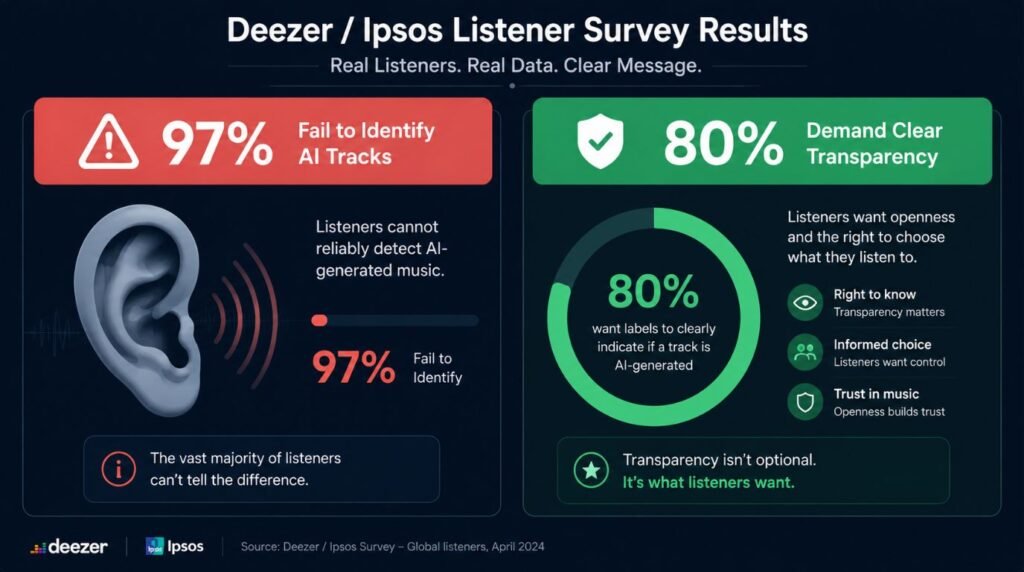
For some people, maybe not. For others, absolutely. This is why transparency matters. Not because AI music is bad. But because informed choices build trust.
Marketing Will Face the Same Challenge
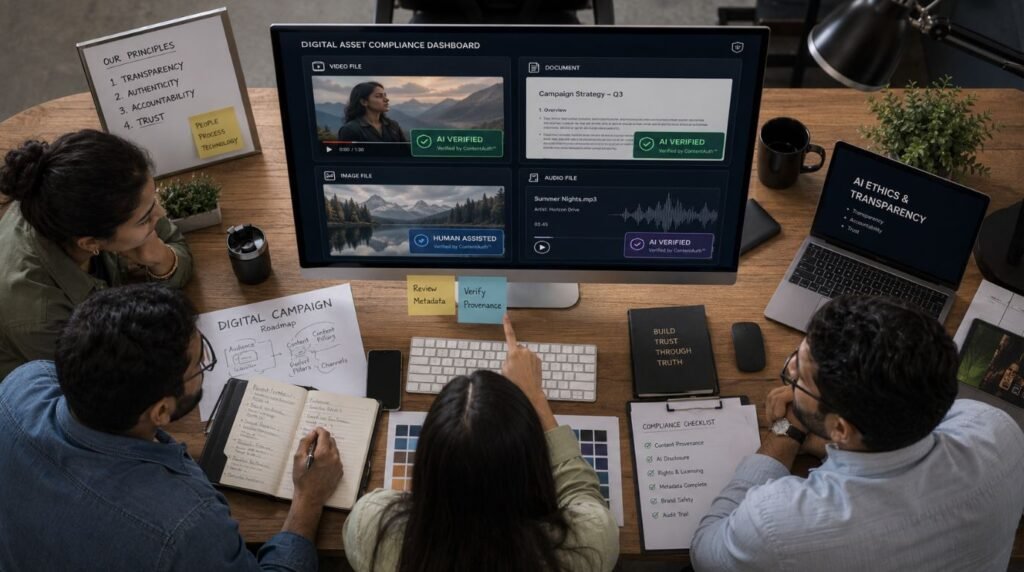
As digital marketers, business leaders, and content creators, we must realize that the push for labels for AI-generated music is not isolated to audio. Soon we’ll see similar labels for:
- AI-generated videos
- AI-written articles
- AI-created advertisements
- AI influencers
- AI-generated product photography
Eventually, transparency won’t be a competitive advantage. It will become an expectation.
The Platforms Will Have a Tough Job
Platforms like Spotify and Apple Music now face a balancing act. They need to encourage innovation without overwhelming users with low-quality AI content. They also need to protect artists while allowing creators to experiment with new tools.
That’s not an easy problem to solve. But ignoring it isn’t an option anymore.
My Take
I don’t believe AI is the enemy of creativity. Hidden AI is.
Technology should enhance creativity, not disguise itself as it. If a song is AI-generated, tell me. If it’s AI-assisted, tell me that too. I’ll still decide whether I like it.
Because in the end, good music isn’t judged by who—or what—created it. It’s judged by how it makes us feel. And transparency ensures that both creators and listeners remain part of that journey.
As the industry shifts, staying informed about AI trends is essential for anyone. Click through to read another thread!