
Summary
The NFL is no longer just a sports league; it is a media empire disguised as a game. In 2026, the NFL media rights business model has evolved into a “Media Operating System” that tech giants like Amazon and Netflix are paying billions to participate in. This post breaks down how the league has mastered the art of owning attention, controlling distribution, and monetizing emotion in the digital age.
The Gravity of The NFL Media Rights Business Model
The NFL Isn’t Just a Sports League Anymore. It’s Basically a Media Operating System.
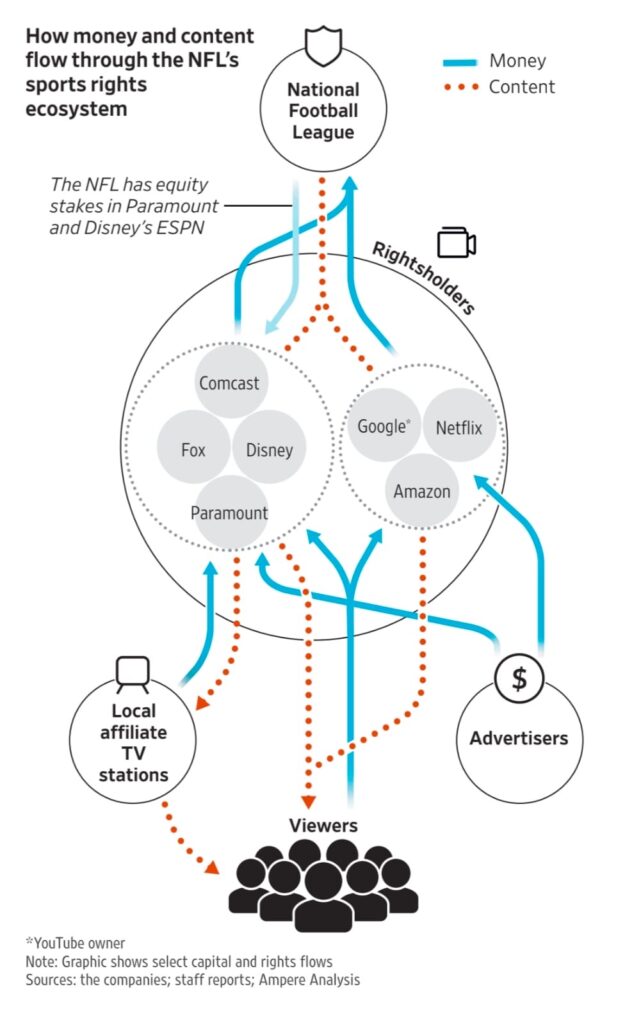
I think one of the smartest businesses in the world today isn’t a tech company. It’s the National Football League.
And the craziest part?
Most people still think the NFL is just “sports.” It’s not. It’s a media empire disguised as a sports league.
When you really look at how money flows around the NFL ecosystem, you realize the NFL media rights business model doesn’t just sell games—it controls the last truly valuable attention asset on the internet.
It controls:
- Attention
- Distribution
- Advertising demand
- Streaming leverage
- Cultural relevance
All at once.
Look at who’s involved
Traditional media giants:
- Disney
- Fox Corporation
- Paramount Global
- Comcast
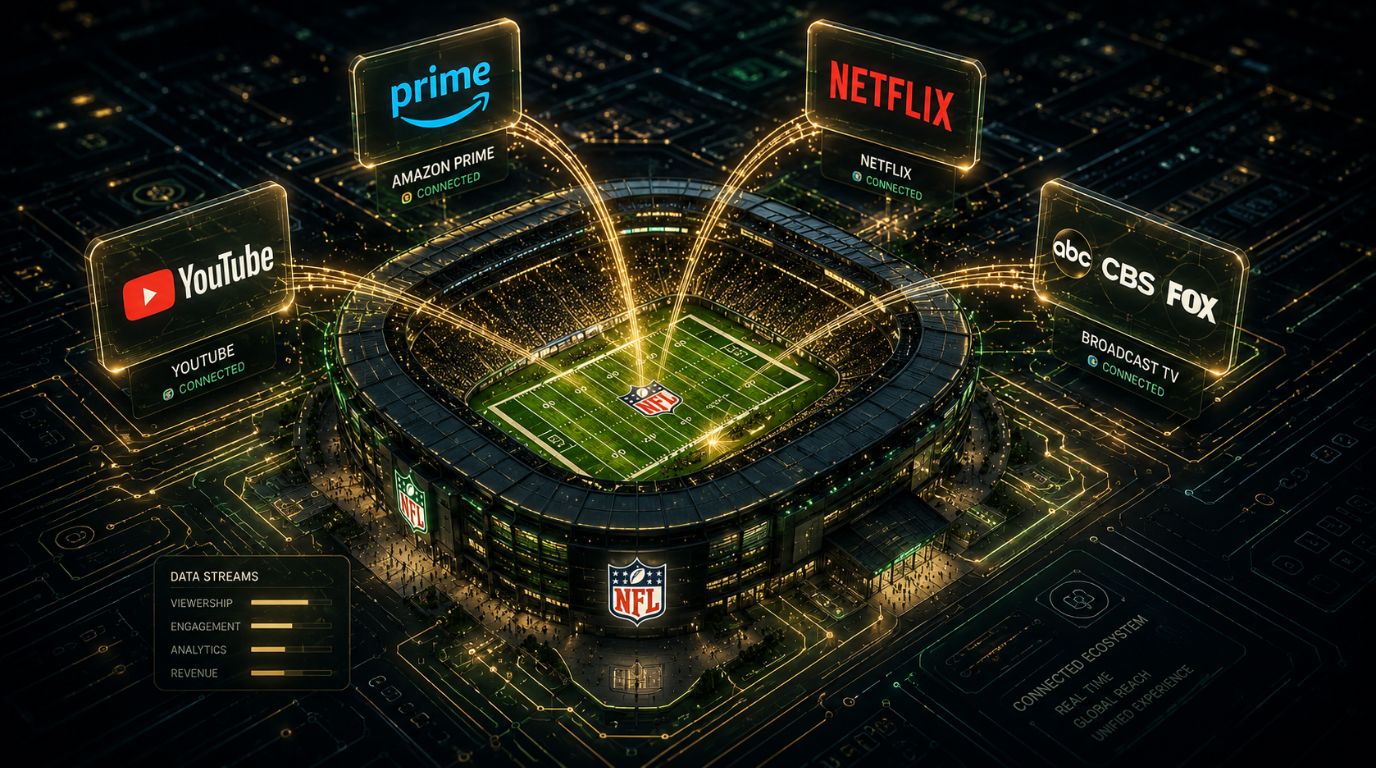
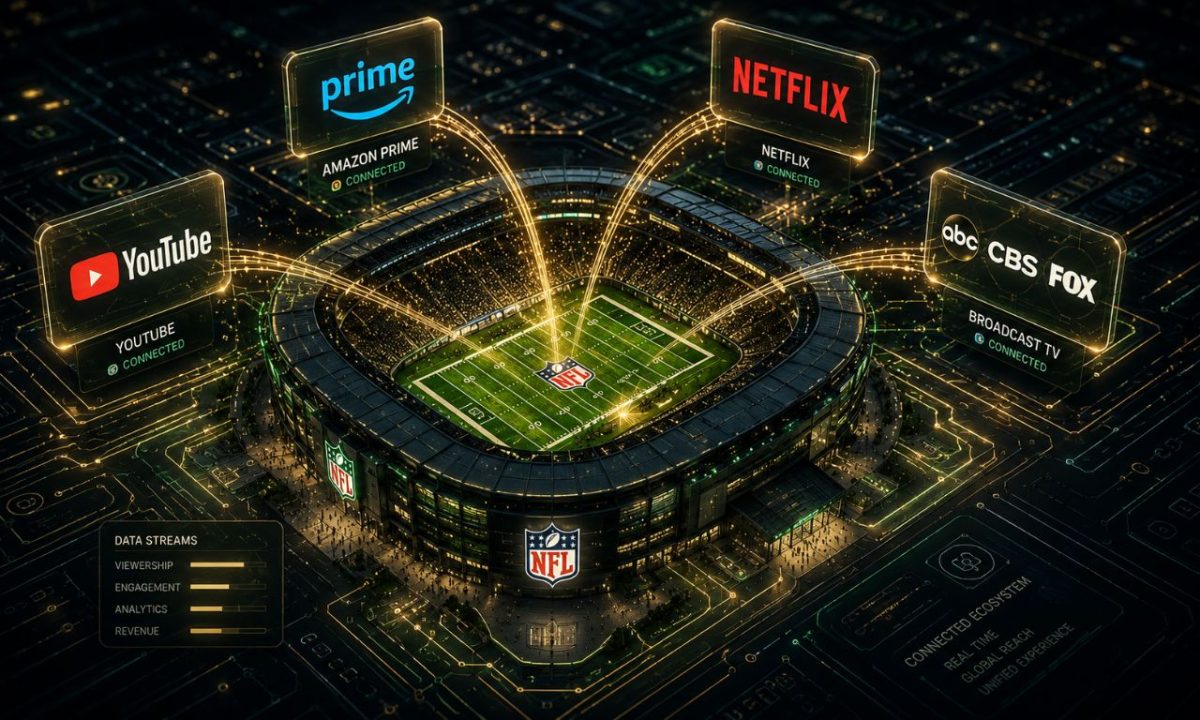
And now the NFL media rights business model has successfully forced tech giants:
- Amazon
- Netflix
Everyone wants in. Because live sports are becoming the last truly valuable attention asset on the internet.
Why?
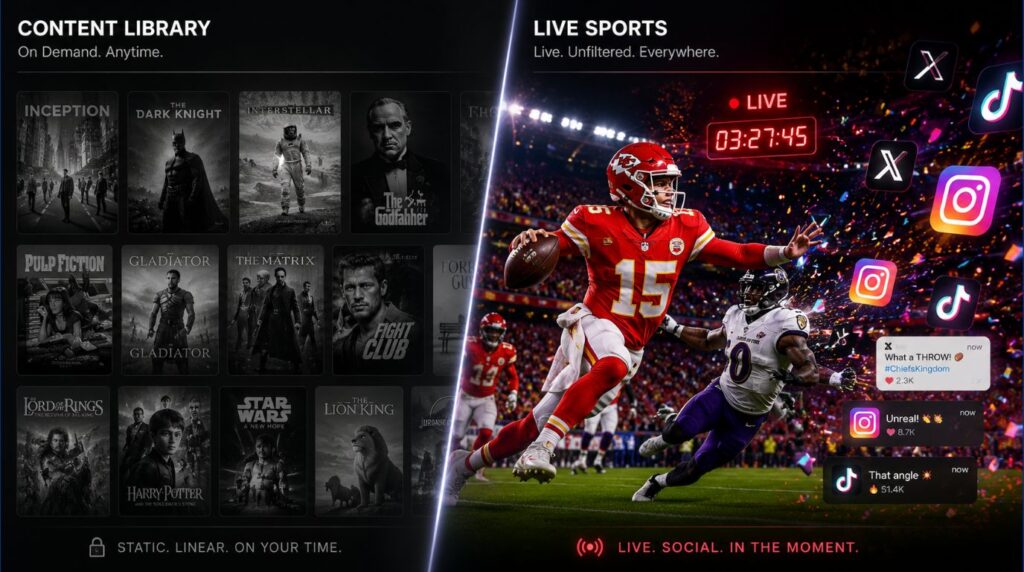
Because almost everything else became:
- On-demand
- Skippable
- Fragmented
- Background noise
But live sports?
People still show up:
- In real time
- Emotionally invested
- With ads turned on
- And social media is exploding simultaneously
That combination is gold.
My Biggest Realization Looking at The NFL Media Rights Business Model
The NFL figured out something modern creators still struggle with: Own the audience demand, not just the content. That’s why the league has leverage over:
- TV networks
- Streaming platforms
- Advertisers
- Distributors
Everyone needs NFL content more than the NFL needs any single platform. That’s power.
The smartest part?
The NFL doesn’t rely on one ecosystem anymore.
Earlier, it was mostly: Television.
Now it’s:
- Cable
- Streaming
- YouTube ecosystems
- Prime Video
- Netflix partnerships
- Digital highlights
- Social clips
They diversified distribution without weakening the core product. That’s incredibly hard to do.
This is Where Marketers Should Pay Attention
Because the NFL isn’t just monetizing viewers once. It monetizes:
- Broadcast rights
- Advertising
- Licensing
- Sponsorships
- Data
- Merchandising
- Streaming exclusivity
- Local affiliate relationships
One audience. Multiple revenue layers. That’s basically the dream business model of the internet era.
The Hidden Insight
There’s another hidden insight here, too
Notice how tech companies are aggressively entering sports? That’s not random.
Streaming platforms now understand something painful: Content libraries don’t create urgency anymore.
Live events do. People can postpone:
- Movies
- Series
- Podcasts
But live sports?
You either watch now…Or miss the cultural moment entirely. And in the attention economy, urgency is priceless.
The Irony
For years, Silicon Valley believed: “Tech will dominate media.”
Now tech companies are spending billions trying to acquire traditional sports attention.
Because even the best algorithms struggle to recreate:
- Tribal loyalty
- Live excitement
- Shared emotional moments
Sports already solved that decades ago.
Final Thought on The NFL Media Rights Business Model
The NFL’s real business isn’t football. Football is just the engine.
The real business is: Attention infrastructure. And they’ve built one of the strongest ecosystems on earth around it.
The NFL media rights business model proves that owning the audience demand is more powerful than owning the platform. Honestly, I think every creator, startup, and marketer should study this carefully. Because the future of media probably belongs to companies that can do three things simultaneously:
- Own attention
- Control distribution
- Monetize emotion
The NFL mastered all three long ago. And now the tech world is paying rent to participate.
As the industry shifts, staying informed about tech trends is essential for anyone. Click through to read more such threads!