
• Home /
  • AI /
  • Why Model-Market Fit Comes Before Growth in AI
Model-Market Fit

Why Model-Market Fit Comes Before Growth in AI

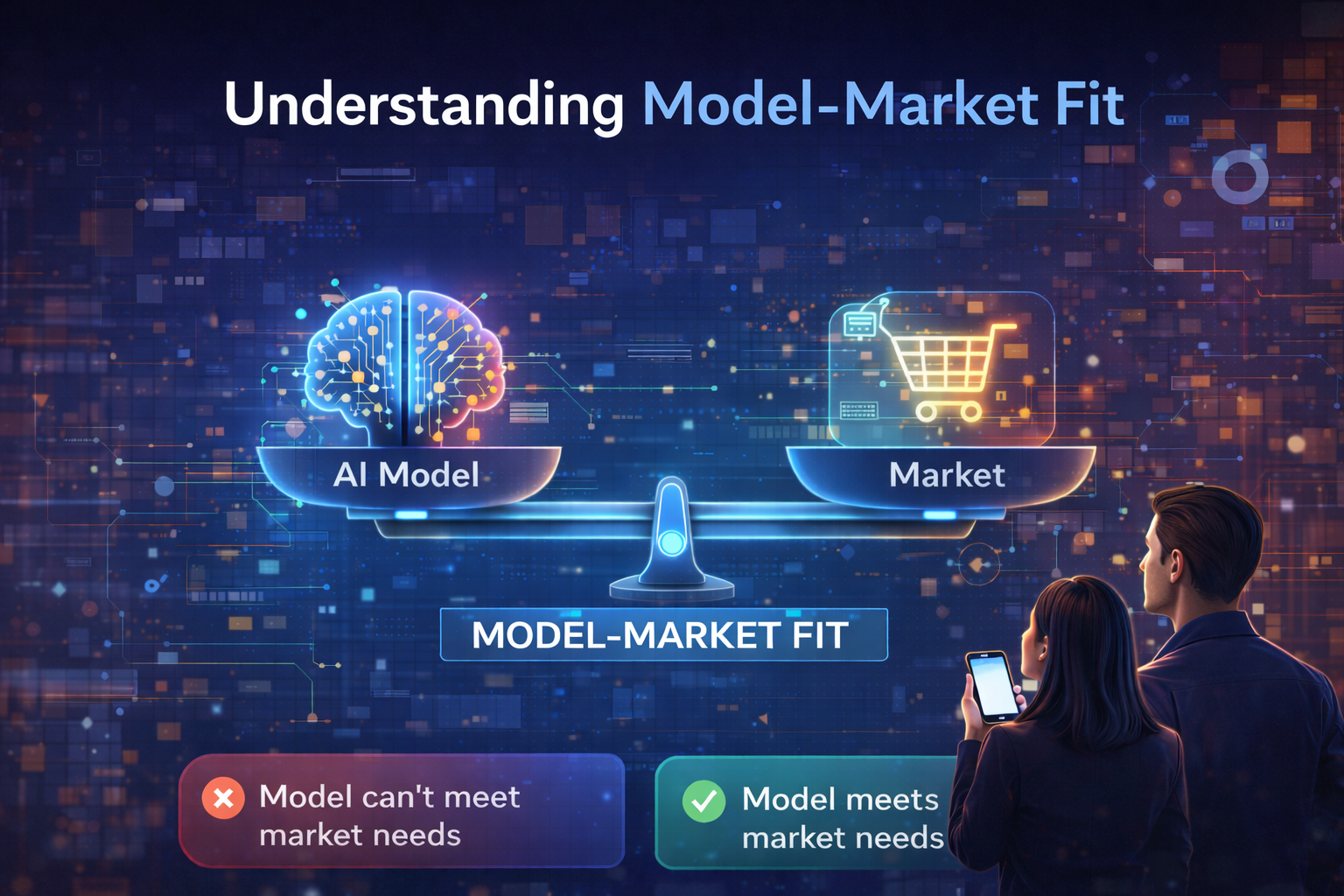
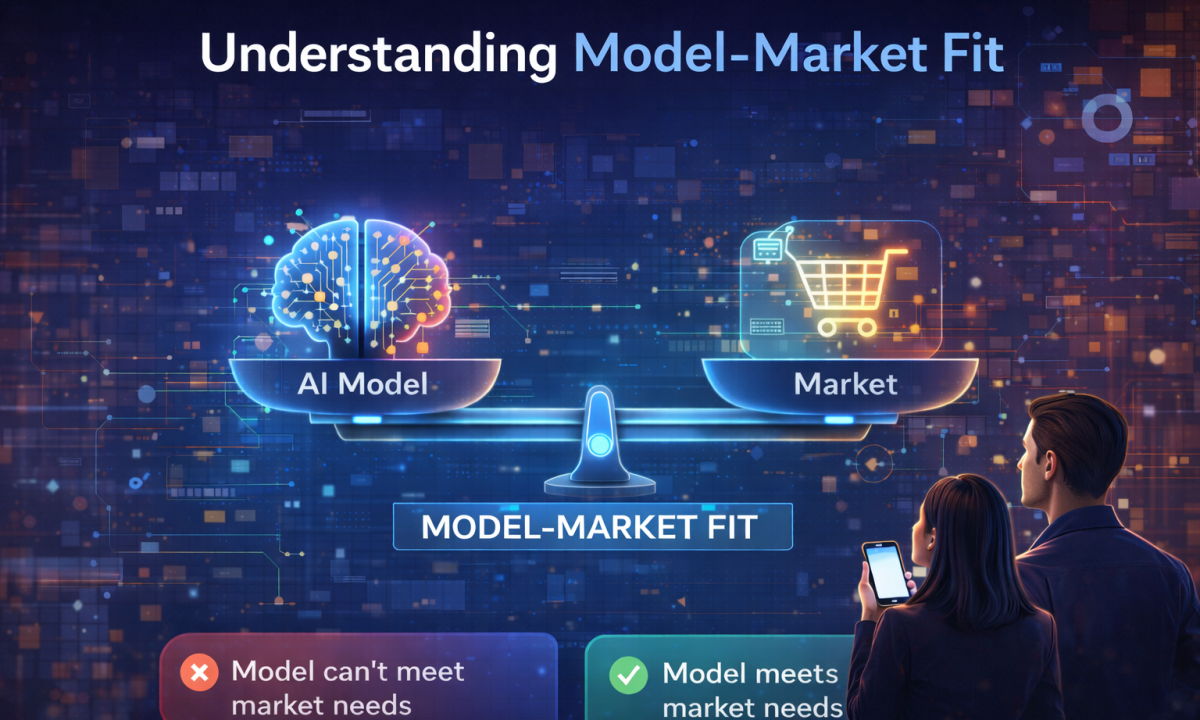
One of the most important ideas I’ve read recently is Model-Market Fit. The premise is simple but often ignored: in AI, product-market fit doesn’t matter if the model itself can’t do the job.

Key highlights

Traditional startups rely on demand pulling the product forward. AI products don’t work that way. If the model lacks capability, no amount of UX, marketing, or positioning will drive sustained adoption.

We can already see this pattern. Legal tech adoption surged once models became reliable. In areas like financial analysis or drug discovery, demand exists—but models still fall short, slowing growth.

The sequence is clear: Model-Market Fit first, Product-Market Fit second.

What this means for a marketer

For marketers in AI, this is a grounding reminder. Messaging can amplify value, but it cannot create it. Overpromising accelerates churn and erodes trust.

The strongest AI marketing today is rooted in honest capability, narrow use cases, and clear expectations. In this space, credibility compounds faster than hype.

Source: https://www.nicolasbustamante.com/p/model-market-fit

Model-Market Fit

Latest Threads...

The Job Even Accountants Want AI to Steal (And Honestly, I Get It) There’s a certain irony in how we talk about AI and jobs. We love debating which glamorous

A 13-Year-Old Outsmarted a Cyber Scam. Most Adults Wouldn’t. I read this and had one immediate thought: We’re not losing to scammers because they’re smart. We’re losing because they’re convincing.

A few years ago, brands were flexing how innovative they were. “Powered by AI.” “AI-generated.” “Next-gen creativity.” Now? They’re proudly saying the exact opposite. “No AI used.” And I can’t

Somewhere along the way, “tracking your health” became a full-time job. Steps. Sleep. Calories. Water. {Mood}. And 47 notifications reminding you that you’re failing at all of them. Irony level:

Artificial Intelligence (AI) is widely promoted as a tool that enhances creativity and efficiency. Yet for many design students, it is increasingly becoming a barrier rather than a benefit. While

Fashion week in 2026 has changed a lot, but the most noticeable shift is in fashion marketing. As a design student, I’ve realised that brands are no longer just focused