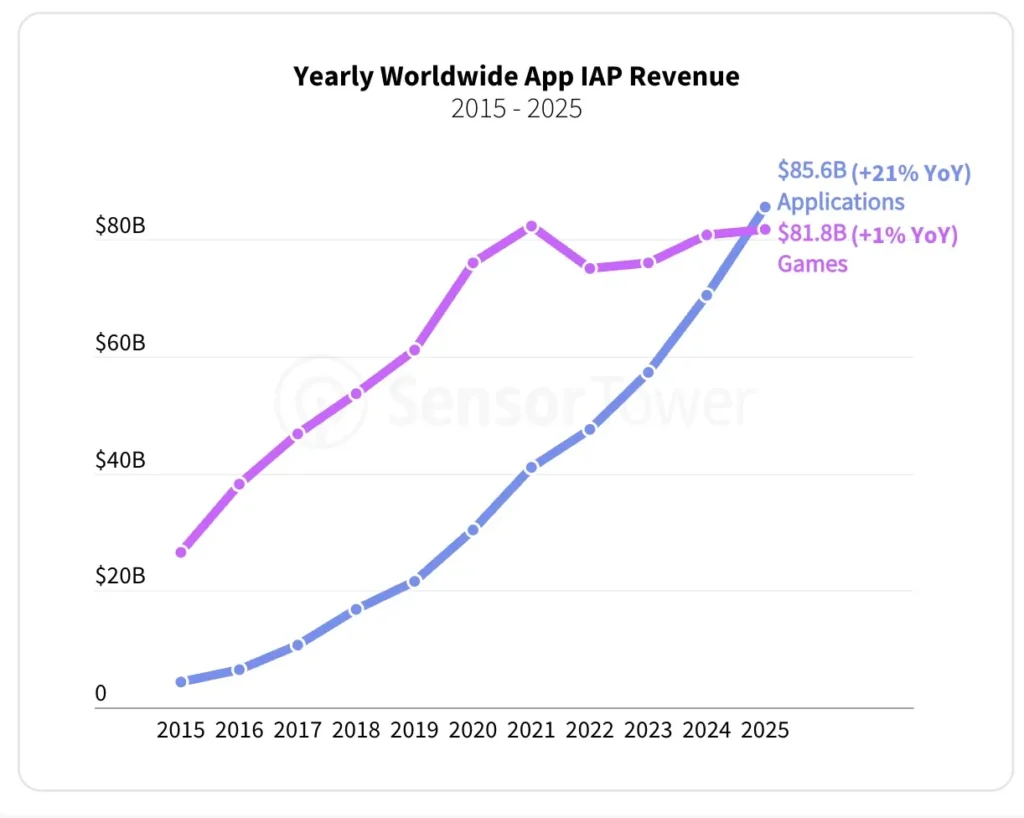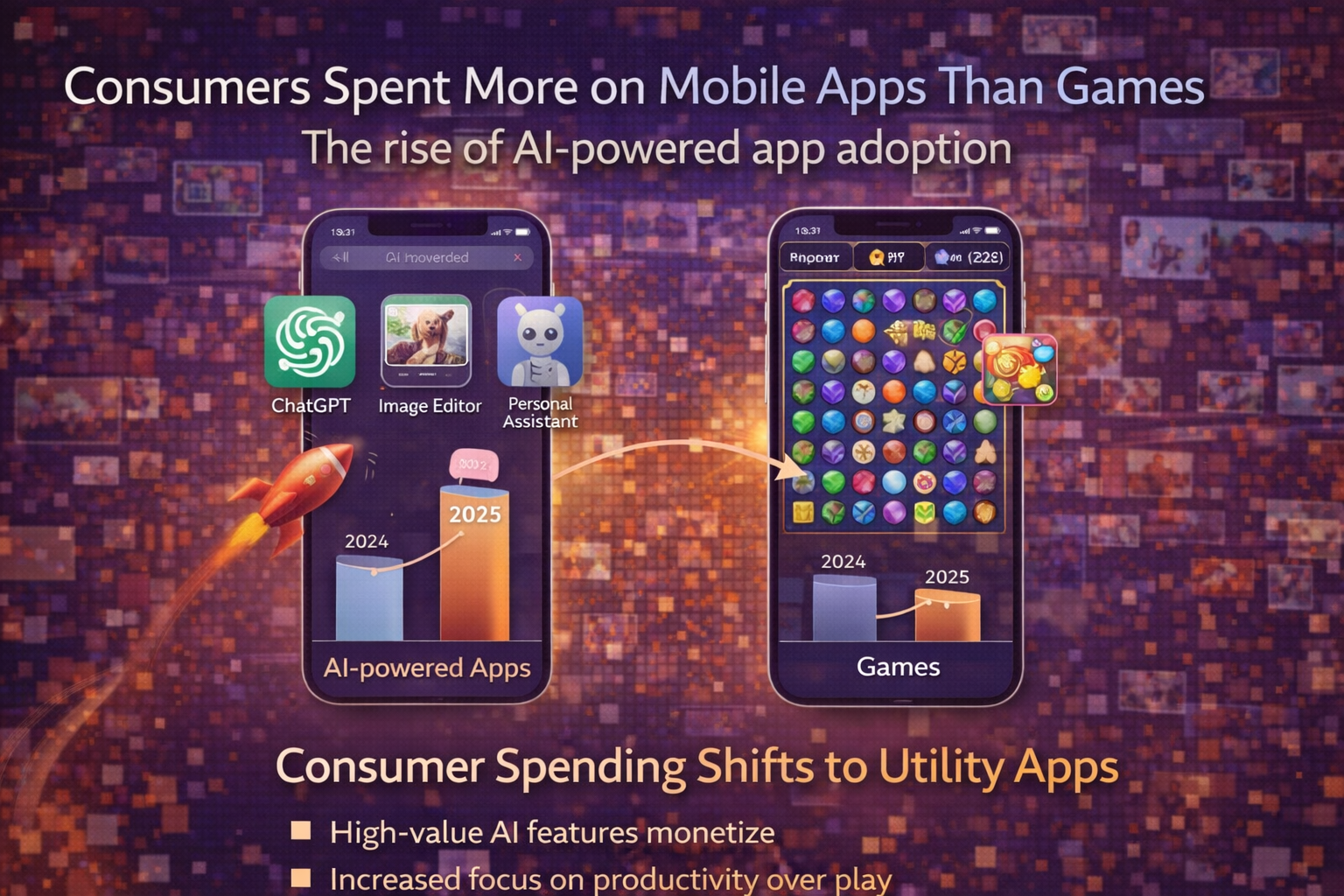

I came across a telling trend in mobile app spending for 2025. For the first time, consumer spending on non-gaming mobile apps surpassed games, driven strongly by the adoption of AI-enabled applications. According to TechCrunch, this marks a structural shift in how people value and pay for mobile experiences.
Key Highlights
Historically, mobile games have dominated app revenue charts—think in-app purchases, battle passes, and virtual goods. But in 2025, spending on AI-powered utility and productivity apps overtook game revenue. Generative AI, image editing, writing assistants, learning tools, and personal intelligence features in apps are encouraging users to pay for value-added capabilities multiple times throughout the year.
The data suggests that consumers are willing to pay not just for entertainment, but for functional experiences that improve productivity, learning, creativity, and personalization. AI features embedded directly into mobile workflows are proving sticky and monetizable in ways gaming once dominated.
What this means for a marketer
For marketers, this shift has several implications.
First, the mobile opportunity is expanding beyond entertainment. Users are now investing in tools that help them think, create, and manage daily life. Your mobile strategy should account for utility-led engagement, not just ephemeral entertainment.
Second, AI is not just a buzzword—it’s a transactional driver. Consumers are willing to pay for AI features that clearly help them get something done. This changes how pricing, positioning, and value propositions should be crafted.
Finally, this trend signals where attention and revenue are migrating: toward high-value mobile experiences where usefulness aligns with monetization. The apps that win will be those that combine utility with seamless, AI-powered delight.
Mobile is no longer just a playground. It’s a platform for serious, paid engagement—powered increasingly by AI.