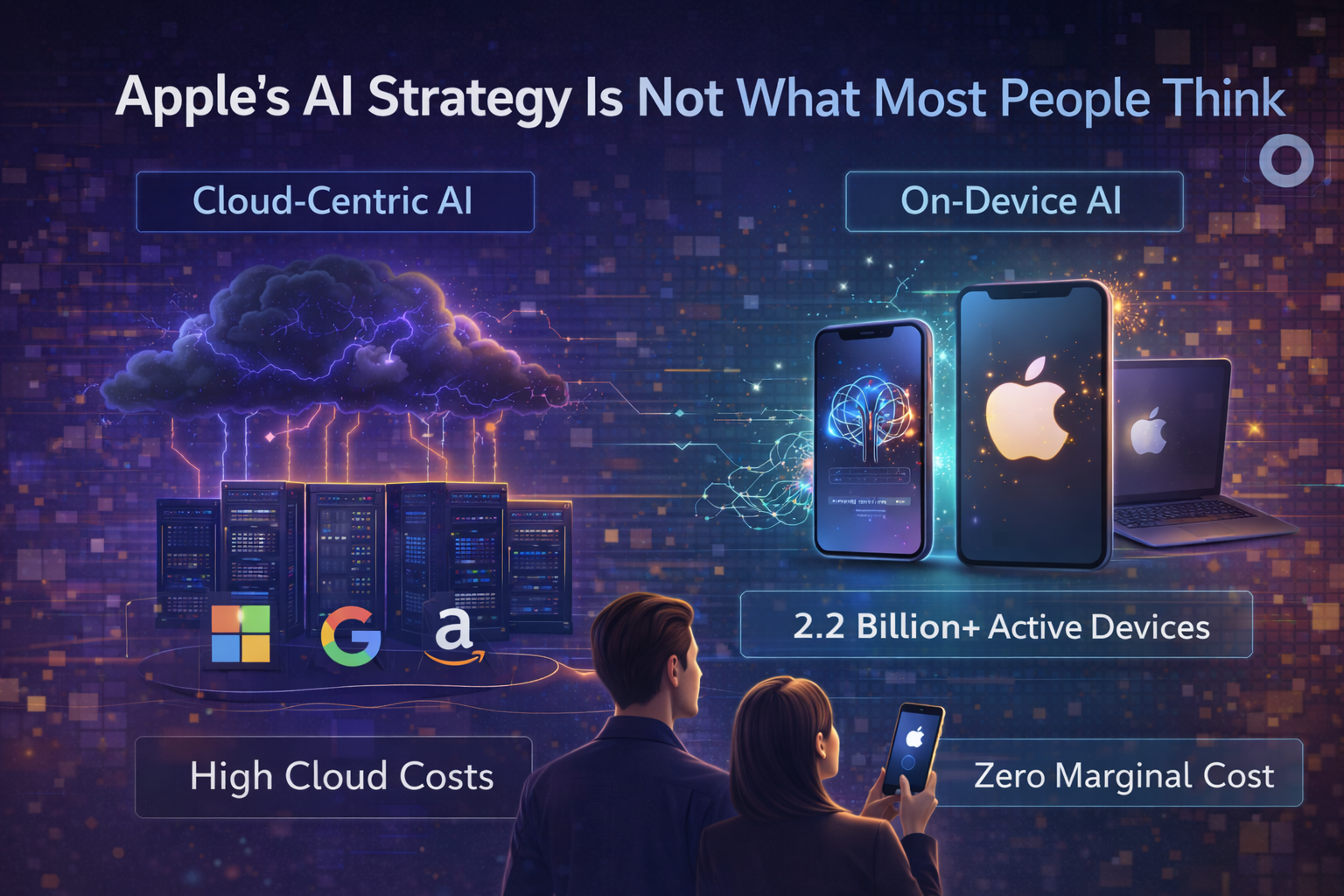

There’s a common narrative in tech circles that Apple is falling behind in the AI race. Analysts point to slower feature rollouts, smaller spending compared to hyperscalers, and delays in next-generation Siri as evidence. But this view misses a deeper strategic bet Apple is making—one built on on-device AI, not cloud infrastructure.
Key highlights
Apple isn’t trying to replicate the cloud-centric AI model that companies like Microsoft, Google, and Amazon are chasing. Instead, it is focused on performing AI inference directly on users’ devices. With over 2.2 billion active devices already in the market, Apple effectively has a massive, distributed inference infrastructure that doesn’t require additional cloud spend.
What this means for a marketer
For marketers, this perspective shift matters for two reasons.
First, it reframes how we should evaluate platform AI progress. Apple’s approach suggests that user experience and privacy can be competitive differentiators without massive cloud spending.
Second, marketers need to rethink messaging around AI capabilities. In a world where on-device AI becomes the norm, performance will be judged by speed, relevance, and trustworthiness, not by scale of infrastructure or size of model parameters.This strategic nuance helps explain why Apple’s AI may feel slow to arrive, even as it quietly builds a sustainable, consumer-centric advantage. Understanding this allows marketers to align strategies not just with what AI can do, but how the ecosystem enabling it is evolving.
Source: https://davefriedman.substack.com/p/apples-ai-game-is-misunderstood