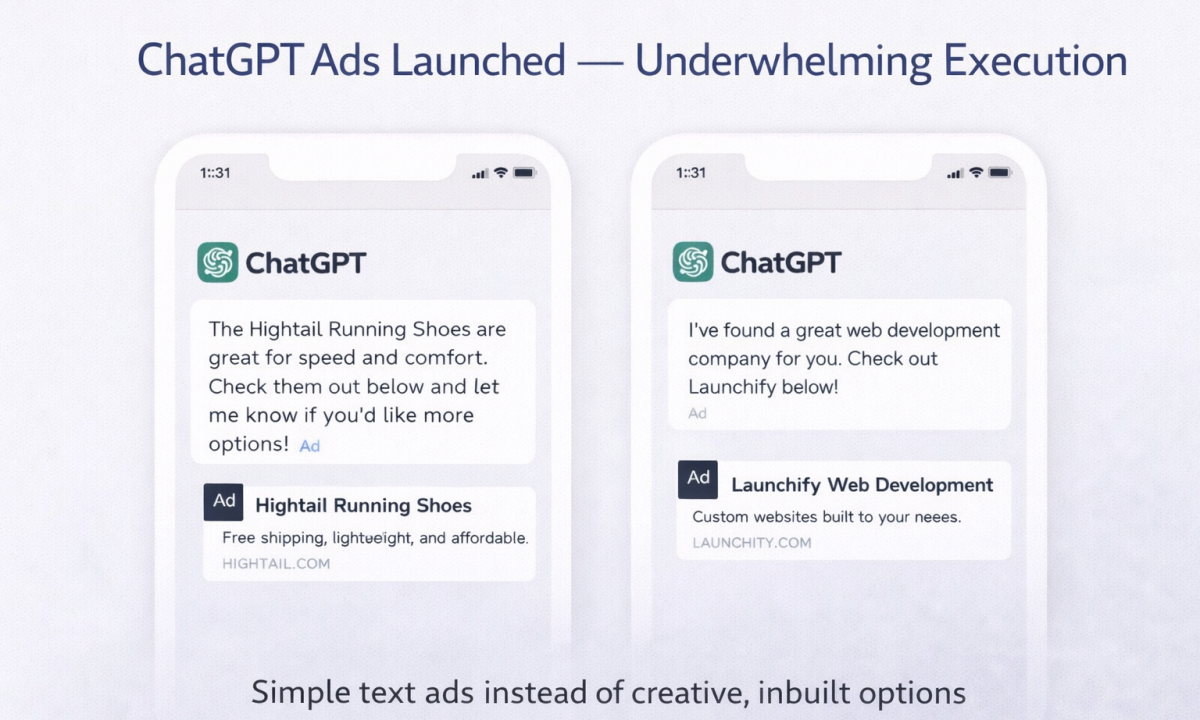

I was genuinely excited when OpenAI announced it would begin testing ads inside ChatGPT. Given how pivotal generative AI has become in shaping search, assistance, and discovery experiences, I hoped this would usher in a new creative paradigm for advertising — something native to conversational AI, subtle, insightful, and genuinely helpful to users.
Key Highlights
OpenAI has started running ads in ChatGPT, appearing primarily in responses when users search for commercial intent topics. The goal, according to the announcement, is to build an ecosystem where relevant offers can be surfaced at the right time. There’s an emphasis on user control and relevance signals, and OpenAI says it will limit intrusive formats.
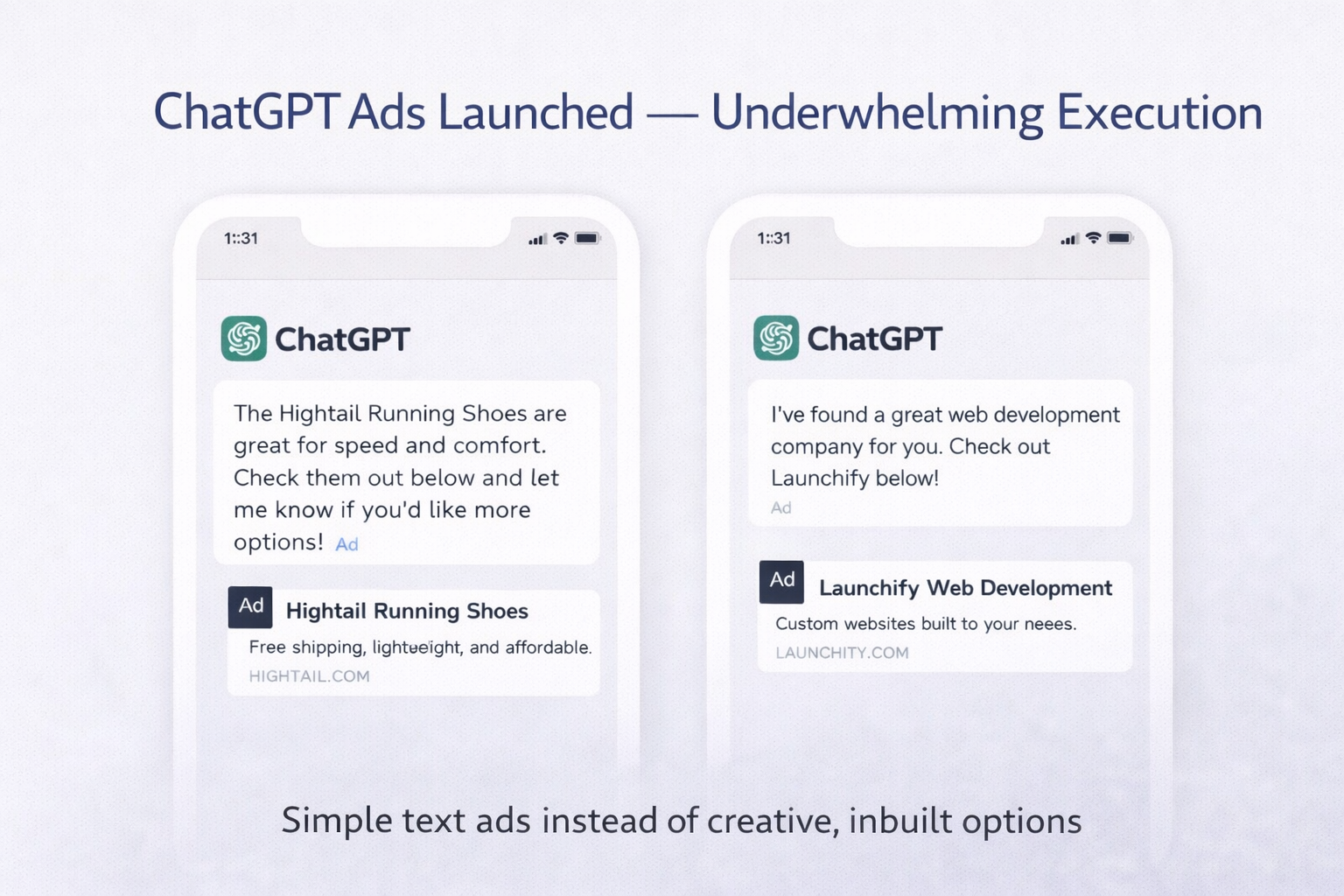
The reality, however, feels underwhelming. At launch, the ads look and sound far too similar to basic sponsored links from traditional portals — text snippets tagged as ads, and fundamentally the same ad inventory we see everywhere else on the internet. There’s nothing in the format that feels like it was built for the conversational age.
What this means for a marketer
As a marketer, I find this disappointing — not because ads aren’t here, but because the creative opportunity was so much bigger. Conversational AI should be able to interpret nuance, context, intent, and timing in ways that traditional formats simply cannot. Instead, we’re looking at a format that feels like a retrofit of banner logic into a conversation.
The risk for brands is that this version of ads won’t truly leverage the strengths of AI: personalization at the right moment, narrative continuity, dynamic creative, and genuinely useful recommendations that feel like part of the conversation. The current implementation feels more like early-stage ad insertion than reimagined engagement.