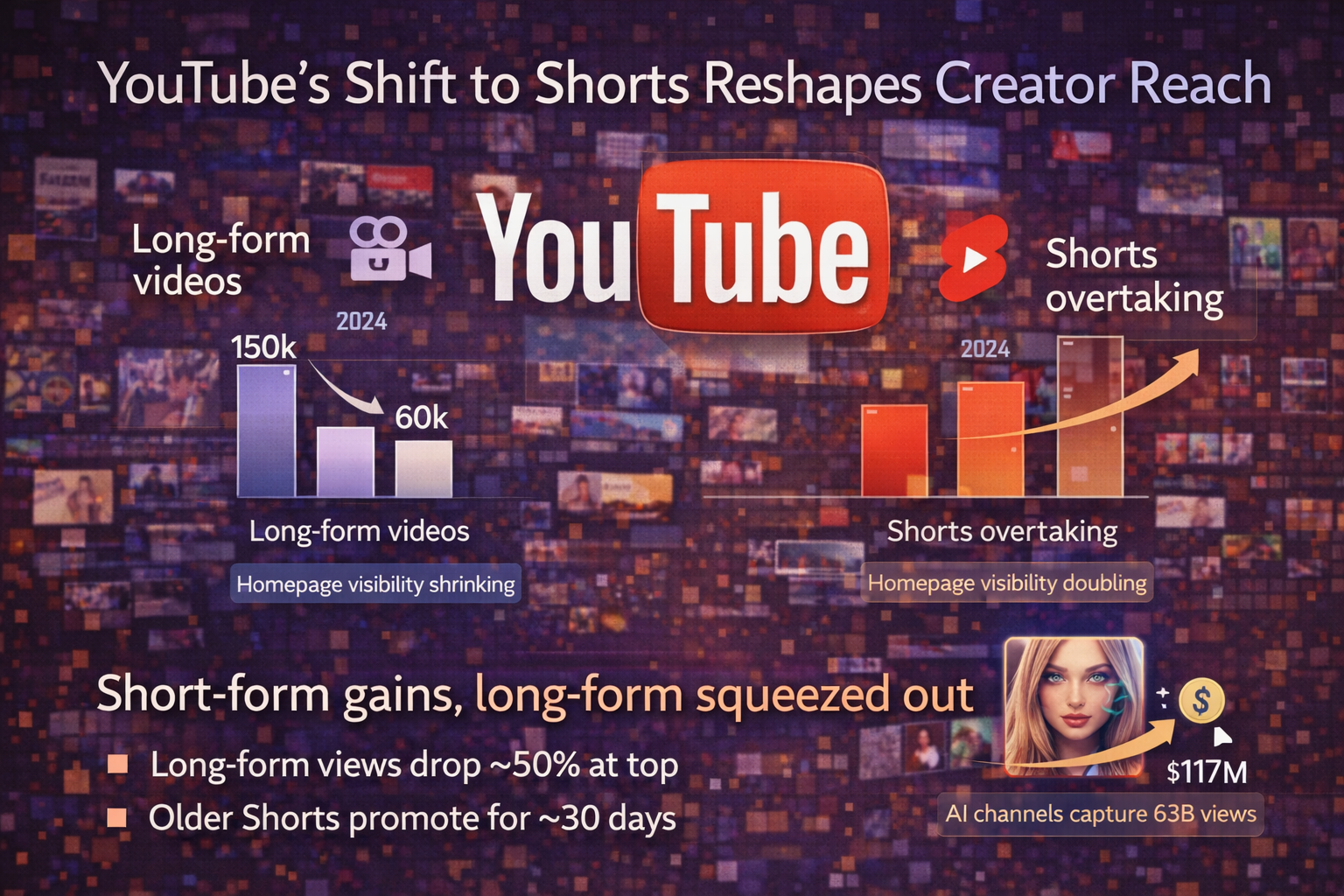
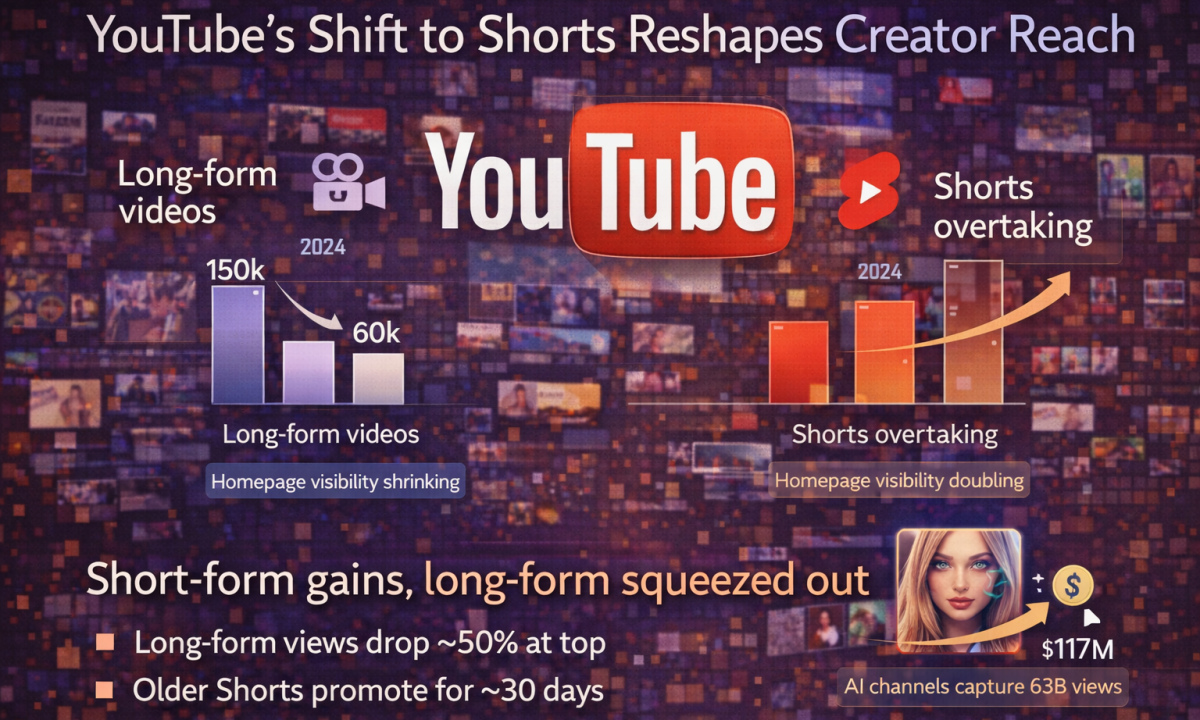

Across 500+ channels studied, average long-form views reportedly fell from around 150,000 to about 60,000 per upload. Even more striking, some of the top 100 YouTubers saw roughly a 50% drop in views within a single week.
Homepage real estate tells the same story. Long-form slots reportedly shrank from around ten in 2024 to just two or three in 2025. At the same time, Shorts visibility from home and search has roughly doubled.
There’s also a lifecycle shift. Older Shorts tend to lose promotion after about 30 days, pushing creators into a constant production cycle. Add to this the rise of AI-generated channels capturing billions of views and significant revenue, and competition intensifies further.
What this means for a marketer
For marketers, this signals a structural change, not a temporary tweak. Attention on YouTube is increasingly short-form and velocity-driven.
If your strategy relies heavily on long-form YouTube, distribution risk is rising. Shorts can drive awareness, but they monetize less and demand higher output. That changes ROI calculations.
My takeaway is balance. Use Shorts for discovery and frequency, but treat long-form as depth and authority. The brands and creators who adapt their content mix—rather than resist the shift—will be more sustainable as the platform evolves.